
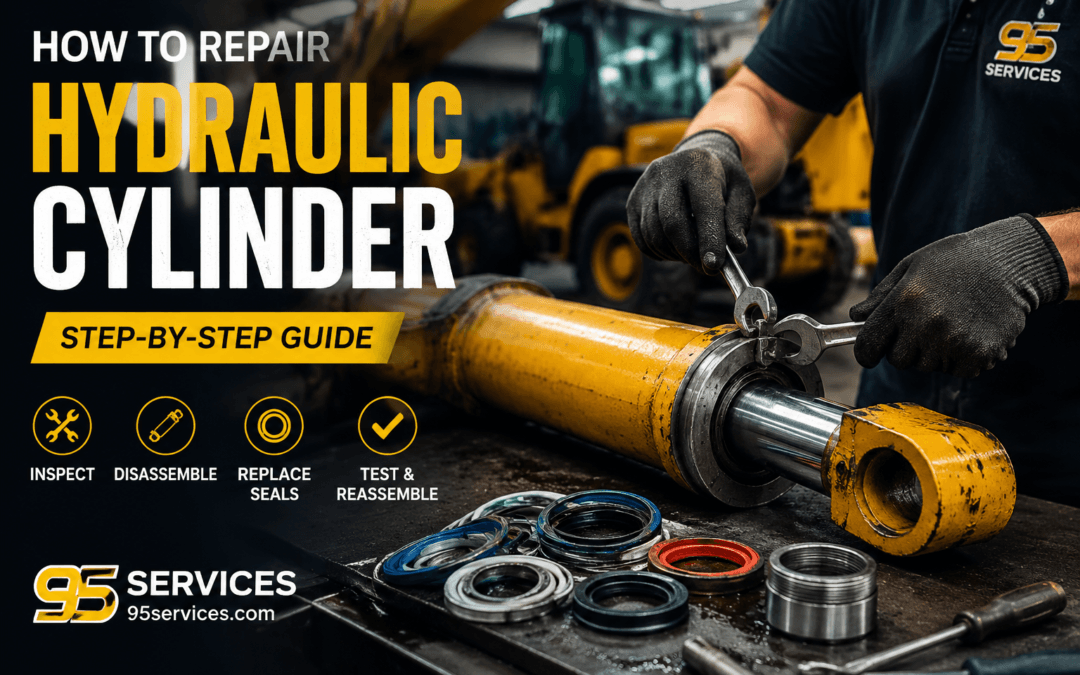
How to repair a hydraulic cylinder?
Hydraulic cylinders are essential components used in construction equipment, industrial machinery, agricultural machines, lifting systems, and many other heavy-duty applications. They convert hydraulic pressure into linear motion to perform pushing and pulling operations. Over time, hydraulic cylinders can develop problems such as oil leaks, slow movement, reduced power, or complete failure due to worn seals, damaged rods, contamination, or internal wear.
A proper hydraulic cylinder repair process can restore performance, prevent expensive equipment downtime, and extend the life of your hydraulic system. This guide explains how to diagnose, disassemble, repair, and test a hydraulic cylinder safely.
Common Signs That a Hydraulic Cylinder Needs Repair
Before repairing a hydraulic cylinder, it is important to identify the actual problem. Common warning signs include:
- Hydraulic oil leaking around the piston rod
- Slow cylinder movement
- Loss of lifting or pushing power
- Cylinder drifting under load
- Jerky or uneven operation
- Scratches or rust on the piston rod
- Unusual noises during operation
- Visible damage to the cylinder body
Most hydraulic cylinder failures happen because of damaged seals, contaminated hydraulic oil, misalignment, or excessive pressure. Regular inspection helps detect small problems before they become major failures.
Tools Required for Hydraulic Cylinder Repair
A professional hydraulic cylinder repair requires the correct tools to avoid damaging important components.
Common tools include:
- Hydraulic cylinder repair bench
- Spanner wrench
- Socket and wrench set
- Torque wrench
- Seal removal tools
- Cleaning materials
- Measuring tools
- New hydraulic seal kit
- Hydraulic oil
- Safety equipment
Using incorrect tools can damage the cylinder rod, gland, or sealing surfaces and create new leaks after repair.
Inspect and Diagnose the Cylinder Problem
Before removing the cylinder, perform a complete inspection.
Check:
- External oil leaks
- Condition of the piston rod
- Cylinder barrel damage
- Loose fittings
- Bent rod or alignment issues
- Hydraulic oil condition
If the piston rod has deep scratches, corrosion, or bending, replacing seals alone may not solve the problem. Damaged rods may require polishing, chrome repair, or replacement.
Remove the Hydraulic Cylinder Safely
Safety is extremely important because hydraulic systems operate under high pressure.
Follow these steps:
- Turn off the machine.
- Release all hydraulic pressure.
- Disconnect hydraulic hoses carefully.
- Drain remaining oil.
- Remove mounting pins and bolts.
- Move the cylinder to a clean repair area.
Never attempt repairs while the cylinder is still connected to a pressurized system.
Disassemble the Hydraulic Cylinder
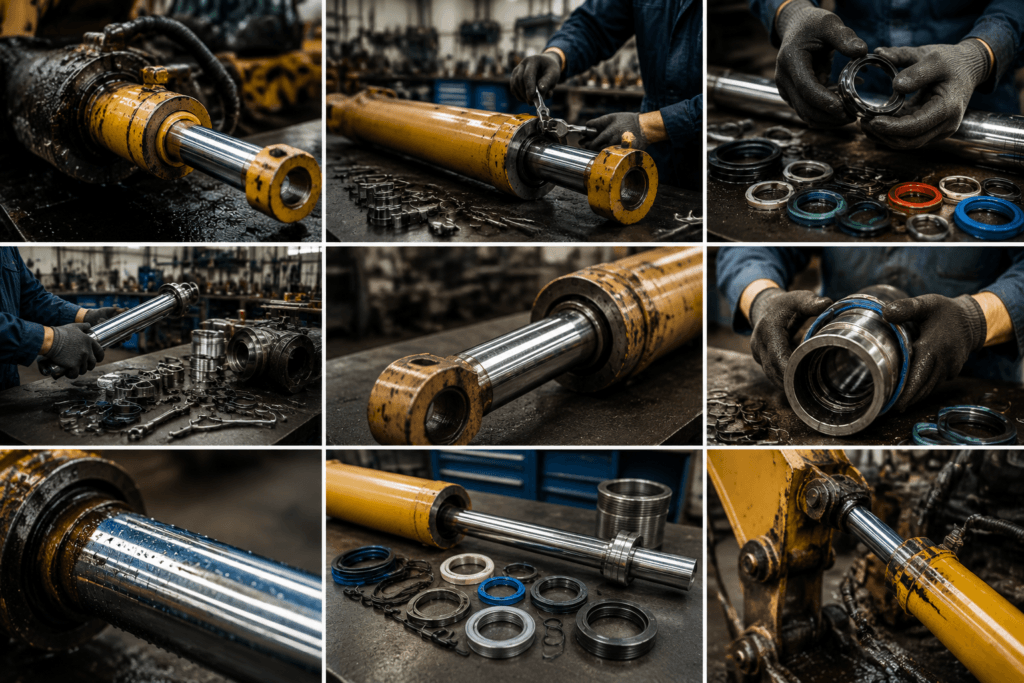
The cylinder must be carefully opened to access internal components.
Typical disassembly process:
- Remove the gland or cylinder head.
- Pull out the piston rod assembly.
- Remove the piston from the rod.
- Take out old seals and wear rings.
- Clean all internal parts.
Keep all components organized so they can be installed correctly during reassembly.
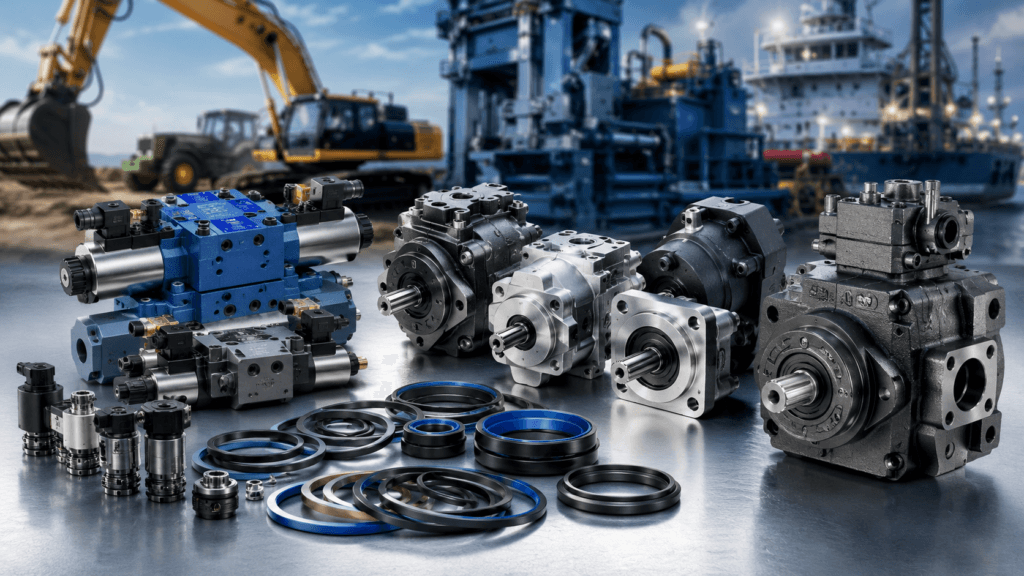
Inspect Internal Components
After disassembly, inspect every part carefully.
Check:
Piston Rod
Look for:
- Scratches
- Rust
- Bending
- Chrome damage
A damaged rod can quickly destroy new seals.
Cylinder Barrel
Inspect for:
- Internal scratches
- Cracks
- Excessive wear
Light damage may be repaired through honing, but severe damage may require cylinder replacement.
Piston and Gland
Check:
- Wear rings
- Thread condition
- Surface damage
- Seal grooves
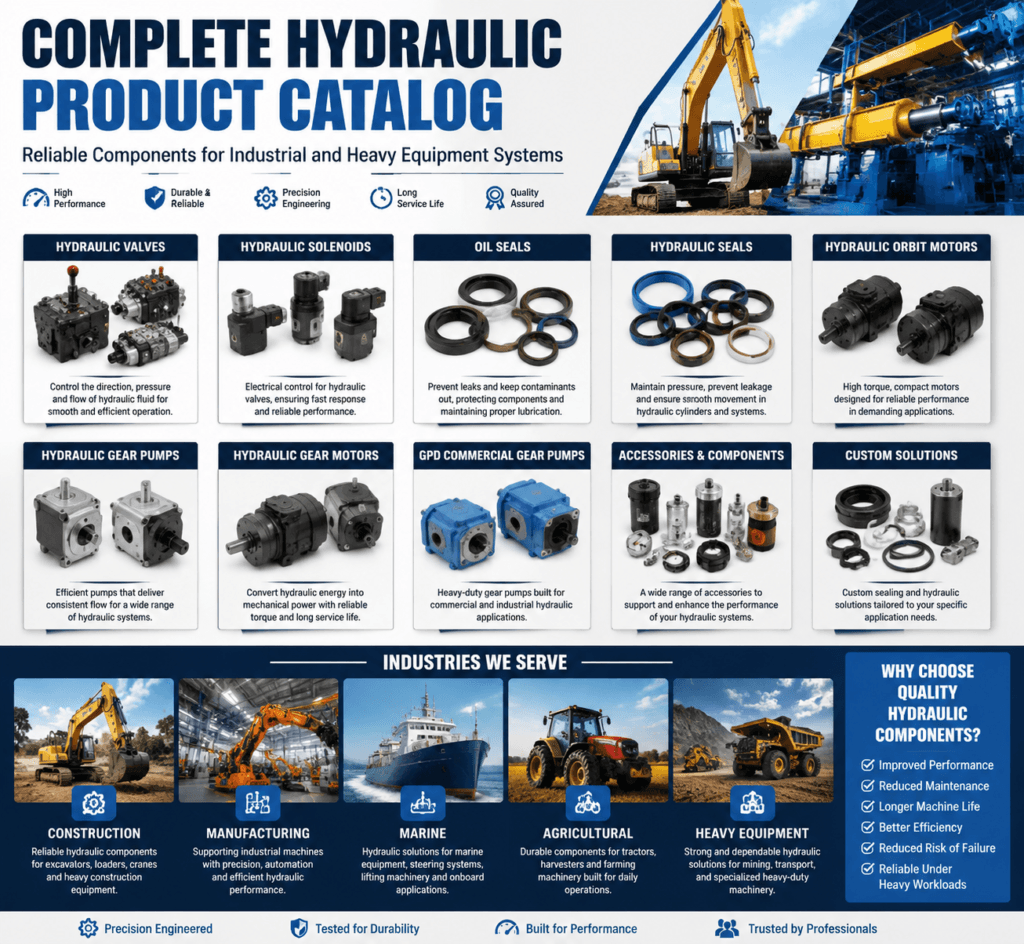
Replace Hydraulic Cylinder Seals
Seal replacement is one of the most common hydraulic cylinder repairs.
Old seals should be removed and replaced with the correct seal kit designed for your cylinder model.
Replace:
- Rod seals
- Piston seals
- Wiper seals
- O-rings
- Backup rings
- Wear rings
Before installing new seals:
- Clean all surfaces
- Remove dirt and metal particles
- Lubricate seals with clean hydraulic oil
- Install seals carefully without twisting or cutting them
Damaged seals are a major cause of hydraulic leaks and pressure loss.
Reassemble the Hydraulic Cylinder
After replacing damaged parts:
- Install new seals.
- Attach piston to the rod.
- Insert the rod assembly into the cylinder barrel.
- Install the gland and locking components.
- Tighten bolts according to manufacturer specifications.
- Check that all parts move smoothly.
Correct assembly is important because incorrect seal positioning can cause immediate leakage.
Test the Repaired Hydraulic Cylinder
Before putting the cylinder back into operation, perform testing.
Check:
- Hydraulic oil leaks
- Smooth extension and retraction
- Operating pressure
- Unusual sounds
- Cylinder holding ability
A professional hydraulic workshop may perform pressure testing to confirm that the cylinder can handle working conditions safely.
How to Prevent Hydraulic Cylinder Failure
Regular maintenance can significantly increase cylinder life.
Follow these maintenance tips:
Keep Hydraulic Oil Clean
Contaminated oil damages seals and internal surfaces. Check oil quality regularly and replace filters when required.
Inspect Seals Frequently
Look for:
- Oil around the rod
- Cracked seals
- Reduced performance
Replace damaged seals before they damage other components.
Protect the Piston Rod
Keep the rod clean and protected from:
- Dust
- Moisture
- Corrosion
- Impact damage
Maintain Proper Alignment
Misalignment creates side loads that wear cylinders unevenly and can bend the piston rod.
Hydraulic Cylinder Repair Services in Dubai
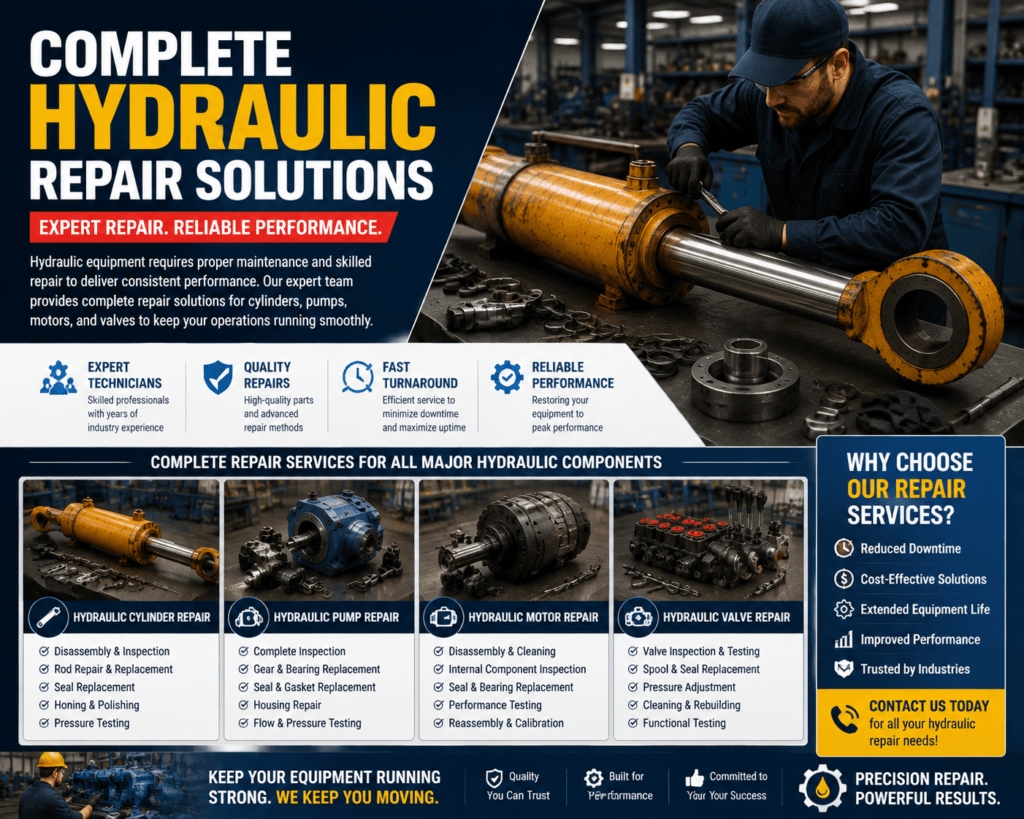
If you need professional hydraulic cylinder repair in Dubai, 95 Services provides reliable hydraulic solutions for industrial equipment, machinery, and mobile repair requirements.
Our hydraulic specialists can help with:
- Hydraulic cylinder inspection
- Seal replacement
- Cylinder rebuilding
- Hydraulic hose repair
- Hydraulic pump and valve services
- On-site hydraulic troubleshooting
Professional repair helps reduce machine downtime and restores hydraulic performance without unnecessary replacement costs.
Frequently Asked Questions (FAQs)
Can a hydraulic cylinder be repaired?
Yes. Most hydraulic cylinders can be repaired by replacing worn seals, repairing damaged rods, and restoring internal components.
What is the most common hydraulic cylinder problem?
The most common issues are oil leaks caused by worn seals, damaged piston rods, and contaminated hydraulic fluid.
How long does hydraulic cylinder repair take?
Simple seal replacement may take a few hours, while complete rebuilding with machining work may require more time.
Is it cheaper to repair or replace a hydraulic cylinder?
Repair is usually more affordable when the cylinder body and rod are still in good condition. Replacement may be better if there is severe structural damage.