12 Common Car Problems in Dubai and How to Fix Them: A Practical UAE Driver's Guide (2026)
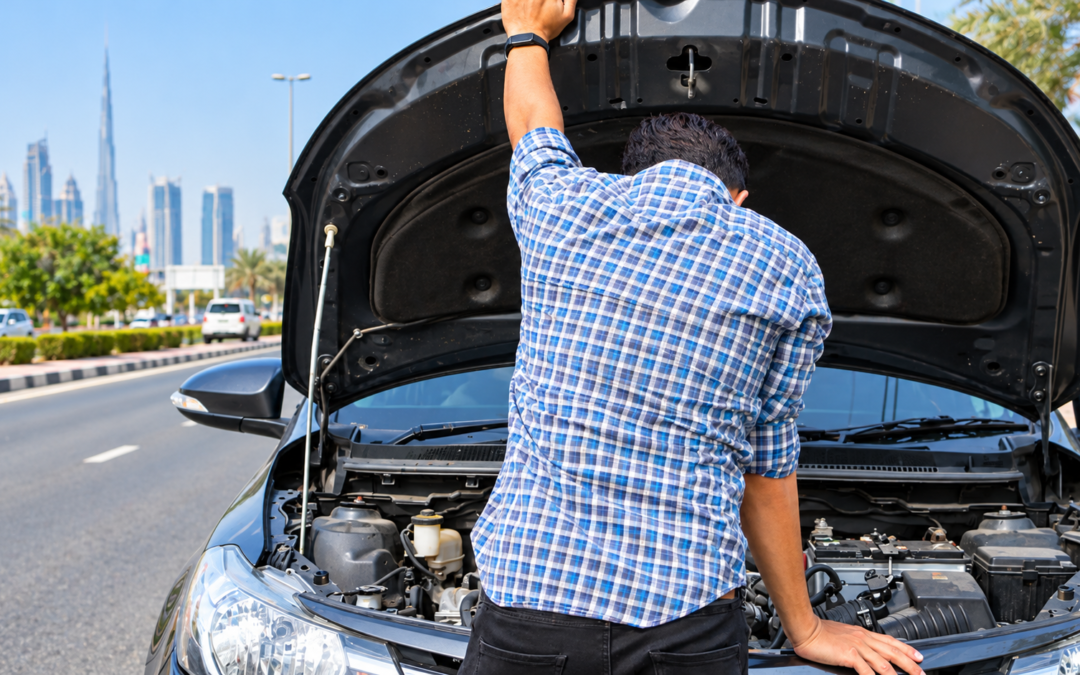
Driving in Dubai means high summer temperatures, stop-start traffic, long motorway journeys and occasional dust exposure. These conditions do not automatically cause a breakdown, but they can expose weak batteries, marginal cooling systems, worn tyres and neglected maintenance. When something goes wrong, the most useful question is not simply “What part should I replace?” It is “What does this symptom mean, is it safe to keep driving, and which checks will identify the real cause?”
This Dubai-focused guide explains twelve common car problems, their likely causes, safe first steps, professional diagnostic checks and practical ways to reduce repeat failures. It is written for drivers of petrol and diesel vehicles, with notes where hybrid and electric vehicles require different procedures. It is educational information, not a substitute for your owner's manual or an inspection of the actual vehicle.
Important safety rule: Stop safely and request professional help for overheating with steam, loss of braking, severe steering problems, smoke, fuel leaks, a flashing check-engine light with rough running, or red oil-pressure warnings. Never work on high-voltage orange cables or open a hot cooling system.
Quick Dubai Car Problem Troubleshooting Table
| Symptom | Possible causes | Safest first action |
|---|---|---|
| Clicking, no start | Weak battery, terminals, starter circuit | Switch off loads; request battery/starting diagnosis |
| Temperature rising | Coolant leak, fan, thermostat, pump | Pull over safely; switch off engine if overheating |
| AC blowing warm | Leak, compressor control, condenser fan | Check settings; book AC diagnosis |
| Grinding brakes | Worn pads/rotors or brake hardware | Avoid driving if braking is impaired |
| Steering vibration | Tyre imbalance, tyre damage, suspension | Check tyres; arrange inspection |
| Flashing engine light | Possible severe misfire | Reduce load; stop safely and seek assistance |
| Transmission slipping | Fluid, control or internal gearbox fault | Avoid hard driving; arrange diagnosis |
| Burning electrical smell | Wiring or electrical fault | Stop safely; seek qualified help |
Why Dubai Conditions Matter
Heat can accelerate battery ageing and increase demands on engine cooling and cabin air conditioning. Slow traffic can reduce natural airflow through the radiator and condenser, making fan performance especially important. Dust can load filters, while long highway journeys expose tyre pressure, tread condition and alignment problems. Preventive maintenance should follow the manufacturer's UAE or severe-use guidance when applicable, rather than a single interval applied to every car.
The sections below follow a practical format: recognise the symptom, take a safe action, diagnose before replacing parts and prevent the problem from returning.
Problem 1: Car Won’t Start: Battery, Starter or Alternator?
Related search terms: car not starting Dubai, car battery replacement Dubai
A car that refuses to start in a Dubai parking basement can disrupt work, school runs and travel plans. The first clue is what happens when you press Start or turn the key. Rapid clicking and dim lights often point toward a weak 12-volt battery or poor connection. A single solid click may involve the starter circuit. If the engine cranks normally but will not fire, the problem may be fuel delivery, ignition, immobiliser communication or engine management rather than the battery.
What to do now: Switch off unnecessary electrical accessories and check whether the dashboard lights appear unusually weak. If you see loose or heavily corroded battery terminals, avoid touching damaged cables and arrange inspection. A jump-start is appropriate only when the vehicle manufacturer permits it and the correct procedure is followed. Hybrid and electric vehicles can have special low-voltage jump points; never connect equipment to orange high-voltage cables.
How a technician should diagnose it: Test battery state of charge and health, inspect terminal and ground resistance, measure voltage drop under load and check alternator charging after starting where applicable. Starter-current and scan-tool tests may be needed. Replacing the battery without checking the charging system can leave the underlying fault unresolved.
Dubai prevention tip: Heat accelerates battery ageing. Ask for a battery health test before summer travel, especially if the engine cranks slowly or the vehicle repeatedly needs a boost. Battery life varies by design, driving pattern and installation; age alone does not prove failure.
Problem 2: Engine Overheating in Dubai Traffic
Related search terms: car overheating Dubai, radiator repair Dubai
A rising temperature gauge, coolant warning, steam or a sudden loss of air-conditioning performance may indicate a cooling-system fault. Common causes include low coolant, a leaking hose or radiator, an inoperative cooling fan, thermostat trouble, water-pump failure or restricted coolant flow. Dubai's hot weather and slow traffic make a marginal cooling system more likely to reveal itself.
What to do now: Turn off the air conditioner, find a safe place to stop and switch off the engine if overheating continues or the warning is severe. Do not remove a hot radiator or expansion-tank cap: pressurised coolant can cause serious burns. If steam is escaping, stay clear of the engine bay until it cools. Arrange recovery rather than driving with repeated overheating.
What proper repair involves: A technician may pressure-test the cooling system, inspect fan operation, verify thermostat and water-pump function, check coolant concentration and scan temperature sensor data. If coolant keeps disappearing without an external leak, further checks may be needed for internal engine problems.
Avoid the common mistake: Repeatedly topping up with plain water can dilute corrosion protection. Use the manufacturer's specified coolant and mixture. A head-gasket repair is much more expensive than addressing a leaking hose early, but no single symptom proves a head-gasket failure.
Problem 3: Car AC Not Cooling Properly
Related search terms: car AC repair Dubai, AC compressor repair Dubai
Weak air conditioning is more than an inconvenience in UAE summer. A system that blows warm air at idle but cools while driving may have condenser airflow or cooling-fan trouble. Cooling that gradually fades can result from refrigerant leakage, an obstructed cabin filter, blend-door faults or compressor-control problems. A musty smell points to a different problem from a loss of cooling.
What to do now: Check whether the cabin filter is heavily restricted, whether the AC is set to recirculation and whether the condenser area is visibly blocked by debris. Do not release refrigerant or connect an unapproved refill can. Refrigerant type and charge quantity differ between vehicles, and overcharging can damage components.
What to ask the workshop: Request vent-temperature and system-pressure checks interpreted alongside ambient temperature, condenser-fan testing and leak diagnosis before refrigerant recharge. Modern variable-displacement compressors may not have a traditional clutch, so a simple visual test can be misleading. If a leak is confirmed, repair it and recharge by the specified weight.
Dubai prevention tip: Park in shade when possible, use sunshades and ventilate a heat-soaked cabin before demanding maximum cooling. These measures reduce cabin heat load but do not replace a mechanical repair.
Problem 4: Brake Squealing, Grinding or Weak Braking
Related search terms: brake repair Dubai, brake pad replacement Dubai
A short squeak after washing can be different from persistent grinding, pulsation or a soft pedal. Brake noise may arise from worn pads, glazing, dust, hardware movement or rotor condition. Grinding accompanied by reduced stopping performance deserves urgent attention. A soft or sinking brake pedal may indicate a hydraulic problem and should not be treated as routine wear.
What to do now: If braking feels weak, the pedal sinks, the car pulls sharply or a brake warning light appears, stop driving safely and request professional assistance. Do not keep testing a suspected failure in traffic. Avoid spraying lubricants on brake discs or pads.
Inspection checklist: A proper brake inspection measures pad and rotor thickness, checks calliper slides, hoses, fluid condition, leaks and electronic brake-system faults where relevant. Vibration does not always mean the discs are simply 'warped'; uneven rotor thickness, deposits and suspension issues can create similar sensations.
Dubai prevention tip: Stop-start traffic increases brake use. Follow the vehicle's service schedule and have unusual noise assessed promptly rather than waiting for a fixed mileage interval.
Problem 5: Uneven Tyre Wear, Low Pressure and Highway Vibration
Related search terms: tyre repair Dubai, wheel alignment Dubai
Tyres face intense heat, long highway journeys and frequent kerb contact in the UAE. Underinflation raises heat build-up and rolling resistance, while overinflation can reduce ride comfort and alter the contact patch. Uneven shoulder wear may point to alignment, inflation or suspension problems. A steering-wheel vibration at certain speeds may involve wheel balance, tyre damage or other rotating components.
What to do now: Measure pressure when tyres are cold and use the vehicle's door-jamb placard rather than the maximum pressure printed on the tyre sidewall. Inspect for cuts, bulges, exposed cords or objects embedded in the tread. A bulge or structural damage requires prompt replacement, not a cosmetic patch.
Workshop diagnosis: Check tread depth across each tyre, date and condition, alignment readings, wheel balance and steering/suspension play. Rotation patterns depend on drivetrain, tyre size and directional tread; do not assume diagonal rotation suits every vehicle.
Dubai prevention tip: Before inter-emirate travel, inspect tyres and the spare or tyre-repair kit. Heat and speed magnify the consequences of neglected tyre damage.
Problem 6: Check Engine Light, Misfiring and Rough Idle
Related search terms: check engine light Dubai, car computer diagnostics Dubai
A steady check-engine light means the engine-management system has detected a condition that deserves investigation. It can involve ignition, emissions, sensors, intake leaks or fuel delivery. A flashing check-engine light, especially with shaking or loss of power, can indicate a damaging misfire; reduce demand, stop safely and seek assistance rather than continuing a long drive.
What to do now: Record when the warning appeared, whether the car hesitates and whether the problem occurs only when hot or under acceleration. Check the fuel cap if the manufacturer uses one and the car otherwise drives normally, but do not assume that a loose cap explains every light. Do not erase codes before a technician records them.
Correct diagnosis: Read diagnostic trouble codes, freeze-frame data and live sensor information; inspect ignition coils, spark plugs, air intake, fuel pressure and relevant mechanical conditions. A code identifies a system or symptom, not automatically a part that must be replaced.
Dubai prevention tip: Service ignition and air filtration according to the manufacturer's schedule and investigate repeated rough running promptly. Prolonged misfiring can overheat the catalytic converter.
Problem 7: Oil Leaks, Low Oil Pressure and Burning Smells
Related search terms: engine oil leak repair Dubai, engine repair Dubai
Oil spots under a parked car may come from a drain plug, filter housing, gasket, seal or other component. A burning-oil smell can occur when leaking oil reaches hot exhaust surfaces. A low-oil-pressure warning is more serious than an ordinary service reminder: continuing to run the engine can cause rapid damage.
What to do now: If the red oil-pressure warning appears while driving, stop safely and switch off the engine. Check the owner's manual and arrange recovery if necessary. When the engine is cool and the vehicle is on level ground, you may check the dipstick if your model has one. Do not add oil blindly without checking the correct grade and level.
How to solve it: Identify the leak source, clean and inspect the affected area, repair failed seals or housings and verify oil pressure if a warning occurred. A technician may need to distinguish oil from transmission fluid, coolant or AC condensate.
Dubai prevention tip: Monitor the parking space and investigate new stains early. Repeatedly adding oil without finding the leak can mask worsening damage.
Problem 8: Transmission Jerks, Slips or Delayed Engagement
Related search terms: gearbox repair Dubai, transmission repair Dubai
A gearbox that hesitates when selecting Drive, jolts during shifts or allows engine speed to rise without matching acceleration may have a transmission problem. Causes range from low or degraded fluid and electronic-control issues to worn internal components. Different automatic, CVT and dual-clutch systems behave differently, so diagnosis must be model-specific.
What to do now: Avoid aggressive acceleration and towing if the transmission is slipping or overheating. If the car barely moves, makes severe noises or displays a transmission-overheat warning, stop safely and arrange recovery. Do not add universal transmission fluid: incorrect fluid can damage the unit.
Diagnostic approach: Check stored faults, fluid condition where serviceable, temperature data, external leaks, mounts and software-related service bulletins. A road test under controlled conditions may help separate engine hesitation from actual gear slip.
Dubai prevention tip: Follow the exact gearbox service specification for your vehicle, particularly under severe-use conditions. 'Lifetime fluid' marketing does not mean every transmission is immune to heat-related wear.
Problem 9: Suspension Knocking, Steering Pull and Noisy Belts
Related search terms: suspension repair Dubai, steering repair Dubai
Clunks over speed bumps, rattles on rough roads and steering that wanders may involve worn bushes, ball joints, tie rods, shocks or mounts. A squeal from the engine bay may come from a belt or pulley, but not every engine accessory is belt-driven on every vehicle. Identifying when a sound occurs is more useful than guessing the part.
What to do now: Note whether the noise appears during braking, turning, acceleration or bumps. If steering feels loose, a wheel appears misaligned after impact or the car becomes unstable, avoid further driving until inspected. Do not place hands near moving belts or fans.
Workshop checks: Inspect suspension joints, bushings, dampers, steering linkage, wheel bearings, mounts and drive-belt condition as applicable. Alignment should follow repairs that affect geometry, rather than being used to hide worn components.
Dubai prevention tip: Parking ramps, kerbs and repeated speed humps can reveal wear. Report new noises before a small joint problem affects tyre wear or vehicle control.
Problem 10: Fuel Economy Suddenly Gets Worse
Related search terms: poor fuel economy Dubai, engine diagnostics Dubai
A noticeable increase in fuel use can result from tyre pressure, heavy AC demand, traffic, driving style or mechanical faults. Dragging brakes, misfires, air-flow problems, thermostat faults and incorrect sensor readings can all contribute. Compare consumption over several similar trips instead of reacting to one unusually congested day.
What to do now: Check tyre pressures, remove unnecessary load and look for warning lights or changes in idle quality. Avoid aftermarket 'fuel saver' devices with unproven claims. If fuel consumption worsens alongside a petrol smell, misfire or poor acceleration, arrange diagnosis promptly.
Professional checks: Review fuel trims, engine temperature, fault codes, brake drag, air intake and maintenance history. Fixing the actual cause is more effective than replacing sensors at random.
Dubai prevention tip: Summer AC use and idling can change consumption substantially. Track litres filled and distance travelled to compare trends rather than relying only on a dashboard estimate.
Problem 11: Electrical Faults, Flickering Lights and Repeated Battery Drain
Related search terms: car electrical repair Dubai, alternator repair Dubai
Flickering lights, intermittent dashboard warnings and a battery that repeatedly goes flat can point to a charging issue, a poor ground connection, damaged wiring or an accessory that stays awake after the car is parked. A battery replacement alone will not fix an excessive parasitic drain.
What to do now: Record which accessories fail and whether symptoms occur after rain, washing or overnight parking. If you smell burning insulation, see smoke or notice hot wiring, stop using the vehicle and seek qualified assistance. Avoid fitting oversized fuses or bypassing protective circuits.
How technicians trace it: Verify battery health and alternator output, perform voltage-drop testing, inspect connectors and ground straps and measure sleep-state current using a manufacturer-appropriate procedure. Modern vehicles may need time for modules to enter sleep mode.
Dubai prevention tip: Ensure aftermarket dashcams, trackers and audio equipment are installed with appropriate power management. Poor accessories can cause recurring flat-battery complaints.
Problem 12: Car Stalls, Loses Power or Enters Limp Mode
Related search terms: car loses power Dubai, car diagnostics Dubai
Sudden loss of power on a Dubai highway is a safety concern. An engine may enter reduced-power mode to protect itself when it detects overheating, boost-control issues, sensor faults or transmission trouble. Stalling may involve fuel supply, ignition, electrical power or other systems.
What to do now: Switch on hazard lights if appropriate, move to a safe location when possible and avoid attempting repeated high-speed restarts. If you cannot safely leave the roadway, follow local road-safety instructions and contact roadside assistance or emergency services as needed.
Correct repair sequence: Document warnings and driving conditions, retrieve fault and freeze-frame data, check relevant power and fuel systems and perform controlled verification after repairs. A cleared warning light is not proof the fault is resolved.
Dubai prevention tip: Have recurring hesitation or warning lights diagnosed before long journeys. Keep a roadside contact number available and share your exact location when requesting help.
How to Decide: Drive, Book an Inspection or Request Recovery?
Not every warning means the vehicle must be towed, but certain symptoms should never be treated as minor. A slightly weak AC system with normal engine temperature usually allows a planned appointment. A battery that is slow to crank may justify prompt testing before it leaves you stranded. In contrast, a sinking brake pedal, serious overheating, red oil-pressure warning, severe steering instability, smoke or a fuel leak calls for immediate safety-first action and professional assistance.
If you are unsure, describe the symptom rather than naming the repair you think you need. Tell the technician the vehicle's make, model, year, location, when the issue began, which warning lights are on and whether the problem occurs when hot, cold, moving or idling. Photos of the dashboard warning can help, provided they are taken only when the vehicle is safely parked.
A Dubai Preventive Maintenance Checklist
- Weekly or before long trips: Look for fresh leaks, inspect tyres visually and check warning lights.
- At manufacturer-recommended intervals: Check tyre pressures cold, engine oil level where applicable, coolant level when cold and scheduled servicing.
- Before peak summer: Test a marginal battery, verify AC cooling and cooling-fan performance, and inspect the engine cooling system.
- After kerb strikes or strong vibration: Inspect tyre condition, wheels, alignment and suspension.
- When buying a used car: Request diagnostic scanning, accident and service history checks, cooling and AC assessment, brake and tyre inspection, and vehicle-specific hybrid/EV checks when relevant.
The right maintenance interval depends on your vehicle, age, mileage and manufacturer recommendations. Avoid universal promises that every battery, coolant or brake part must be replaced after a fixed number of months.
Frequently Asked Questions About Car Problems in Dubai
What is the most common reason a car will not start in Dubai?
A weak 12-volt battery is one common cause, but starter-circuit faults, bad connections, immobiliser issues and engine-management problems can create similar symptoms. Battery testing and voltage-drop checks help distinguish them.
Why does my car overheat only in traffic?
Low-speed driving reduces natural airflow. A failed radiator fan, marginal cooling system, low coolant or condenser/radiator obstruction may become more noticeable while idling. Do not continue driving when the engine is overheating.
Why does my car AC cool while driving but not when stopped?
Condenser airflow and cooling-fan problems are possible causes, but refrigerant and compressor-control issues also need assessment. Request a proper diagnosis instead of automatically topping up gas.
Can I keep driving with the check-engine light on?
A steady light requires investigation, even if the car seems normal. A flashing light, severe rough running, loss of power or other urgent warnings should prompt safe stopping and professional advice.
How often should I check tyre pressure in Dubai?
Check it regularly and before long trips, using the cold-pressure specification on your vehicle's placard. Also inspect for damage and uneven wear. Pressure changes with temperature and driving.
Is a squeaking brake always dangerous?
Not always; dust, moisture and pad material can cause noise. Persistent squealing, grinding, reduced stopping power, pulling or a soft pedal needs inspection, and impaired braking makes continued driving unsafe.
Can a new battery go flat again?
Yes. A faulty alternator, poor connection, parasitic electrical drain or installation problem can discharge a new battery. Testing the whole system is important.
How much does car repair cost in Dubai?
Costs depend on the exact fault, make and model, diagnostic time, parts quality and labour. Ask for an itemised estimate after inspection rather than relying on an unverified generic price.
Can mobile mechanics fix every car problem?
Some battery, basic electrical and inspection tasks may be suitable on-site. Serious brake faults, internal engine work, transmission repairs and high-voltage vehicle systems may need specialist equipment or workshop conditions. Confirm service eligibility.
What information should I send when booking a diagnosis?
Share your make, model, year, Dubai location, symptom description, dashboard warning messages and whether the vehicle can move safely. This helps determine whether inspection, mobile support or recovery is appropriate.
Get Help With Car Problems in Dubai
95 Services provides automotive service enquiries in Dubai. If your car will not start, overheats, has weak AC, warning lights or unusual noises, ask which diagnostic or repair options are available for your exact vehicle. Work scope, location coverage, parts and any pricing should be confirmed before booking.
Call: +971 54 344 3513
WhatsApp: Ask 95 Services about a car problem
Related guides: Car battery replacement · Engine warning signs · Why cars overheat in Dubai
Editorial note: This guide is written for Dubai/UAE driving conditions and focuses on safe, symptom-based diagnosis. It does not promise a specific repair result or replace a manufacturer-approved service procedure.