
Hybrid vs PHEV vs Electric Cars in UAE: Which One Solves Your Driving Problems?
A practical Dubai guide to charging access, real running costs, summer range, maintenance and buying a used electrified car—without the marketing hype.
Hybrid (HEV)
Petrol engine plus electric assistance. No plug needed. Good starting point if reliable charging is unavailable.
Plug-in Hybrid (PHEV)
Charge the larger battery for shorter electric journeys; petrol provides flexibility when needed.
Electric (EV)
Fully battery-powered. Best ownership experience usually depends on reliable charging access.
Buying an electrified car in Dubai is not just about saving petrol. The right choice depends on whether you can charge at home, how far you drive each day, how often you travel between emirates, and whether you are buying new or used. This guide tackles the practical problems that make UAE buyers hesitate—and gives you a decision process rather than a blanket recommendation.
Quick answer: Which type solves your main problem?
| Your situation | Start by comparing | Why |
|---|---|---|
| No dependable charging at home or work | Conventional hybrid (HEV) | No plug needed; petrol backup is built in |
| Daily commute can fit within a PHEV's usable electric range, and you can plug in regularly | Plug-in hybrid (PHEV) | Electric trips plus petrol flexibility |
| Dedicated home/work charging and predictable driving | Battery electric vehicle (BEV/EV) | No petrol engine and convenient routine charging |
| Frequent unplanned inter-emirate trips | HEV or PHEV; compare EV route options too | Less dependence on charger stops |
| Buying used and worried about expensive repairs | Compare battery health, warranty and inspection access | Condition matters more than the badge |
A PHEV is not automatically the best middle ground. If you rarely charge it, you may carry the weight and cost of a larger battery without using much electric driving. Equally, an EV can be straightforward for someone with reliable overnight charging.
Problem 1: “I live in a Dubai apartment and cannot install a charger”
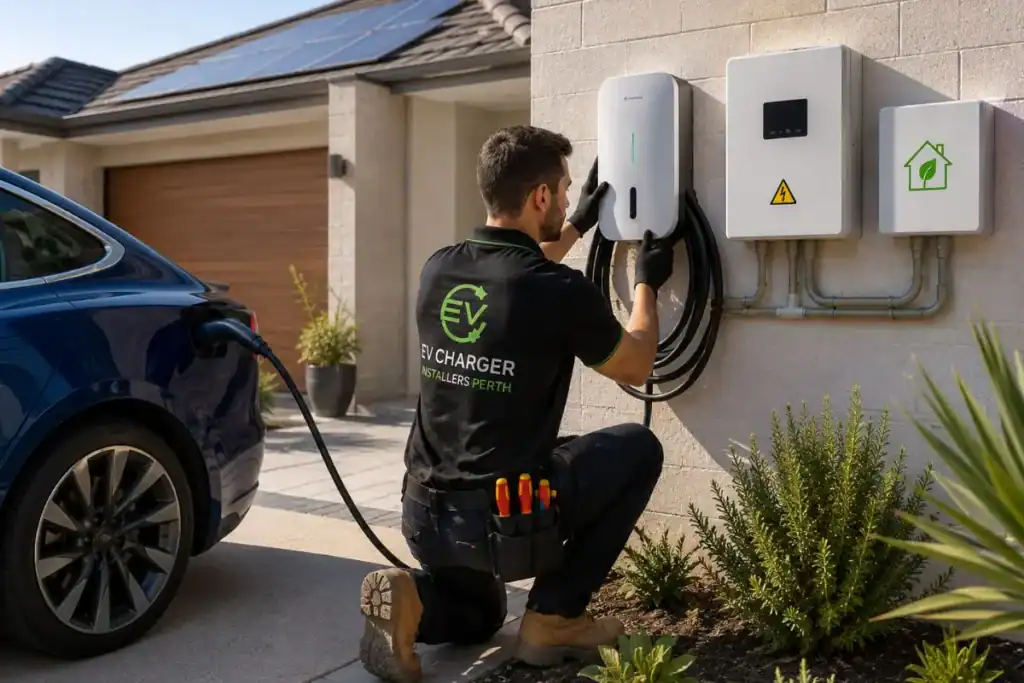
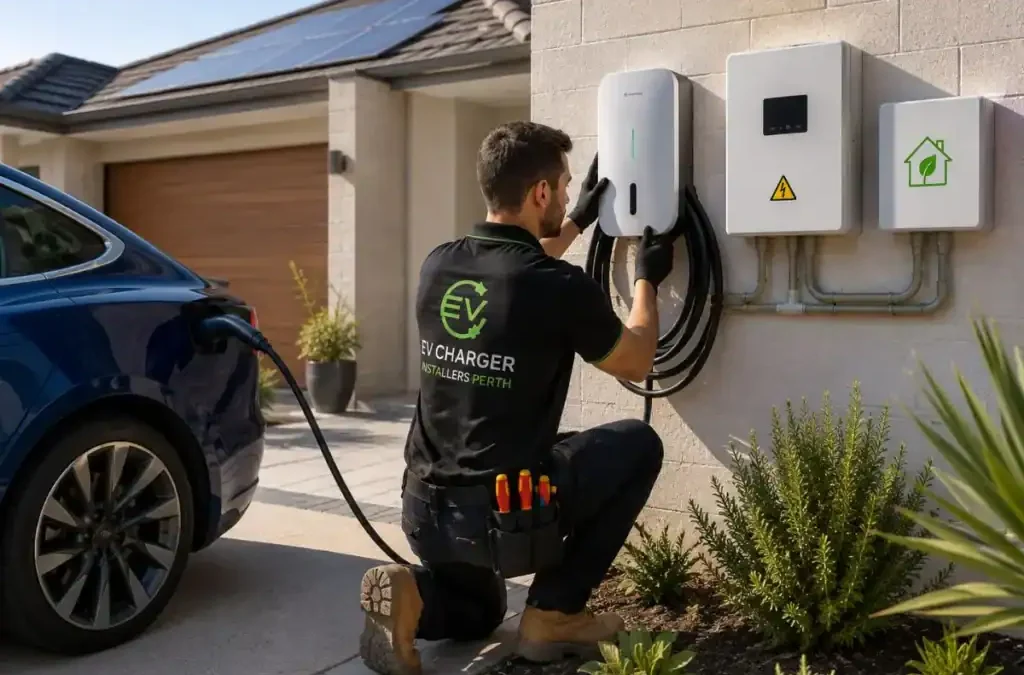
Why this matters: A full EV needs dependable charging. A PHEV delivers its strongest electric-driving benefit when it is plugged in regularly. Apartment parking rules, assigned bays and building approval can make that difficult.
Practical solution: Ask building management whether an approved charging installation is possible, whether your bay has access to metered power, and what permissions and installation costs apply. DEWA says home charging installations in Dubai should use DEWA-approved electrical contractors and that home charging electricity appears on the residential bill. Do not run an improvised extension lead through common areas. Source: DEWA EV charging FAQ.
If charging cannot be arranged, list chargers you could actually use near work or your regular errands. Check connector compatibility, operating access, parking fees, charger power and the time your car would occupy the bay. If charging remains inconvenient, an HEV may be the simpler option.
Problem 2: “Will public charging really cost less than petrol?”
The important number is energy used per 100 km, not just the price displayed at a charging station. For registered DEWA EV Green Charger users, published public charging rates are AED 0.70/kWh for AC and AED 1.20/kWh for DC, before VAT. Other access methods and providers can have different conditions, so confirm the displayed price before charging. Source: DEWA.
Worked Dubai example—not a vehicle quotation
Assume an EV uses 18 kWh per 100 km. At the above public rates, energy costs are approximately:
| Charging method | Example energy cost per 100 km (before VAT) |
|---|---|
| Public AC at AED 0.70/kWh | AED 12.60 |
| Public DC at AED 1.20/kWh | AED 21.60 |
For a petrol car using 7 L/100 km, multiply 7 by the current petrol price per litre to compare. For example, if fuel were hypothetically AED 2.70/L, the result would be AED 18.90/100 km. That petrol price is only an illustration, not a current UAE price quote.
Real-world results differ with traffic, speed, air-conditioning, vehicle size, tyre pressure, charging losses and battery temperature. Home electricity rates depend on your bill and consumption tier. Include charging-session fees or parking charges if applicable.
Decision: If you would rely mainly on DC fast charging, compare the actual total cost against a fuel-efficient hybrid—not against an inefficient petrol SUV.
Problem 3: “Will an electric car lose too much range in UAE summer?”

Extreme heat increases air-conditioning demand and can change battery thermal-management energy use. Highway speed, heavy loads and repeated short trips also affect consumption. The range displayed by a vehicle is an estimate, not a promise for every Dubai-to-Abu Dhabi journey.
Practical solution: Before buying, compare real highway efficiency in hot weather for the exact model. Plan a comfortable arrival buffer rather than using every kilometre of the displayed range. Pre-cool the cabin while plugged in when supported, park in shade where practical, maintain recommended tyre pressure and avoid unnecessary high-speed driving. Never disable battery cooling systems to save energy.
For a PHEV, confirm its real electric-only range with AC operating and how it behaves once the battery's usable electric charge is depleted. For an HEV, assess real fuel economy in your own driving mix.
Problem 4: “I drive Dubai–Abu Dhabi or other long routes unexpectedly”

An HEV refuels like a conventional petrol car. A PHEV can continue on petrol after its usable electric charge is depleted. An EV needs route planning and a charging stop when the distance exceeds comfortable range.
Practical solution: For EV ownership, check chargers on your actual route in the operator's live map or app before departure, and identify a backup location. Confirm charger connector type and the vehicle's supported DC charging speed; a high-power charger does not mean every EV charges at that maximum rate. Allow extra time for traffic, heat, queueing and a charger that is unavailable.
Dubai's charging network is growing: DEWA reported 2,826 charging points by the end of Q3 2026, including licensed independent operators. A network-wide count does not guarantee an available compatible charger at your chosen stop. Source: DEWA, October 2026.
Problem 5: “Is a PHEV cheaper than a hybrid if I never plug it in?”
Not necessarily. A PHEV usually has a larger battery and more charging hardware than an HEV. Without frequent charging, it may operate mainly on petrol and deliver less benefit than expected. Compare official fuel-consumption figures for charge-sustaining operation where available, not just an eye-catching combined test-cycle number.
Practical solution: Calculate the percentage of your weekly kilometres you can genuinely drive electrically. If you can charge overnight and your weekday routes fit within the car's usable electric range, a PHEV can make sense. If you cannot plug in at least regularly, compare an efficient HEV's price and fuel use carefully.
Problem 6: “Will maintenance or battery replacement be expensive?”
Each powertrain has a different repair profile:
- HEV: Petrol engine servicing remains necessary; hybrid battery, inverter, cooling and electrical systems also need specialist diagnosis when faults occur.
- PHEV: Combines an engine, charging system and larger high-voltage battery. Follow both engine-service and high-voltage maintenance guidance.
- EV: No engine oil changes, but tyres, brakes, suspension, cabin filters, cooling systems and high-voltage components still need attention. Repairs involving batteries, inverters or charging hardware can be specialist work.
Practical solution: Before purchase, obtain the manufacturer's UAE warranty terms for the traction battery and other high-voltage parts. Ask whether coverage transfers to a second owner, what exclusions apply, and where authorised repairs are performed. Do not assume every independent garage can service high-voltage components. High-voltage work should only be performed by appropriately trained technicians.
Problem 7: “How do I avoid buying a used hybrid or EV with hidden faults?”
A general road test is not enough. Ask for a vehicle-specific pre-purchase inspection covering:
- Battery health: Obtain a manufacturer-compatible traction-battery health report where available; a dashboard range estimate alone is not a reliable health test.
- Charging: Verify the charge port, AC charging function and, for EVs, DC charging where feasible and safe.
- Cooling: Check cabin AC and battery/drive-unit thermal-management faults, especially important in hot conditions.
- Fault codes: Scan the relevant modules using suitable diagnostic equipment; generic OBD readers may not access every hybrid/EV module.
- Accident and flood history: Inspect the underbody, battery enclosure, wiring connectors and documented repair history.
- Warranty and recalls: Confirm remaining warranty, service history, recall status and UAE-market parts support.
- Tyres and suspension: Look for uneven wear, vibration, alignment problems and damage that can reduce efficiency and safety.
Do not open, probe or dismantle a high-voltage battery as part of a casual inspection.
Problem 8: “What if my hybrid or EV stops working?”
A car that will not start may have a low-voltage (often 12V) battery issue, a high-voltage-system fault, charging problem or control-system issue. The correct response depends on the warning messages and vehicle design.
If you see smoke, smell burning, notice liquid leaking near electrical components or receive a serious high-voltage warning, stop safely and arrange qualified assistance. Do not touch orange high-voltage cables or attempt improvised jump-start procedures. Use the manufacturer's instructions for low-voltage battery support and towing; incorrect towing can damage some electric drivetrains.
For a routine non-start, record the exact warning message, vehicle model/year and recent charging or service history. Share these with a qualified technician before authorising parts replacement.
Dubai buyer's five-minute decision checklist
- Charging: Can I reliably charge at home or work at least several times a week?
- Distance: What is my typical daily distance, and what is my longest unplanned trip?
- Costs: Have I compared purchase price, insurance, electricity/petrol, maintenance and depreciation—not only fuel savings?
- Vehicle: Is the exact UAE-spec model supported for charging, parts and warranty locally?
- Inspection: If used, have I obtained a proper battery, diagnostic and accident-history assessment?
A realistic recommendation by lifestyle
If you cannot plug in, begin with an HEV. If you can charge regularly but still want petrol flexibility for unpredictable trips, compare PHEVs. If you have dependable charging and your usual routes fit comfortably within the vehicle's real-world range, evaluate EVs. The answer can change by model, budget and parking arrangement.
Frequently asked questions
Can a PHEV drive without charging?
Yes. It can generally continue using its petrol engine when usable plug-in charge is low, but fuel economy and performance depend on the model and driving conditions.
Does a normal hybrid need a charger?
No. A conventional HEV charges its smaller battery through vehicle operation, including regenerative braking and engine power.
Are EV charging stations free in Dubai?
Do not assume so. DEWA publishes paid public charging tariffs; check the specific operator and station before use.
Is an EV cheaper to maintain than a hybrid?
It may require fewer conventional engine services, but tyre, brake, suspension, cooling and electrical work still cost money. High-voltage repairs can be expensive.
Can I charge an EV from an apartment socket?
Only use an installation and charging arrangement approved for the building, electrical supply and vehicle. Ask management and a DEWA-approved electrical contractor about compliant options.
Is a PHEV the best option for Dubai families?
It can be suitable when regularly charged and used for mixed short and long trips. Without charging access, an HEV may be more practical; with excellent charging access, an EV may be simpler.
Final verdict: Solve your own driving problem first
The best electrified vehicle for UAE roads is the one that fits your actual parking, charging, distance and ownership budget. Do not buy a PHEV solely for an advertised electric range if you cannot plug it in. Do not rule out an EV solely because you occasionally drive between emirates—check the exact model's real range and your route's charging options. And do not overlook an HEV if charging access is uncertain.
Need a vehicle inspection in Dubai? Contact 95 Services for information about available diagnostic and pre-purchase inspection services. Confirm hybrid or high-voltage EV inspection capability for your exact model before booking. Call +971 54 344 3513 or send a WhatsApp enquiry.
Sources and further reading: DEWA EV charging FAQ · DEWA charging infrastructure update, October 2026 · UAE National EV Policy.
Dubai buyer action plan: five checks before you pay a deposit
1. Map a normal week: Write down your weekday distance, peak traffic routes, weekend mileage and any regular trips between Dubai, Sharjah, Abu Dhabi or other emirates. Compare that pattern with the usable electric range of the specific model rather than the headline laboratory figure. Air conditioning, speed, hills and passengers can change actual consumption.
2. Verify your charging plan: If you park in an apartment building, ask management about approved installation, electricity metering and access to your assigned space. If you will use public charging, test the stations you intend to depend on at the actual times you travel. Confirm the connector, app, parking rules and payment process.
3. Request a complete ownership quotation: Include vehicle price, insurance, registration, finance, routine servicing, tyres, fuel or electricity and any charger installation. Ask the dealer which battery and electrical components are covered by warranty and whether the warranty transfers to a second owner.
4. Inspect the exact used vehicle: Request service records, accident and flood history, diagnostic reports, charging tests and battery health information where available. A short test drive cannot reliably establish high-voltage battery condition. Have any high-voltage inspection performed only by appropriately trained personnel.
5. Compare convenience as well as cost: A cheaper estimated energy bill does not compensate for a charging routine that disrupts work or family plans. Equally, an owner with overnight charging may find that a fully electric car is the simplest daily choice. Select the option that works on an ordinary Tuesday, not just on a perfect test drive.
Costs are illustrative unless explicitly attributed to an official source. Confirm current tariffs, charger access, vehicle specifications and service availability before making a decision.