

Dubai is one of the hardest places on earth for a car. Summer temperatures past 45°C, year-round air conditioning load, dusty air, stop-start traffic, and long highway runs at speed all wear components faster than the same driving would in a mild climate. The good news is that most heat-related breakdowns are preventable: a small set of regular checks, done consistently, catches the problems that strand drivers — flat batteries, burst hoses, worn tyres, and overheating engines — while they are still cheap and convenient to fix.
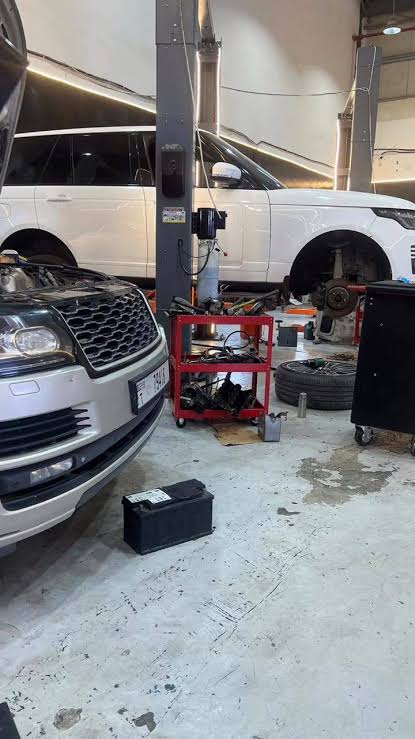
These are the maintenance habits that matter most for Dubai drivers, organised by system, with what to check, what the warning signs look like, and when to call for professional help instead of carrying on.
Cooling System: The One That Strands Cars in Summer
Overheating is the classic Dubai breakdown, and it almost always gives warning first. The cooling system — radiator, hoses, water pump, thermostat, coolant, and fans — works harder here than anywhere else, and a weak point that would survive a cool climate fails in August traffic. Check the coolant level regularly when the engine is cold, and look for the signs of trouble: a temperature gauge creeping above normal, a sweet smell from the engine bay, puddles of green, pink, or orange fluid under the car, and visible cracks, swelling, or soft spots on hoses.
Never open a radiator cap or coolant reservoir cap on a hot engine — the system is pressurised and the coolant can scald. If the temperature gauge climbs into the red, switch off the air conditioning, turn the heater to maximum to draw heat from the engine, and pull over safely as soon as possible. Do not keep driving to "reach the next exit" — an overheated engine can warp a cylinder head in minutes, turning a hose or thermostat job into an engine rebuild. If the car has overheated, it needs inspection before it is driven again, because the cause — a leak, a failed fan, a stuck thermostat, a worn water pump — is still there. For the warning signs that should never be ignored, read the guide to engine warning signs.
Tyres: Pressure, Tread, and Heat Ageing
Tyres are the only part of the car that touches the road, and in UAE heat they age faster than their tread wear suggests. Rubber hardens and cracks with heat and sun exposure, so a tyre with legal tread can still be unsafe if it is old — check the manufacture date on the sidewall and treat cracking, bulges, or flat spots as replacement signals regardless of tread depth.
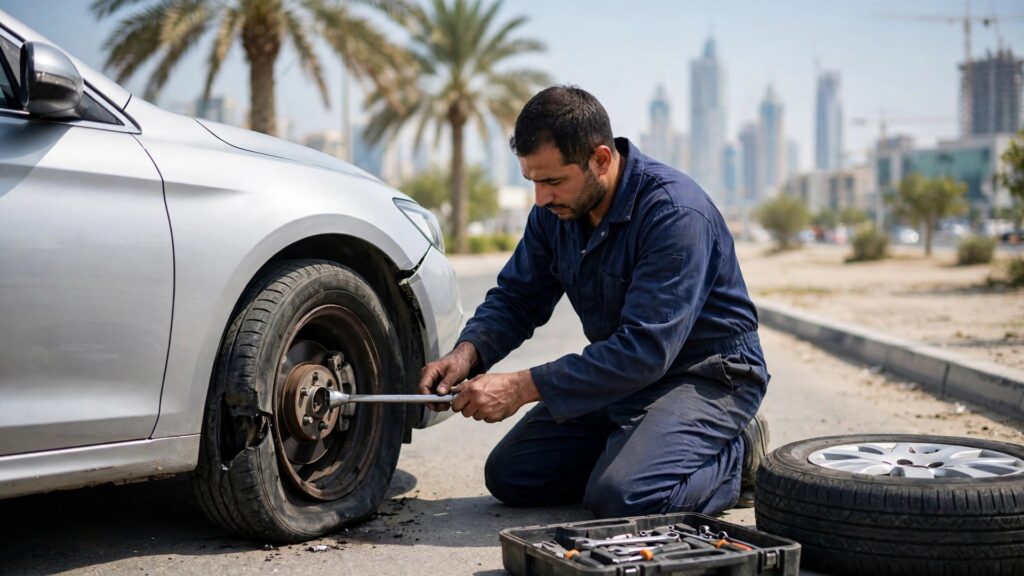
Pressure deserves a monthly check with a proper gauge, when the tyres are cold, against the pressures on the driver's door jamb or fuel flap — not the maximum printed on the tyre sidewall. Under-inflation increases heat build-up, wear, and fuel consumption, and raises blowout risk at highway speeds; over-inflation reduces grip and wears the centre of the tread. Dubai's temperature swings between seasons shift pressures noticeably, so a pressure that was right in January may be wrong in July. Rotate tyres on schedule, check the spare's pressure too — a flat spare is no spare at all — and have alignment checked if the car pulls to one side or tyres wear unevenly. For punctures and damage, tyre repair services cover mobile repair and replacement, and the guide to tyre puncture repair cost explains when a puncture can be repaired and when replacement is safer.
Battery: Test Before It Fails, Not After
Heat is the battery's worst enemy. High under-bonnet temperatures accelerate self-discharge and corrode internal grids, so batteries in Dubai live shorter, harder lives than the same battery would elsewhere. Short trips make it worse: frequent starts with little driving never fully recharge the battery, leaving it partly discharged — the state in which sulphation damages the plates.
Watch for the early signs: slow cranking, dim headlights at idle that brighten with revs, a battery warning light, corrosion around the terminals, and electrical quirks such as slow windows or a resetting clock. A battery test at the first slow crank is a planned replacement at a convenient time; the same battery ignored becomes a no-start in a basement car park. Keep terminals clean, dry, and tight, and the hold-down secure — vibration cracks internal connections. When replacement is needed, mobile car battery replacement brings testing, fitting, and charging-system checks to the car, and the guide to a car battery dying overnight explains the drains behind repeated discharge.
Engine Oil & Fluids: The Lifeblood Checks
Engine oil does three jobs at once — lubrication, cooling, and cleaning — and in extreme heat it degrades faster, so oil change intervals matter more here, not less. Check the oil level monthly on level ground with the engine cool, looking at both level and condition: oil that is very dark, gritty, or smells of fuel needs attention. Follow the manufacturer's interval for changes, and treat severe-service guidance seriously — Dubai's heat, dust, and traffic meet most manufacturers' definition of severe service.
The other fluids deserve the same monthly glance. Brake fluid level and colour, power steering fluid where fitted, transmission fluid condition, and windscreen washer fluid all sit in reservoirs designed to be checked quickly. A falling brake fluid level is never "just evaporation" — it signals pad wear or a leak and needs inspection. Coolant was covered above; windscreen washer fluid matters more than it sounds, because a dusty windscreen at sunset with empty washers is a genuine visibility hazard. Topping up is easy; understanding why a level dropped is the part that prevents the next failure.
Brakes: Never Postpone, Never Guess
Brakes give clear warnings, and every one of them means "inspect now". Squealing or grinding noises, a spongy or sinking pedal, vibration through the pedal or steering wheel when braking, a car that pulls to one side under braking, and a brake warning light are all inspection triggers — not items for the next service "if there is time". Brake pads wear, discs score and warp, and brake fluid absorbs moisture over time, lowering its boiling point; in sustained Dubai traffic with heavy air conditioning load, the braking system works hard for long periods.
A visual check through the wheels can show pad thickness on many cars, but the definitive check is a professional inspection measuring pads, discs, and fluid condition together. Car brake repair covers pads, discs, fluid, and stopping performance. Brakes are the one system where postponing a check to save money reliably costs more — in parts, in risk, and sometimes in far worse.
Air Conditioning: Service It Before Summer, Not During It
In Dubai, air conditioning is a safety system, not a comfort extra — a car without working AC in July is undrivable. The common failure pattern is a slow decline: cooling that weakens gradually, air that is cool but not cold, musty smells from the vents, or a compressor that cycles noisily. These are early warnings of low refrigerant, a failing compressor, a blocked condenser, or a cabin filter long past replacement.
The mistake is waiting until the AC stops entirely, because by then a small leak has often become a compressor-damaging one. Have the AC inspected before summer: refrigerant level, leak detection, condenser condition, blower operation, and cabin filter. And never let a system be "just regassed" without a leak check — refilling a leaking system is money spent twice, and the refrigerant escapes again within weeks. Car AC repair covers inspection, leak detection, and repair, and the guide to car AC not cooling after a gas refill explains what to check when a refill does not hold.
Air Filters, Wipers & Visibility: The Cheap Fixes That Matter
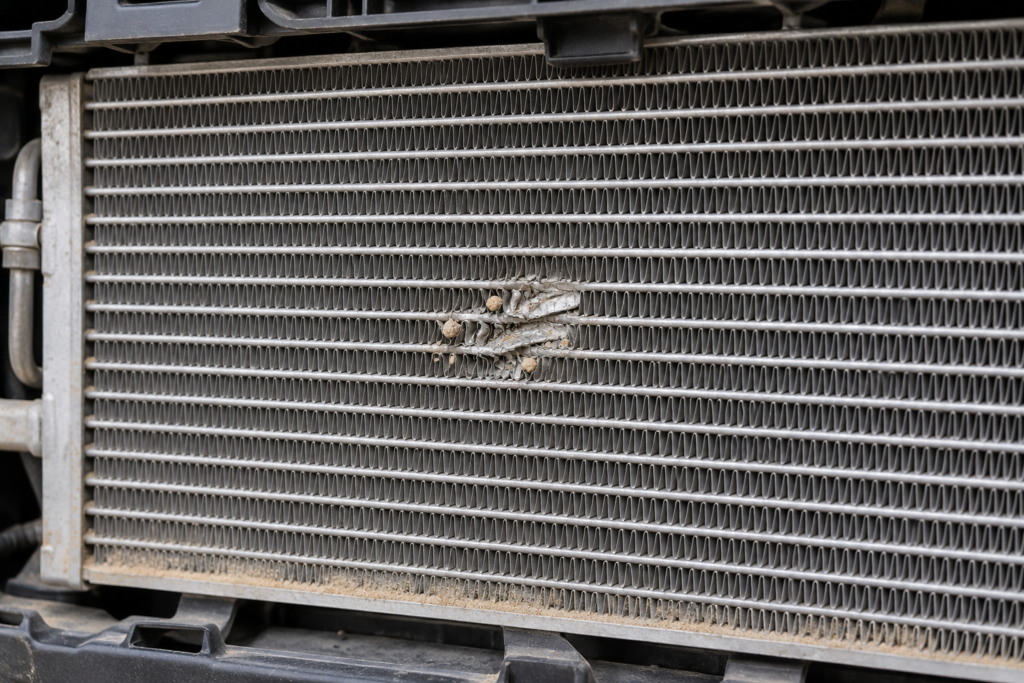
Dust is a maintenance factor in Dubai, not just a cleaning annoyance. The engine air filter clogs faster in dusty air, restricting airflow, hurting performance and fuel economy; check it on schedule and replace it when dirty rather than blowing it clean repeatedly. The cabin filter affects the air the driver breathes and the AC's airflow — a musty smell or weak vent airflow often means the cabin filter, not the AC itself.
Wiper blades harden in heat and sun, and fail exactly when they are needed — the first rain after months of dust. Replace blades at the first sign of streaking or juddering, keep washer fluid topped up, and check that all lights work: headlights, brake lights, indicators, and reverse lights. A monthly walk-around — lights, tyres, glass, wipers, and a look underneath for fresh fluid spots — takes five minutes and catches problems while they are small.
Belts, Hoses & Rubber: The Parts Heat Kills Quietly
Rubber and heat are enemies, and a car is full of rubber doing critical jobs: drive belts, coolant hoses, vacuum lines, seals, and wiper blades. In Dubai's climate these parts harden, crack, and perish faster than their mileage suggests, and they usually fail without a dashboard warning — a belt snaps, a hose bursts, and the car stops. A visual check costs nothing: look for cracks, fraying, glazing, or soft, swollen sections on belts and hoses, and listen for squealing on start-up, which often means a belt is slipping or worn. Belts and hoses are among the cheapest parts on a car and among the most expensive when they fail at speed, so replacing them on condition — at the first signs of ageing rather than at a fixed mileage — is one of the best-value habits a Dubai driver can adopt. Mention any visible cracking at the next service and have it inspected rather than noted for later.
Service Schedules: Follow the Book, Adjusted for Dubai
The manufacturer's service schedule is the baseline, but Dubai conditions justify treating the severe-service column as the real one: shorter oil change intervals, more frequent filter changes, and cooling-system attention ahead of schedule. The schedule exists to replace wear items before they fail — belts, filters, fluids, spark plugs — and skipping services to save money reliably produces the failures the schedule was designed to prevent.
Keep service records. A documented history protects warranty claims, supports resale value, and lets any technician see what has been done and what is due. When a service is booked, ask what is included and what was actually found — a good service ends with the driver knowing the car's condition, not just a stamp in a book. For the difference between minor and major services and what each should include, read the guide to car service cost in Dubai.
Paint, Interior & Sun Protection: Maintenance Is Not Only Mechanical
The Dubai sun attacks paint, trim, and interiors relentlessly. Regular washing removes dust and grit before it grinds into paintwork; parking in shade where possible, using a windscreen sunshade, and protecting leather and dashboards from direct sun slows fading and cracking. Car detailing covers interior and exterior care that protects value as well as appearance, and car PPF — paint protection film — shields paintwork from stone chips and sun damage for drivers who want long-term protection.
Interior care matters for health as well as looks: cabin filters, AC sanitisation, and regular interior cleaning keep the air in the car clean in a dusty climate. A car that is cared for inside and out is also a car whose problems get noticed earlier — the driver who washes the car sees the new leak, the cracked hose, the worn tyre, before it becomes a breakdown.
The Monthly 10-Minute Check Every Dubai Driver Should Do
Once a month, with the engine cold and the car on level ground: check tyre pressures including the spare; check engine oil level and condition; check coolant level; check brake fluid level; look under the car for fresh fluid spots; check all lights; test wipers and washer fluid; look at tyre tread and sidewalls for damage; and glance at belts and hoses for cracks. Ten minutes, no tools beyond a tyre gauge and a cloth, and it catches most developing faults before they strand anyone.
When a check finds something — a dropping fluid level, a new noise, a warning light, a vibration — the right response is inspection, not hope. Small faults found early are small bills; the same faults ignored become the breakdowns that cost real money and real time.
When to Call for Help Instead of Driving On
Some symptoms mean "stop and call", not "drive carefully to the garage". A temperature gauge in the red, a sudden loss of braking, a burst hose with fluid pouring out, smoke from the engine bay, a steering failure, or a tyre blowout all mean pulling over safely and calling for help. Driving on risks turning a repair into a replacement — or worse. 95 Services runs a 15–20 minute response time across the complete UAE: call or WhatsApp +971 54 344 3513 with a live location, vehicle details, and what happened, and help is dispatched to reach the vehicle within 20 minutes. Where the car cannot be driven, car recovery brings it to the workshop, and the fault is inspected with a confirmed quote before repair work begins.
Frequently Asked Questions
How often should I service my car in Dubai?
Follow the manufacturer's schedule, treating the severe-service intervals as the real ones for Dubai's heat, dust, and traffic. Monthly owner checks — tyres, oil, coolant, brakes, lights — sit between services and catch developing faults early.
Why do car batteries die faster in Dubai?
Heat accelerates self-discharge and internal corrosion, and short trips never fully recharge the battery. Test at the first slow crank, keep terminals clean and tight, and replace on test results rather than waiting for a no-start.
What tyre pressure should I use?
The pressures on the driver's door jamb or fuel flap, checked cold with a proper gauge — not the maximum on the tyre sidewall. Check monthly, including the spare, because temperature changes shift pressures.
My AC is getting weaker. Can I just regas it?
Only after a leak check. Refilling a leaking system wastes the refrigerant within weeks. Inspection first — refrigerant level, leak detection, condenser, and cabin filter — then regas if the system is sound.
The temperature gauge is climbing. What should I do?
Switch off the AC, turn the heater to maximum, and pull over safely as soon as possible. Do not open the cooling system when hot, and do not keep driving — get the car inspected before driving it again.
Are 95 Services prices low?
Yes — service prices are kept very low as a matter of policy. The scope and price are confirmed before repair work begins, and no work starts without the customer's approval.
Contact 95 Services: Maintenance, Repair & Fast Help Across the UAE
Whether the car needs a scheduled service, an inspection after a warning sign, or urgent help at the roadside, the first step is one call. Contact 95 Services on +971 54 344 3513 by phone or WhatsApp, or email info@95services.com, with the vehicle details, the location, and what has happened. Help is dispatched within the 15–20 minute response standard, prices stay very low, and the quote is confirmed before any work begins. The office is at Ahmed Ali Al Owais Showroom Building, Office M05, Abu Hail, Al Khabaisi, Dubai, UAE. Call before visiting so the correct service arrangement can be confirmed. For general repairs, see car repair and maintenance, or visit the contact page to send an enquiry.
