
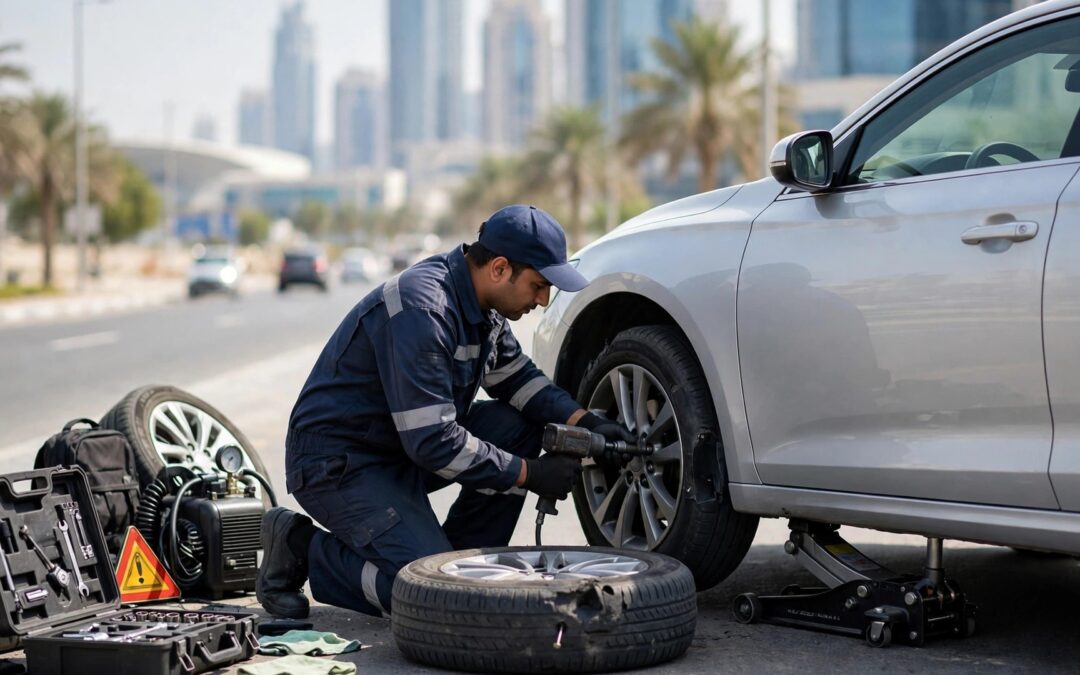
A flat tyre always arrives at the worst moment — on Sheikh Zayed Road in traffic, in a parking basement, or on the way to something important. What you do in the first few minutes matters more than most drivers realise: the right steps keep you safe, protect the wheel and tyre from further damage, and make the technician's job faster when help arrives. The wrong steps — driving on, jacking on soft ground, or changing a wheel beside moving traffic — can turn a simple puncture into a damaged rim, a ruined tyre, or something worse. This article covers exactly those first minutes: getting safe, assessing the damage, deciding whether to drive at all, preparing for the technician, and knowing what information to give when you call. The repair itself is covered in the tyre puncture repair guide, the flat tyre step-by-step guide, and the tyre repair guide — this article is about everything that happens before the repair begins.
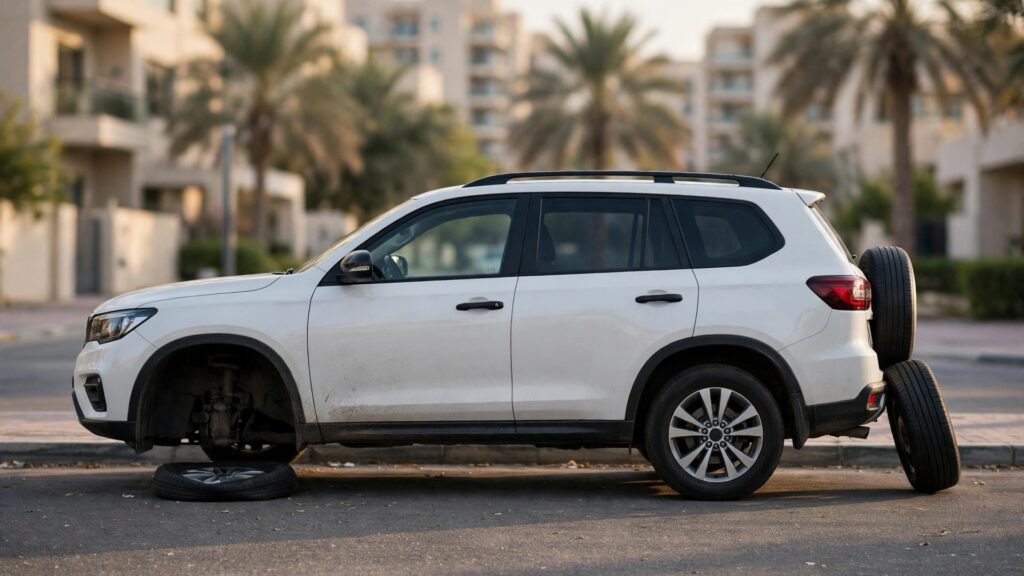
Step 1: Get Safe First — Before You Look at the Tyre
Safety comes before diagnosis, every time. If you are moving, slow down gently — no hard braking, no sudden steering — and pull over as far from traffic as you can: a hard shoulder, a parking bay, a service road, or a lay-by. The further from moving traffic, the better; a flat tyre beside fast traffic is a danger to everyone. Switch on the hazard lights immediately, and keep them on. Apply the parking brake firmly. If you have a warning triangle, place it well behind the car — further back than feels necessary on a fast road. Move all passengers out of the car and behind a barrier or well away from the road side, especially children. If you are on a highway with no safe shoulder, stay in the car with seatbelts on and call for help rather than standing beside traffic. In Dubai's heat, shade matters too: if the car can be moved to shade without driving on the flat tyre, do it — but never drive further than necessary on a deflated tyre to reach shade. Safety first, tyre second, always.
Step 2: Assess the Damage Without Touching Anything Dangerous
Once safe, look before you act. Walk around the car and identify which tyre is flat — sometimes it is obvious, sometimes a slow leak leaves the tyre looking low rather than flat. Check for visible causes: a nail or screw in the tread, a cut in the sidewall, a damaged valve, or a bulge. Look at how flat it is: a tyre that is soft but holding some shape is different from one that is completely flat with the rim near the ground. Check the other tyres too — a second slow leak is not uncommon, and the technician should know. Note whether the rim has touched the ground or been driven on, because rim damage changes the job. Do not pull out a nail or screw — it may be plugging the hole, and removing it can turn a slow leak into a rapid deflation. Do not try to reinflate a tyre with visible sidewall damage or a large cut. This assessment takes two minutes and gives the technician exactly what they need to bring the right equipment and the right replacement options.
Step 3: The Question Everyone Asks — Can I Drive On It?
The short answer: almost never, and never far. Driving on a flat tyre destroys the tyre's sidewall within a very short distance, and once the sidewall is damaged the tyre usually cannot be repaired — a repairable puncture becomes a replacement. Driving further risks the rim: once the rim contacts the road, it bends, cracks, or grinds, and rim damage is far more expensive than a tyre repair. Handling is compromised too — steering, braking, and stability all suffer, and at speed a flat tyre can cause loss of control. The only exception is moving a very short distance at very low speed to reach a safe stopping place — metres, not kilometres, and only when staying put is more dangerous than moving. Run-flat tyres are the exception: they are designed to be driven a limited distance at limited speed after deflation — check the manufacturer's guidance for the specific tyre, and do not exceed it. If you are unsure whether your tyres are run-flats, assume they are not. When in doubt, stop, stay safe, and call — the tyre puncture repair guide explains what the technician does on arrival.
Step 4: Spare Wheel, Sealant Kit, or Wait for Help?
Many cars carry a spare wheel, a space-saver, or a tyre sealant and inflator kit instead — and the right choice depends on the situation. A full-size spare, changed safely on flat, firm ground away from traffic, gets you moving — but changing a wheel beside a busy road, on a slope, or on soft sand is dangerous, and a space-saver spare has strict speed and distance limits. A sealant kit can seal small tread punctures temporarily, but it cannot fix sidewall damage, large cuts, or rim leaks, and the sealant makes the tyre messier to repair afterwards — tell the technician if sealant was used. If you are not confident with the jack, if the ground is uneven, if traffic is close, or if the damage is more than a simple puncture, the safest choice is to wait for help. There is no shame in it: a technician with the right jack, tools, and lighting does in minutes what takes an untrained driver much longer in worse conditions. The decision is about safety and the tyre's condition, not about pride — and help is a phone call away.
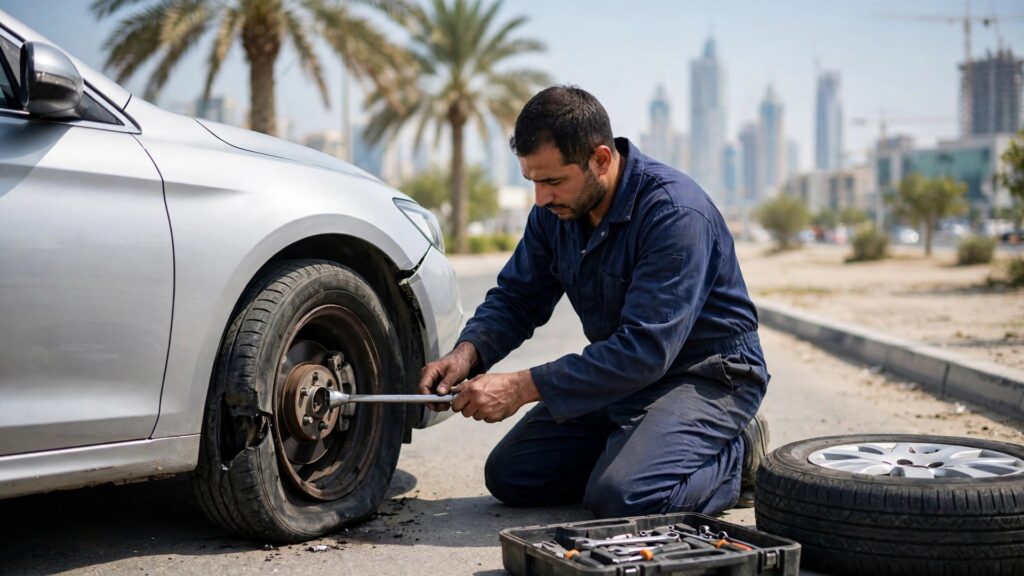
Step 5: What to Tell the Technician When You Call
A good call saves time on arrival. Have this information ready: your exact location (a live location pin is best, plus a landmark or road name), the car make and model, which tyre is flat and what the damage looks like, whether the rim has touched the ground, whether sealant was used, and whether you have a spare. Mention anything unusual: the car is in a basement with low clearance, the wheel nuts are locking nuts and the key location, or a second tyre looks low. The more precise the information, the better prepared the technician arrives — the right jack, the right repair materials, and the right replacement options if the tyre cannot be saved. The response time is 15–20 minutes, and help is dispatched to reach the site within 20 minutes, anywhere in the complete UAE — so the call itself is the fastest step in the whole process. Call or WhatsApp +971 54 344 3513 with a live location and the details above.
Step 6: While You Wait — Do These, Not Those
While help is on the way, a few things help and a few things hurt. Do: stay in a safe place away from traffic, keep the hazards on, keep passengers safe, and have the car unlocked and the boot accessible if the spare or tools are needed. Do: note the tyre size (printed on the sidewall) in case a replacement is needed — a photo of the sidewall markings helps. Do not: attempt a repair yourself with a plug kit unless you know exactly what you are doing — a bad plug can damage the tyre further. Do not: jack the car up on soft ground, a slope, or beside traffic. Do not: let anyone work on the road side of the car. Do not: drive to "just reach the next exit" — the damage done in those minutes usually costs more than the wait saves. The wait is short, and the technician arrives prepared — the best use of the waiting time is staying safe and staying reachable. If you are in a basement car park, note the level and bay number; if you are on a highway, note the nearest exit or landmark so the technician finds you without delay.
Common Mistakes That Make a Flat Tyre Worse
Several mistakes turn a simple puncture into a bigger bill. Driving on: covered above — the single most expensive mistake. Pulling the nail out: the object may be plugging the hole; leave it for the technician. Overinflating a damaged tyre: pumping air into a tyre with sidewall damage or a large cut risks a blowout. Using the wrong jack point: jacking under the wrong point damages the bodywork or lets the car slip — the owner's manual shows the correct points. Ignoring the other tyres: a second slow leak left unchecked becomes the next breakdown. And delaying the call: every minute spent hoping the tyre will "hold" is a minute the damage can grow. Each mistake is understandable in the moment — and each is avoidable with the steps above.
Flat Tyre in Dubai's Heat: What Changes
Dubai's conditions add two factors. Heat: tyre pressures rise as tyres heat up, and a tyre that looks acceptable in the morning can be underinflated by the time it is hot — check pressures when the tyres are cold, and never bleed air from a hot tyre to reach the cold pressure. And road debris: construction zones and new developments leave nails, screws, and metal debris on the road — routes through construction areas deserve extra attention, and a tyre check after driving through debris is worth the minute it takes. The heat also affects the driver: waiting in a hot car is uncomfortable, and shade and water matter while help is on the way. None of this changes the steps above — it just makes them more important, and makes the fast response time more valuable. One more heat factor: the road surface itself. Asphalt in direct sun reaches temperatures that soften rubber and make a damaged tyre deteriorate faster, and a tyre that has been sitting flat on hot asphalt should be inspected with extra care — the heat accelerates sidewall damage in a deflated tyre. Parking in shade where possible, keeping pressures correct, and inspecting tyres regularly are small habits that pay for themselves many times over in Dubai's climate.
How It Works: From Your Call to Driving Again
Every tyre call follows the same sequence. First, the call: phone or WhatsApp with the location, car details, and the damage. Second, the response: help dispatched within the 15–20 minute standard, anywhere in the complete UAE. Third, assessment on arrival: the tyre inspected, the damage assessed, and the options explained — repair or replacement, with the reasoning. Fourth, the quote: scope and price confirmed before work begins. Fifth, the repair or replacement: completed on site, the wheel refitted and torqued, pressures checked, and the car ready to drive. That sequence never changes, because speed without assessment is guessing, and a handover without a pressure check is incomplete.
Reading the Sidewall: What the Numbers Tell the Technician
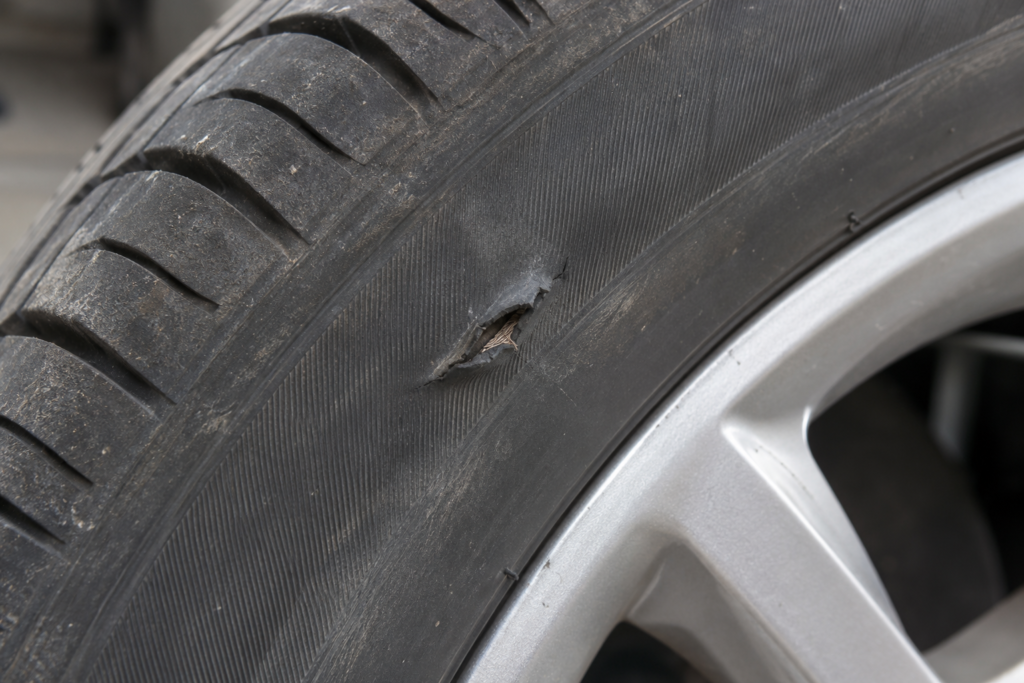
The tyre sidewall carries information the technician needs, and a photo of it saves time. The size marking — for example 205/55 R16 — gives the width, the aspect ratio, and the wheel diameter, and any replacement must match it. The load index and speed rating tell the technician the tyre's capacity, and they must match or exceed the original specification. The DOT code includes the manufacturing date: the last four digits give the week and year, so a tyre made in 2019 is showing its age regardless of tread depth. The tread wear indicators — raised bars across the grooves — show when the tread has reached its legal minimum. And the sidewall itself shows damage: bulges, cuts, and cracking are all visible on inspection, and any of them can mean the tyre is not repairable. None of this requires expertise to photograph — a clear photo of the sidewall and the damage, sent by WhatsApp with the location, lets the technician arrive with the right options. The more the technician knows before arriving, the faster the job goes on arrival.
After the Repair: The Checks Before You Drive Away
When the repair or replacement is done, a few checks before driving away protect the work. Pressures: all four tyres checked, including the spare if one was fitted — the correct pressures are on the driver's door jamb or in the owner's manual, not guessed. Wheel nuts: torqued correctly, and re-checked after a short drive if the technician advises it. The repaired tyre: inspected once more, with the repair explained — what was done, and any limits on it. The other tyres: a quick look at tread and condition, since the visit is already happening. And the paperwork: the scope and price confirmed as quoted, with no additions. These checks take minutes and they are part of the job, not extras — a handover without them is incomplete. If anything feels wrong on the first drive — vibration, pulling, or noise — stop safely and call back. A good repair feels like nothing happened; anything else deserves a second look.
Frequently Asked Questions
Should I drive slowly to a garage on a flat tyre?
No — driving on a flat tyre destroys the sidewall and risks the rim. Move only a very short distance at very low speed to reach safety. Call for mobile help instead; the response time is 15–20 minutes.
Is it safe to change the wheel myself?
On flat, firm ground away from traffic, with the correct jack points and a serviceable spare, yes. Beside a busy road, on a slope, or on soft ground, it is dangerous — wait for help.
What if I have no spare wheel?
Many newer cars carry a sealant kit instead of a spare. Sealant can help with small tread punctures but cannot fix sidewall damage or large cuts. Call for help and tell the technician there is no spare.
Should I remove the nail from the tyre?
No. Leave it in place — it may be plugging the hole. Removing it can cause rapid deflation. The technician removes it as part of the repair.
How fast can help reach me?
The response time is 15–20 minutes. Call or WhatsApp +971 54 344 3513 with a live location, car details, and the damage, and help is dispatched to reach the site within 20 minutes, anywhere in the UAE.
Are 95 Services prices low?
Yes — service prices are kept very low as a matter of policy. Assessment comes first, and the scope and price are confirmed before work begins, with no work starting without the customer's approval.
Contact 95 Services: Flat Tyre Help Across the UAE
A flat tyre is stressful, but the next step is simple: one call. Contact 95 Services on +971 54 344 3513 by phone or WhatsApp, or email info@95services.com, with the location, car details, and what the damage looks like. Help is dispatched within the 15–20 minute response standard, prices stay very low, and the quote is confirmed before any work begins. The office is at Ahmed Ali Al Owais Showroom Building, Office M05, Abu Hail, Al Khabaisi, Dubai, UAE. Call before visiting so the correct service arrangement can be confirmed. For general repairs, see car repair and maintenance, or visit the contact page to send an enquiry.
