
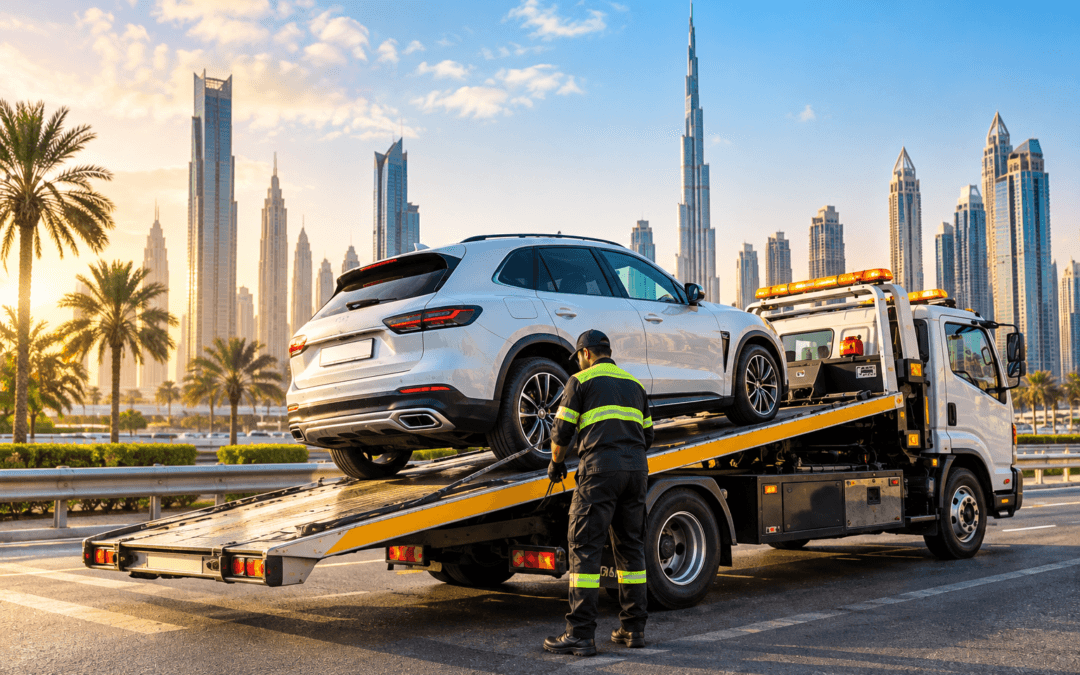
A breakdown rarely gives you a warning you can plan around. One moment you are moving with the traffic on Sheikh Zayed Road or heading home through Deira, and the next the car loses power, a warning light comes on, or a strange noise turns into silence. What you do in the next few minutes matters more than anything else about the breakdown. Done well, those minutes keep you and your passengers safe and get help to you quickly. Done badly, they put you in danger from the traffic still moving past you.
This guide walks through those minutes in the order they happen. It is about the scene, not the spanner: getting the car somewhere safe, warning other drivers, getting everyone out safely, making the call, and waiting without taking risks. What happens after help arrives — the checks, the fix, and the decision about recovery — is covered in the emergency car repair guide. What roadside assistance covers as a service is covered in the roadside assistance guide. Here, the focus is the emergency itself, and keeping people safe while it is happening.
Dubai adds its own conditions to every breakdown. Traffic moves fast on the highways, the hard shoulder is narrow in places, and the heat makes waiting outside the car hard work, especially in the middle of the day. The steps below are written for those conditions: busy multi-lane roads, long stretches between exits, strong sun, and drivers who may not expect a stopped car ahead of them. Read them once now, while nothing is wrong, and they will be there in your head when you need them.
The First Few Seconds: Stay Calm and Take Control
The first thing a breakdown tests is not the car. It is you. A sudden loss of power in moving traffic is frightening, and fright makes people brake hard, swerve, or freeze. The most useful thing you can do in the first few seconds is also the simplest: keep steering, keep the car going straight, and give yourself room to think. The car will usually keep rolling for a while even when the engine has stopped, and that rolling distance is your chance to reach a safer place.
Ease off the accelerator rather than stamping on the brake. Look in your mirrors, check the lane beside you, and start moving steadily toward the edge of the road. Switch on your hazard lights straight away so the drivers behind you can see that something is wrong. If the steering feels heavy, that is normal when the engine stops — the car can still be steered, it just needs more effort. Keep both hands on the wheel and aim for the hard shoulder, a service road, or any paved area clear of moving traffic.
What Your Car Is Telling You
While you are steering to safety, notice what the car is doing. Is the engine still running roughly, or has it stopped completely? Are warning lights showing on the dashboard? Is there smoke or steam, a smell of burning, or a noise that was not there before? You do not need to diagnose anything. You just need to remember what happened, because the person you call will ask, and a clear description helps them send the right help. A short note of the warning lights showing, and whether the car stopped suddenly or faded gradually, is worth more than a guess about what is wrong.
Getting Your Car Off the Live Road
The single most important goal in any breakdown is getting the car out of moving traffic. A stopped car in a live lane is a danger to everyone, including you. Everything else — the phone call, the checks, the wait — comes after the car is somewhere safe. If the car will still move at all, use that movement to reach the safest place you can.
On a highway, that means the hard shoulder. Signal, move across steadily, and stop as far to the edge as the shoulder allows, with the car pointing in the direction of traffic. Turn the wheels away from the road if you are on a slope, so the car cannot roll back toward traffic. On a city street, look for a side street, a parking bay, or a wide stretch of pavement edge where the car is clear of the flow. In a residential area, a quiet side road is better than a busy main road, even if it means coaxing the car a little further.
When You Cannot Reach the Shoulder
Sometimes the car stops where it is, and no amount of steering will move it. If you are stuck in a live lane, stay in the car with your seatbelt on only until you can judge whether leaving is safer than staying — and if you can leave safely, leave by the side away from traffic and move well clear of the car. Keep the hazard lights on. Do not try to push the car across lanes of moving traffic, and do not stand in the road waving at drivers. Your safety comes before the car, every time. If the car is in a dangerous position and you cannot move it, say so clearly when you call for help, so the help that comes knows what it is arriving to.
On Busy Multi-Lane Roads
Dubai's highways carry fast traffic in several lanes, and drivers in the outer lanes do not expect a slow or stopped car ahead. If your car is losing power on a highway, move toward the shoulder early, while you still have speed and steering. Do not wait until the car has nearly stopped before changing lanes, because a slow car crossing lanes is harder for others to read than a car that moves over steadily. Once you are on the shoulder, do not try to rejoin the traffic to reach an exit. Stay where you are, make the car visible, and call for help. An exit that looks close is not worth the risk of rejoining fast traffic in a car that may stop again.
Making Your Car Visible to Other Drivers
A stopped car is easy to miss, especially at speed, at night, or when the sun is low. Making your car visible is the next job after stopping safely, and it takes only moments. It is also the job drivers most often skip, because they are busy thinking about the car itself. Think about the drivers coming up behind you instead. Everything you do to be seen gives them more time to react.
Hazard Lights and Headlights
Leave the hazard lights flashing for as long as the car is stopped. They are the clearest signal you have that something is wrong, and every driver recognises them. At night, or in rain or dust, keep the headlights on as well so the car shows up from further away. If the battery is flat and the lights will not work, that is useful information for the call — say so, and take extra care with where you stand, because the car will be harder for others to see.
Warning Triangle and Being Seen
If you carry a warning triangle, place it on the road behind the car, well back from where you have stopped, so approaching drivers get an early warning. Walk facing the traffic when you place it, stay on the shoulder side, and get back behind the barrier or well clear of the road straight away. Do not spend a long time arranging it perfectly. A triangle placed quickly and safely is better than one placed perfectly after standing in traffic. If you do not carry a triangle, the hazard lights and your position well clear of the car are your main protection, and that is another reason to make the call early rather than spending time searching the boot beside a live road.
At Night and in Poor Visibility
Night breakdowns need extra care. Other drivers see less, judge distances worse, and may not notice a dark car on the shoulder until late. Keep every light you have switched on, wear something light-coloured if you have it, and use a phone torch sparingly to make yourself visible without dazzling anyone. In rain, dust, or fog, the same rule applies: be visible, stay clear, and do not assume drivers can see you. If you have reflective clothing in the car, this is the moment it earns its place.
Getting Everyone Out Safely
Once the car is stopped and visible, the next step is getting people out of it. A car on the shoulder of a busy road is not a safe place to sit, even with the hazards on. Passengers should leave the car and move to a safe place away from traffic. This feels wrong at first — the car feels like shelter — but on a fast road, being outside and well clear is safer than sitting inside.
Which Side to Leave By
Everyone should leave by the side away from traffic. On a highway shoulder, that means the passenger side, away from the lanes. Open doors carefully, checking for anything passing, and move directly away from the road. Children should be helped out by an adult and kept close, with a hand held, until everyone is in a safe spot. Do not let anyone wander back to the car to fetch things while traffic is passing. Bags and belongings can wait. People cannot be replaced.
Where to Stand and Wait
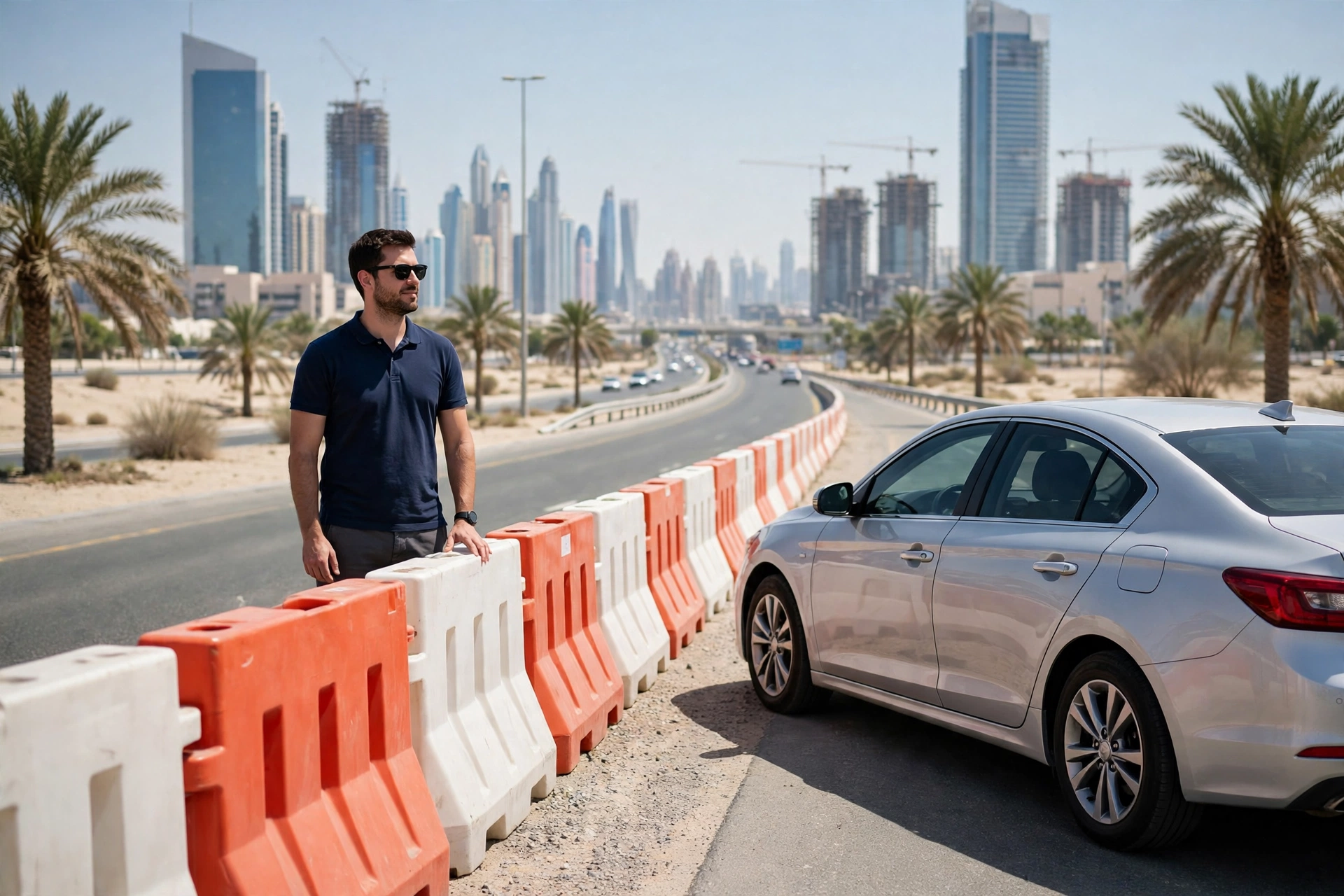
Move behind the barrier if there is one, or well back from the edge of the road, on the far side of the car from traffic. Stand where you can see approaching traffic and where drivers can see you are clear of the road. Do not stand in front of the car, behind the car on the shoulder, or between the car and the traffic. If the ground is uneven or there is a drop beyond the shoulder, take care where you step, especially at night. The safe spot is the one that puts the most distance and the most solid protection between you and the moving traffic.
Children, Older Passengers and Pets
Children need a clear instruction and a hand to hold. Tell them plainly to stay with you and stay away from the road, and give them a job — holding the phone, watching for the help vehicle — so they stay focused. Older passengers may need help getting out of the car and finding level ground, and they will feel the heat sooner, so shade and water matter more for them. Pets should be kept on a lead or in a carrier, well away from the road. A frightened animal near fast traffic is a danger to itself and to everyone trying to help it.
The Call for Help: What to Say
With everyone safe, make the call. The sooner help is on its way, the sooner the wait ends, and a clear call gets the right help moving faster. Call 95 Services on +971 54 344 3513, or message on WhatsApp at https://wa.me/971543443513. The business is open 24 hours, the response time is 15–20 minutes, and help covers the complete UAE, so the same number works wherever you are and whenever the breakdown happens. Prices are very low, and the scope and the price are confirmed before work begins.
Location First, Then the Car
Start with where you are. A road name and a nearby landmark, an exit number, or a shared live location from your phone all work. On a highway, the direction of travel matters as much as the road name — say which way you were heading and what you can see nearby. Then give the car details: the make and model in plain words, the colour, and the registration if you know it. Then describe what happened in simple terms: the car lost power, a warning light came on, the car will not start, there is smoke or steam, or a tyre has gone flat. You do not need technical words. Plain description is exactly what the person on the phone needs.
Staying Reachable
Keep your phone charged and with you, and answer when help calls back. If your phone battery is low, say so on the first call, and keep the phone for the calls that matter rather than using it for anything else. If you move from the spot you described — because a safe waiting place is a short walk away — say where you have moved to. A live location shared by WhatsApp is the simplest way to stay findable, and it keeps working even if you are not sure of the road name.
Waiting Safely in Dubai Heat and Traffic
The wait is the part people underestimate. In Dubai, waiting beside a road means heat, sun, and traffic noise, and it can wear you down faster than you expect. The help is on its way — the response time is 15–20 minutes — but those minutes still need to be spent safely. Stay in the safe spot you chose, keep everyone together, and resist the urge to go back to the car to check things or try fixes beside a live road.
Shade, Water and Sun
If there is shade nearby, use it. The far side of the barrier, the shadow of a sign, or any patch of shade away from traffic is better than standing in full sun. Drink water if you have it, and share it around, especially with children and older passengers. If you have a hat or a light cover, wear it. Heat builds up quietly: feeling hot and tired is a sign to sit down in the shade, drink, and wait, not to push on with checking the car. If anyone feels unwell in the heat, move them to the coolest shaded spot you can find and say so when help calls, so they know to look out for it on arrival.
Staying Clear of the Road
It is tempting to step closer to the road to watch for the help vehicle, or to walk back along the shoulder toward it. Stay in your safe spot. The help vehicle will find you from the location you gave, and the driver will call if needed. Walking along a live shoulder puts you back in the danger you worked to get away from. Keep children and pets with you and away from the edge. If the help vehicle arrives and stops ahead of or behind your car, wait for the technician to come to you or signal you, rather than walking out into the shoulder to meet them.
If Another Driver Stops
Another driver may stop to offer help. That is kind, and it happens often. You can accept a bottle of water or a phone call if you need one, but you do not have to accept a tow from a stranger, follow anyone to a workshop you do not know, or let someone work on your car beside the road. Help you have called, from a service you chose, is the help to wait for. A polite thank you is enough. If you feel unsure about anyone who stops, stay with your group, keep your distance, and wait for the help you called.
Special Situations at the Roadside
Not every breakdown looks the same. A few situations need their own response, and knowing them in advance keeps a bad moment from becoming a worse one. The rule underneath all of them is the same: people first, car second, and no fix attempted in a dangerous place.
Smoke or Steam From the Car
If you see smoke or steam, or smell burning, get everyone out of the car and well away from it, and do not open the bonnet. Steam from a hot engine can scald, and smoke means something is wrong that should not be investigated beside the road. Move everyone upwind of the smoke if you can — to the side the wind is coming from — and say clearly on the call that there is smoke or steam, so the help that comes is ready for it. Do not try to pour water into a hot engine, and do not stand in front of the car. The engine warning signs guide explains the dashboard warnings that often come before this kind of breakdown, which is worth reading before your next long drive.
A Flat Tyre on a Busy Road
A flat tyre on a quiet street and a flat tyre on a highway shoulder are different problems. On a busy road, changing a wheel beside moving traffic is dangerous, and the safe choice is to call for help rather than work with your back to the traffic. Slow down gently, reach the shoulder, and follow the same steps: hazards on, everyone out on the safe side, well clear of the road, then the call.
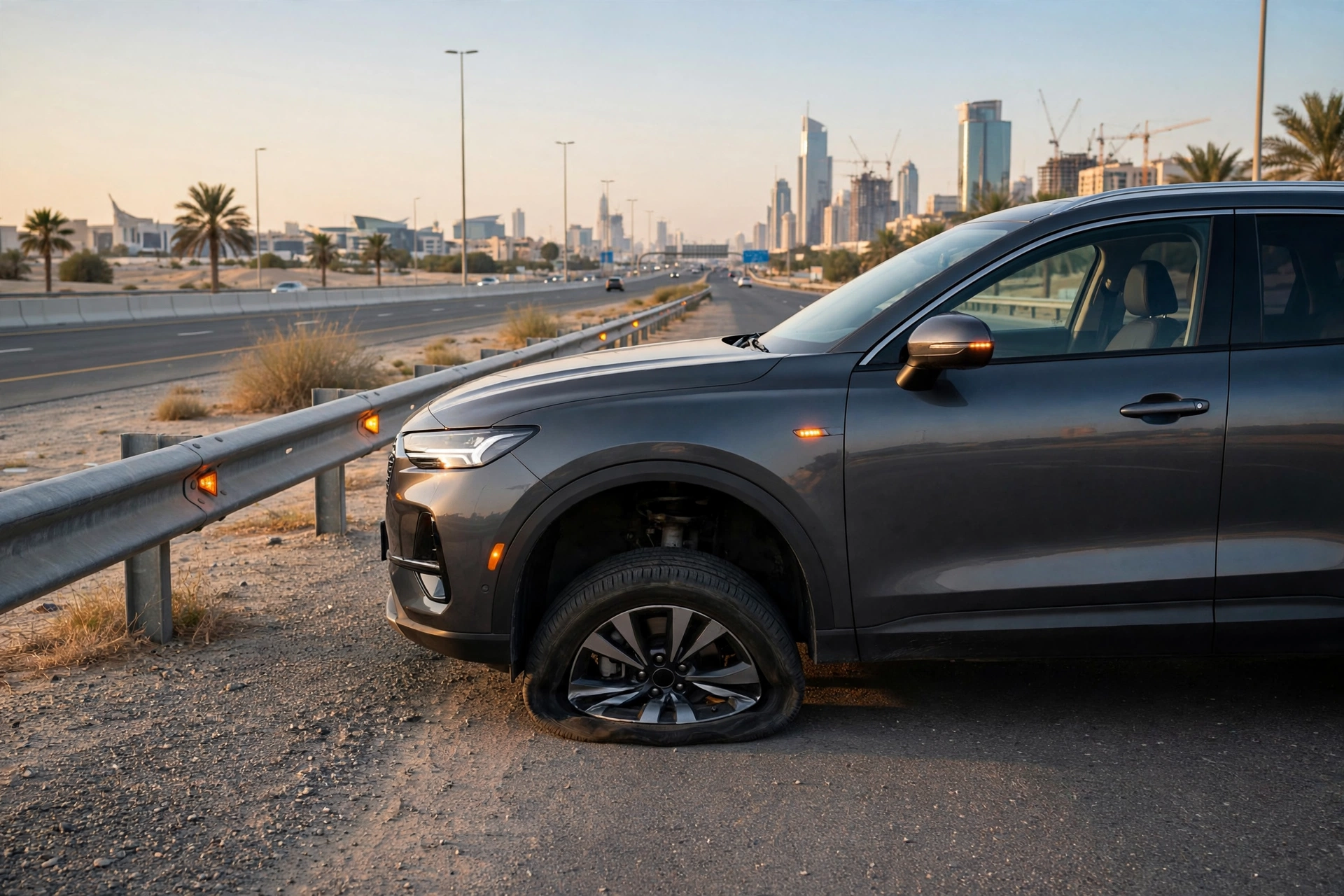
The detailed steps for a flat tyre — what to check, when not to drive on it, and what to do before the technician arrives — are in the flat tyre guide and the step-by-step flat tyre repair guide. Do not drive on a flat tyre to reach an exit unless you have no safe place to stop at all, because it damages the wheel and makes the car harder to control.
Car Stops in a Tunnel or Underpass
Tunnels and underpasses are enclosed, with less room and less light, and drivers behind you have less time to react. If the car stops in one, switch the hazards on immediately, stay in the car with seatbelts on if leaving would put you in the path of traffic, and call for help with your exact position — the tunnel name, the direction of travel, and anything you can see. If there is a walkway or an emergency bay, use it, keeping to the side away from traffic. Do not walk through a tunnel in the traffic lanes. Help will come to you, and the call with a clear location is what makes that possible.
Breakdown at Night
At night, visibility is your main concern. Keep the lights and hazards on, keep everyone together in a lit area if there is one, and use a phone torch to make the group visible without shining it at drivers. A breakdown on an unlit stretch of road feels lonelier than the same breakdown in daylight, but the steps are the same, and the business is open 24 hours, so the call is answered and help is dispatched the same way at night as during the day. Stay with the car, stay clear of the road, and keep the phone handy.
What NOT to Do When Your Car Breaks Down
Some of the worst breakdown decisions come from trying to be helpful or trying to save time. Do not try to fix the car in a live lane or on a narrow shoulder with traffic passing close by. Do not open the bonnet and lean over a hot engine beside the road. Do not crawl under the car. Do not accept a tow rope from a stranger and get towed through traffic by a car you do not know. Do not leave passengers, especially children, in the car on a busy road while you walk away to look for help. And do not try to drive on when the car is clearly telling you to stop — a warning light, smoke, steam, a loud noise, or a car that will not steer properly are all reasons to stop now, not at the next exit. Stopping early is almost always the cheaper and safer choice, because driving on turns a small problem into a bigger one.
It is also worth saying what not to do with the phone call. Do not delay calling because you hope the car will start again on its own. If it starts, you can always say so when help calls back. Do not call several services at once and take whichever arrives first — it wastes everyone's time and leaves you unsure who is actually coming. One clear call, with a good location and a plain description, is the fastest route to help.
After Help Arrives: What Happens Next
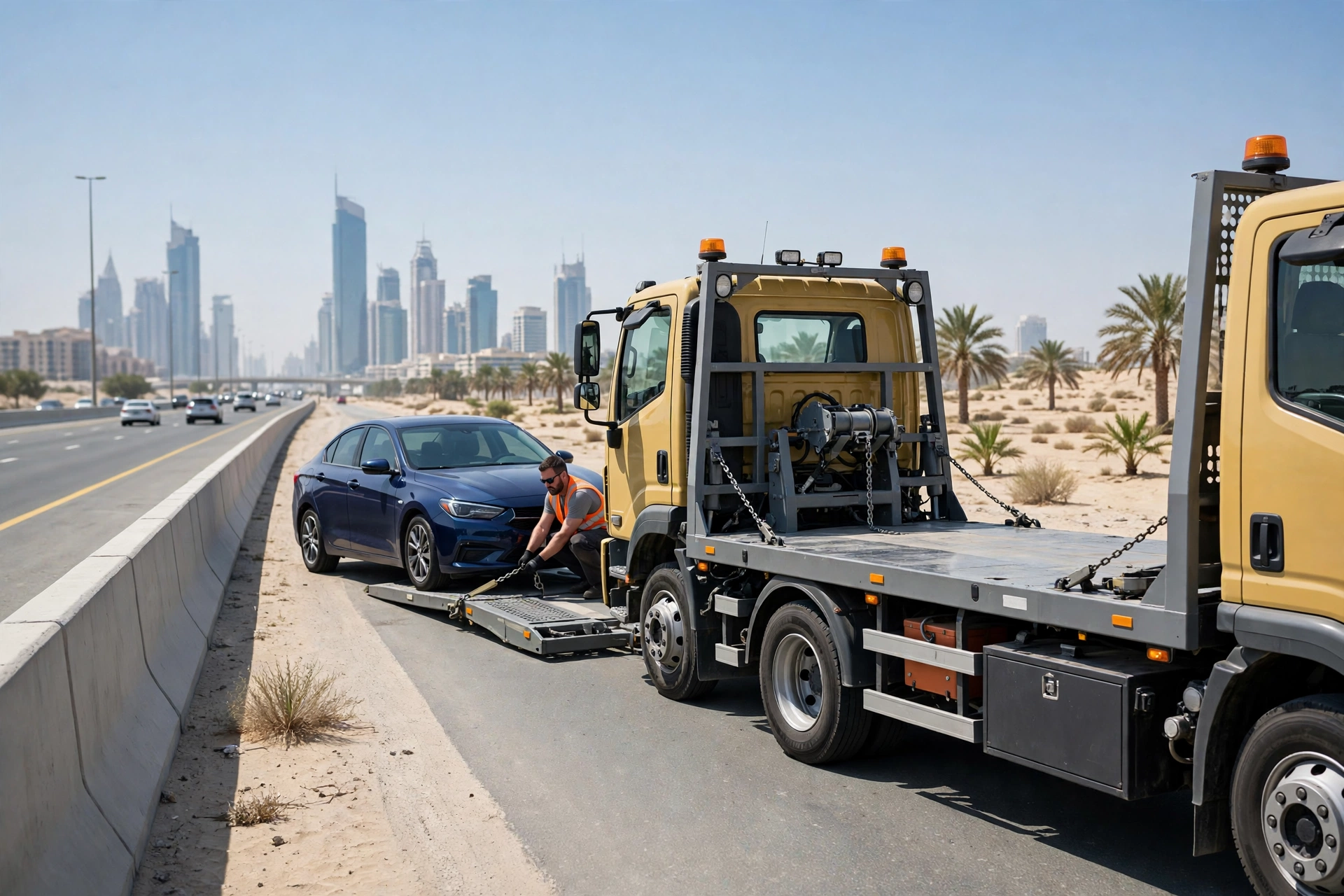
When the technician arrives, the emergency part is over and the repair part begins. The technician will check the scene, listen to what happened, and assess the car before deciding what can be fixed at the roadside and what needs recovery to a workshop. You do not need to stand over the work — the technician will explain what they find and what they plan to do, and the scope and the price are confirmed before work begins. The full process, from the first assessment to the checks before you drive on, is explained in the emergency car repair guide, so you know what to expect before it happens.
Be Ready Before Your Next Journey
The best time to prepare for a breakdown is before it happens. Save the number +971 54 344 3513 in your phone now, so you are not searching for it beside the road. Keep a few useful things in the car: drinking water, a warning triangle, a torch, a phone charger that works in the car, and a light jacket or cover for waiting in the sun. None of these need to be expensive, and all of them earn their space the first time they are needed. A quick look at the car before a long drive — tyres, lights, and any warning lights on the dashboard — catches some problems before they become breakdowns. The car maintenance tips guide covers the checks that matter most for Dubai driving, including the heat.
Frequently Asked Questions
What is the first thing to do when my car breaks down in Dubai?
Stay calm, keep steering, switch on the hazard lights, and move steadily toward the hard shoulder or any paved area clear of moving traffic. Once stopped, make the car visible, get everyone out on the side away from traffic, move well clear of the road, and then call for help. People first, car second, and no fixes beside a live road.
Should I stay in the car or get out?
On a busy road, get out — on the side away from traffic — and move behind the barrier or well clear of the road. Sitting in a car on the shoulder of a fast road is less safe than standing well clear of it. The exception is when leaving the car would put you directly in the path of traffic, such as in a tunnel with no walkway, where staying belted in until help arrives can be safer. Use your judgement about which risk is greater, and say where you are when you call.
What should I tell the person I call for help?
Your location first — road name, direction of travel, nearby landmark, or a shared live location — then the car details and a plain description of what happened. Say if the car is in a dangerous position, if there is smoke or steam, if anyone needs extra care, and if your phone battery is low. A clear call gets the right help moving faster.
How fast can help reach me?
The response time is 15–20 minutes. Call or WhatsApp +971 54 344 3513 with a live location and the car details, and help is dispatched to reach you within 20 minutes, anywhere in the complete UAE. The business is open 24 hours, so the same response applies at night and on weekends.
Is it safe to drive on after the car stops and starts again?
Not always. If the car stopped because of a warning light, smoke, steam, a loud noise, or a loss of steering or braking, do not drive on and hope it was a one-off. Stop safely, call for help, and let the car be checked before you drive on. Driving on can turn a small problem into a much bigger one, and can leave you stopped again in a worse place.
What should I keep in the car for a breakdown?
Drinking water, a warning triangle, a torch, a phone charger that works in the car, and something light to cover up with in the sun. Save the number +971 54 344 3513 in your phone before you need it. Those few items, and a number you can find quickly, make the wait safer and shorter.
Contact 95 Services: Help When Your Car Breaks Down
A breakdown is stressful enough without wondering who to call. Save the number now: phone +971 54 344 3513, WhatsApp https://wa.me/971543443513, or email info@95services.com. Help is dispatched within the 15–20 minute response standard, anywhere in the complete UAE, prices stay very low, and the quote is confirmed before any work begins. The business is open 24 hours. The office is at Ahmed Ali Al Owais Showroom Building, Office M05, Abu Hail, Al Khabaisi, Dubai, UAE. Call before visiting so the correct service arrangement can be confirmed. Or visit the contact page to send an enquiry.
