
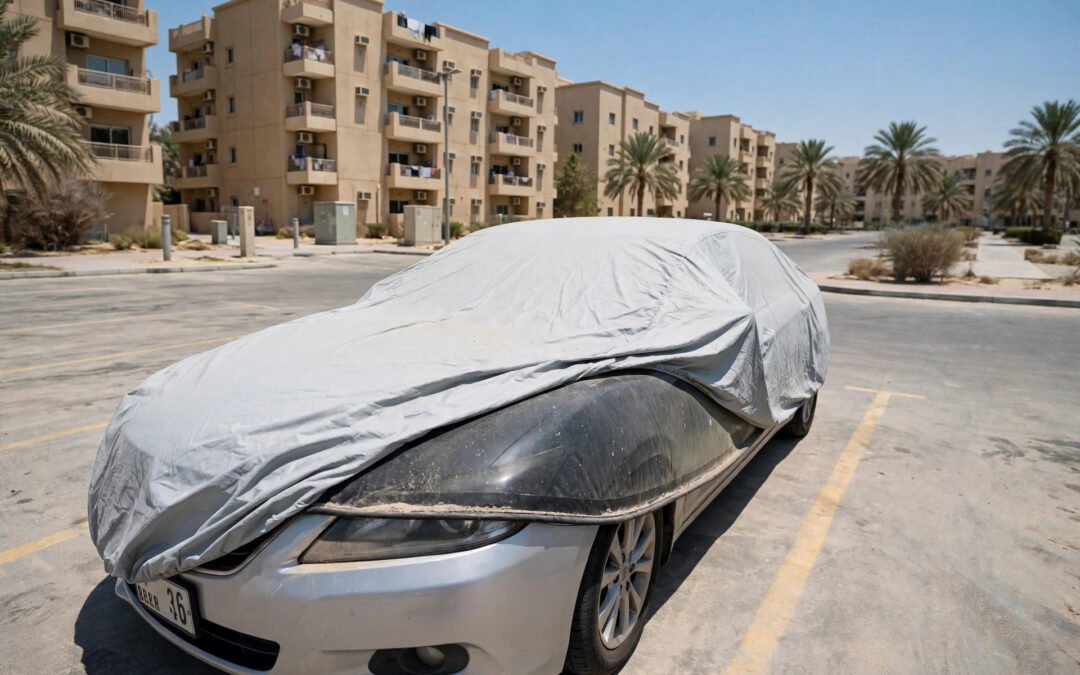
Every summer, and every long holiday, the same thing happens in Dubai. The airport fills up, the buildings empty out, and thousands of cars sit quietly in basement car parks, open sand lots, and shaded residential bays for two, three, six weeks at a time. Then the owners come home, tired from a long flight, bags in hand, and the car that was perfectly fine when they left will not start, or pulls to one side, or makes a noise it never made before.
I have seen this hundreds of times. A car is not like a television you can switch off and forget. It is a machine full of fluids, rubber, metal, and a battery that never really sleeps. Leave it alone in Dubai heat and dust, and small things start to change. The good news is that almost all of it is preventable, and most of the prevention takes one evening before you travel. Not a full service. Not a garage visit, unless you want one. Just a calm, sensible walk around the car, a few checks, and a few decisions made before you lock the door and head to the airport.
This guide is written the way I would talk to a neighbour in the parking lot. No jargon for the sake of jargon, no scare stories, and no pretending that every parked car is about to fall apart. Some cars will sit for three weeks and start on the first turn of the key. Others will not, and usually there is a reason — the battery was already weak, the tyres were already low, a small leak was already there and nobody had noticed it yet. Parking for weeks does not usually create a brand-new problem out of nothing. What it does is give a small, quiet problem time and heat to grow into a big, noisy one.
So let us go through it properly. First, what Dubai does to a parked car that a cooler climate does not. Then a simple before-you-travel routine you can do in one evening. Then each part of the car in turn — battery, tyres, fluids, brakes, fuel, sun and dust, and the small creatures that like a quiet, warm engine bay. Then the part most people skip: what to do in the first ten minutes after you come back, before you drive off in a hurry.
If you are reading this the night before a flight, do not panic. Read the short checklist section first, do the basics, and leave the rest for when you are back. If you have a few days, work through the whole thing. Either way, you will come home to a car that is far more likely to start, stop, and drive the way it did when you left it.
Why Leaving a Car Parked in Dubai Is Different
In many countries, leaving a car for a month means cold weather, maybe some rain, and a battery that slowly loses charge. In Dubai, the problems are different, and they stack on top of each other.
The first is heat. Even in a basement car park, a car in Dubai sits in warm air day and night through the summer. In an open lot, the inside of the car can get far hotter than the air outside. Heat speeds up the chemical reactions inside a battery, so it loses charge faster. It also ages rubber — tyres, belts, hoses, wiper blades — faster than the same rubber would age in a mild climate. A tyre that would last years in a cool garage can harden and crack sooner here if it sits in direct sun week after week.
The second is dust. Dubai dust is fine, and it gets everywhere. It settles on paint, it creeps into door seals, it coats the windscreen, and it finds its way into the engine bay. A thin layer of dust on a car is not a disaster. But dust mixed with a little humidity, or with a small fluid leak, turns into a gritty paste that can stain paint and hide a leak you would otherwise have spotted. Dust on the windscreen, wiped dry with a wiper blade that has been baking in the sun, can scratch the glass. That is why the order of things matters when you come back: clean first, wipe second.
The third is that cars here are often parked for a long time at the same time of year — summer, when families travel home for weeks. So the hottest weeks of the year are exactly the weeks when the most cars are sitting still. An engine that runs every day circulates oil, keeps seals moist, and keeps the battery charged. An engine that sits still does none of that. Oil drains down into the sump. Seals dry a little. The battery gets no charge at all, and yet the car keeps drawing a tiny amount of power for the alarm, the clock, and the computer memory. Over days that is nothing. Over weeks, it adds up.
The fourth is simple human habit. Before a holiday, people are busy. Packing, tickets, family, work handover. The car is the last thing on the list, and it gets a quick wash if it is lucky. After the holiday, people are tired and in a rush to get home, pick up children, or get to work the next morning. The car gets started and driven without a second thought. That rush is when a flat tyre, a low fluid level, or a brake that has stuck a little can turn into a real problem on the road.
None of this means you need to be a mechanic to leave your car for a few weeks. It means you need to respect what heat and stillness do, and give the car ten minutes of attention on each side of the trip. That is the whole idea of this article.
The One-Evening Checklist Before You Travel
If you only have one evening, do this. Everything in this section is quick, and it covers the things that cause most of the trouble after a long park.
Start with a short drive. Not a long one, just enough to warm the engine properly — a normal drive around your area, not a two-minute trip to the shop and back. A warm engine means the battery has had a proper charge, the oil has circulated, and you will notice if anything feels wrong: a warning light, a strange noise, a pull to one side. If something does feel wrong, that is the time to find out, not on the morning after you land back in Dubai.
When you get back from that drive, park where the car will stay, switch off, and walk around it slowly. Look at the ground under the engine, under the gearbox area, and under each wheel. Any fresh wet patch, any dark stain that was not there before, any drip — take note. A small leak that is fine for daily driving can leave a puddle over three weeks, and a puddle means a fluid level that has dropped further. If you see a leak you do not recognise, get it looked at before you travel.
Check the tyre pressures while the tyres are still warm from the drive, or check them cold the next morning and add a little extra air. I will explain the exact thinking on pressure in the tyres section below, but the short version is: do not leave on soft tyres. Soft tyres are the ones that develop flat spots and sidewall damage while they sit.
Open the bonnet and check the three levels you can check without tools: engine oil on the dipstick, coolant in the reservoir, and windscreen washer fluid. Top up the washer fluid — it is cheap and simple, and you will want a clean windscreen when you return. Oil and coolant need more care: if either is low, find out why before you add a lot. A little top-up to the correct mark is fine. A big top-up that hides a leak is not.
Clean the inside of the car. Take out food, take out rubbish, take out anything that can melt, leak, or smell. A chocolate bar left in a door pocket in July will not survive. A bottle of water left in the sun can warp and leak. Food crumbs bring ants and, in the worst cases, other pests. Empty the car properly. It takes five minutes and it saves you coming home to a smell you cannot get rid of.
Take your valuables out, and take anything with a battery that could leak out of the glove box. Remove the parking card or access card from the windscreen if your building asks you to, and make sure you know where the spare key is. If someone else will move the car while you are away, agree that with them now, in writing if it is a building watchman or a neighbour — who has the key, when they will move it, and how they will reach you if something happens.
Fill the fuel tank, or at least leave it more than half full. I will explain why in the fuel section, but for now just know that a nearly empty tank is worse for a long park than a fuller one.
Finally, take a photo of the dashboard with the mileage and any warning lights, and a photo of each tyre and the general condition of the car. It takes thirty seconds. If anything changes while you are away — a flat tyre, a scratch, a leak — you have a record of how the car looked when you left it.
That is the one-evening version. If you have more time, read on, because the detail is where the real protection comes from.
What Happens to a Car That Sits Still
A car is designed to move. Almost every part of it is happier when it moves, even a little. When it sits still for weeks, a few quiet changes happen, and it helps to understand them so the advice later in this article makes sense.
The battery discharges, slowly but steadily. Even with everything switched off, the alarm system, the keyless entry receiver, the clock, and the engine computer all draw a tiny current. On a healthy battery in a newer car, that drain is small. On an older battery, or a car with an aftermarket alarm, a tracker, or a dash camera that stays on, the drain is bigger. Heat makes it worse, because a hot battery self-discharges faster than a cool one. After two weeks, many cars will still start normally. After four to six weeks, a weak battery may not have enough power left to turn the engine. This is the single most common reason a car will not start after a holiday, and it is why the battery gets its own section below.
Tyres lose pressure slowly, even without a puncture. Air seeps through the rubber over time, and heat speeds that up. A tyre that sits in one position, under the weight of the car, with falling pressure, can develop a flat spot — a slightly flattened area where the tyre met the ground. On a short park you will probably never feel it. On a long park, especially with a soft tyre, you may feel a thump or vibration for the first few kilometres after you return. In most cases it works itself out as the tyre warms up and regains its shape. In bad cases, with an old or damaged tyre, it does not, and the tyre needs replacing. Pressure, parking surface, and tyre age all matter here.
Fluids settle and, in some cases, separate or absorb moisture. Engine oil drains back to the sump, leaving the top of the engine dry until the first start. That is normal, and it is why the first start after a long park should be gentle, not a hard rev. Coolant sits still, and if there is already a small leak or a weak hose, the level can drop. Brake fluid absorbs moisture from the air over time — that is a slow process, but a car that sits in humid air with an old reservoir cap seal is not helping itself. Fuel, left in a nearly empty tank, leaves more room for air and moisture, and modern fuel does not like sitting for months. For a few weeks, fuel is usually fine. For two or three months, it deserves more thought.
Brakes can stick. The brake discs are bare metal, and in humid air they develop a thin layer of surface rust very quickly — sometimes overnight. On a car that is driven daily, that rust is wiped off the first time you brake. On a car that sits for weeks, the rust layer gets thicker, and the brake pads can stick lightly to the disc. When you return, the first brake application may feel rough or noisy, or the car may feel as if it does not want to roll freely at first. Usually it clears after a few gentle stops. Sometimes, if the handbrake was left on tightly for weeks in damp conditions, the rear brakes can stick more firmly. That is why the handbrake advice in the brakes section matters.
Rubber and plastic age in the sun. Wiper blades, door seals, dashboard plastics, and tyre sidewalls all suffer from ultraviolet light and heat. A car parked in direct sun for a month will come back with wiper blades that are harder and less flexible, a dashboard that is hotter and more faded, and tyres whose sidewalls have aged a little more. A sunshade and a cover help, but they are not magic. Shade is better than a cover in direct sun, and a cover is better than nothing.
And then there are the living things. An engine bay that is warm, dark, and undisturbed is an attractive home for small creatures. In Dubai, that usually means insects, and sometimes rodents in quieter areas near landscaping or waste areas. They can chew wires, build nests in air filter boxes, and leave droppings that smell when the air conditioning starts. It does not happen to every car, and it does not happen in a busy basement car park as often as in a quiet villa compound, but it is common enough that a quick look under the bonnet when you return is always worth it.
None of these changes happen overnight. They build up over weeks. That is why the length of the trip matters, and why the advice in this article changes a little depending on whether you are away for two weeks, a month, or three months. I will give you a simple way to think about that near the end.
The Battery: The One Part Most Likely to Let You Down
Let us be honest about this. If your car has one problem after a few weeks parked in Dubai, it is almost always the battery. Not the engine, not the gearbox, not the tyres — the battery. So this is the section to read carefully, even if you skim everything else.
A car battery is not a box that holds charge forever. It is a chemical store, and it is always losing a little charge, even when the car is switched off. Your car keeps using power when it is parked. The alarm is awake. The system that listens for your key is awake. The clock is running. The engine computer remembers its settings. On many cars, the infotainment system and the telematics unit also draw a small current. Add a dash camera that records while parked, an aftermarket tracker, or an extra alarm, and the drain gets bigger still.
Heat makes all of this worse. A battery in Dubai summer loses charge faster sitting still than the same battery would in a cool climate. At the same time, heat ages the battery itself. A battery that is already two or three years old, or one that has been struggling on hot starts and short trips, has less reserve to begin with. Put those two things together — a weaker battery and a faster drain — and three or four weeks can be enough to leave it too flat to start the car.
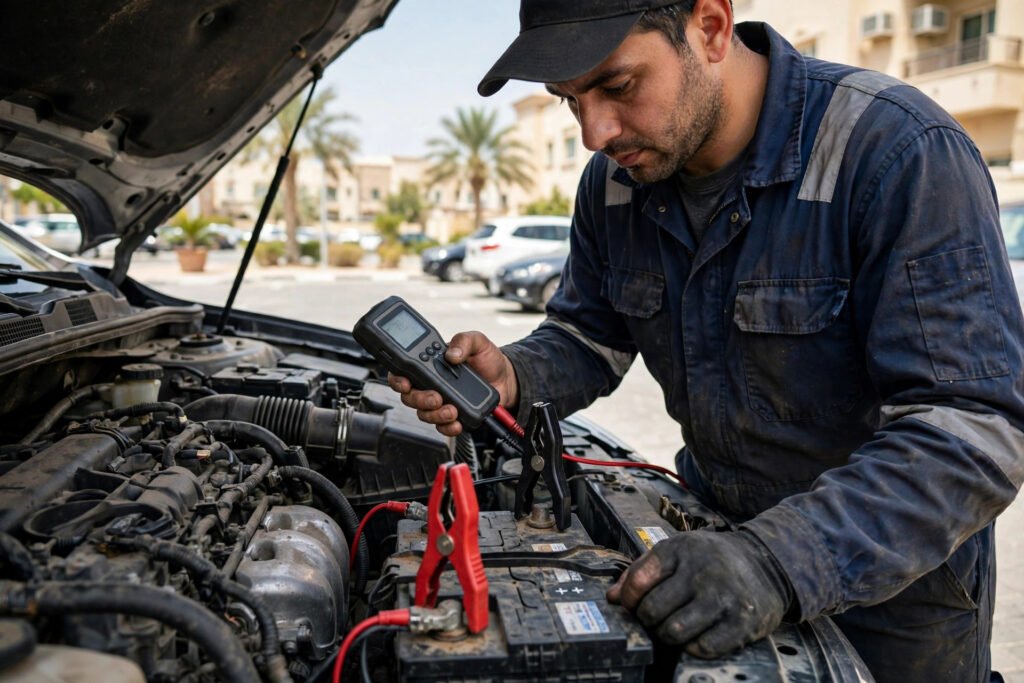
How do you know if your battery is at risk before you travel? Think back over the last few weeks. Has the engine turned over more slowly in the morning? Has the start felt lazy, as if the engine is thinking about it before it catches? Have the headlights dimmed when you start the car? Has a battery warning light come on, even briefly? Has the car needed a jump start at any point recently? Any one of those is a sign that the battery is already weak, and a long park will very likely finish it off. If you have noticed any of them, do not leave on that battery without a proper test. A proper battery test takes a few minutes with a tester that measures the battery under load, not just the voltage sitting still. A simple voltage reading can look fine on a battery that still cannot start an engine. If you are unsure, ask a mechanic to test it. It is a small job, and it is far better to find out before you travel than to find out at midnight in the airport car park.
If your battery is healthy and you are away for two weeks, you will probably be fine. Most healthy batteries in modern cars will still start after two weeks, even in summer. If you are away for three to four weeks, the risk rises, especially for older batteries and for cars with extra electronics. If you are away for six weeks or more, you should plan for the battery, not hope for it. Hope is not a maintenance plan.
So what can you actually do? You have a few sensible options, and the right one depends on your car, your parking place, and how long you will be away.
The simplest option is to ask someone you trust to start the car and drive it for a proper run once a week while you are away. I mean a real drive, not starting it for five minutes in the parking bay. Five minutes of idling does almost nothing for the battery and can actually leave moisture in the exhaust and the engine. A proper run means driving for a good stretch, at normal road speeds, with the air conditioning on as usual, so the alternator has time to put charge back into the battery and the engine and fluids get properly warm and circulated. If a family member, a trusted neighbour, or a friend can do that once a week, that is often the best solution of all, because it helps the tyres, the brakes, and the fluids as well as the battery. Agree it before you leave, leave the key with them, and make sure they know to tell you if a warning light comes on or the car feels different.
The second option is a battery maintainer, sometimes called a trickle charger or smart charger. This is a small device that plugs into a power socket and connects to the battery, and it keeps the battery topped up gently while you are away. It is a good solution if you park in your own villa garage or in a place with a power socket nearby, and if your car will not be moved. It is not a good solution in a shared basement car park with no socket, and you should never run cables across a walkway or leave a charger in a way that could be a trip hazard or get damaged. If you use one, buy a proper smart maintainer made for car batteries, follow its instructions exactly, and make sure the connections are clean and secure. If you are not comfortable connecting anything to a battery, do not guess — ask a mechanic to fit it for you and show you how it works.
The third option people ask about is disconnecting the battery. This can work, because a disconnected battery loses charge much more slowly than a connected one. But it is not a job to do casually, and on many modern cars it has side effects. Disconnecting the battery can reset the clock, the radio presets, the window settings, and sometimes the engine computer's learned settings. On some cars it can trigger a warning light or a security code request for the audio system. On cars with complex electronics, it can cause more trouble than it saves. There is also a safety point: a car battery can produce a spark and can give a nasty shock if handled the wrong way, and the terminals and clamps must be handled in the right order. My honest advice is this: if you are thinking about disconnecting the battery, talk to a mechanic first. Tell them your car model and how long you will be away, and let them tell you whether it is sensible for your car and, if it is, let them do it or show you the safe way. Do not follow a random video for a different car model and hope it applies to yours. If you are unsure about anything involving the battery, ask a mechanic. That rule applies through this whole article, and I will repeat it where it matters.
What you should not do is leave the car with a dash camera in parking mode, an extra alarm, or any accessory that stays on while you are away, unless you have thought about the drain. A dash camera that records every movement in a busy car park can drain a battery surprisingly fast. If your camera has a parking mode, check its settings, or switch it off for the trip if you can. The same goes for phone chargers left plugged in, interior lights left on, and a boot or door that is not quite closed. Walk around the car and check every door, the boot, and the bonnet are properly shut before you lock it. A single interior light left on for three weeks will flatten a battery that would otherwise have been fine.
When you return, do not be surprised if the first start is a little slower than usual, even on a healthy battery. That is normal after a long park. What is not normal is a rapid clicking sound, dashboard lights that flicker and die, or an engine that turns very slowly and then stops. Those are the signs of a flat battery. Do not keep turning the key over and over — that will only flatten it further. If you have jump leads and a second car, and you know the safe way to jump start your car, you can try it, following your car's handbook exactly. If you do not know the safe way, or you are not comfortable, call for help rather than risking damage to the electronics or a spark near the battery. A mobile mechanic can test the battery on the spot, tell you honestly whether it needs a charge or a replacement, and get you going without guesswork. You can read more about the warning signs in our guide to a car battery dying overnight in Dubai, and about what happens when a car will not start at all in our guide to a car won't start in Dubai. If the battery does need replacing, our guide to mobile car battery replacement in Dubai explains how that works.
One last point on batteries, and it is an important one. A battery that has gone completely flat and has been jump started may work for a few days and then fail again. That is because a deeply discharged battery does not always recover fully, especially an older one. If your battery went flat while you were away, have it tested properly after you are back, even if the car is starting again. A test is quick, and it tells you whether you can trust that battery for the next few months or whether you are driving on borrowed time.
Tyres: Flat Spots, Pressure, and Age
Tyres are the second thing to think about, and they are easy to get wrong because the damage is invisible until you drive.
A tyre is a flexible thing. It is designed to flex as it rolls, to spread the weight of the car, and to spring back into shape. When a car sits still for weeks, the same small patch of each tyre carries the weight of the car, hour after hour, day after day, without moving. In hot weather, the rubber softens a little, and that patch can take a slight set — a flat spot. It is a bit like leaving a heavy box on a carpet for a month. When you lift the box, the carpet keeps the shape of the box for a while.
On a short park — a week or two — with tyres at the correct pressure, most modern tyres will recover quickly. You may feel a slight vibration for the first kilometre or two, and then it fades as the tyre warms up and rounds out again. On a longer park — a month or more — especially if the tyre pressure was low when you left, the flat spot can be more noticeable and slower to clear. On an old tyre, a tyre that already has cracks in the sidewall, or a tyre that has been sitting in direct sun, the flat spot can become permanent. That tyre may thump or vibrate at speed no matter how far you drive, and at that point it needs to be looked at and very likely replaced.
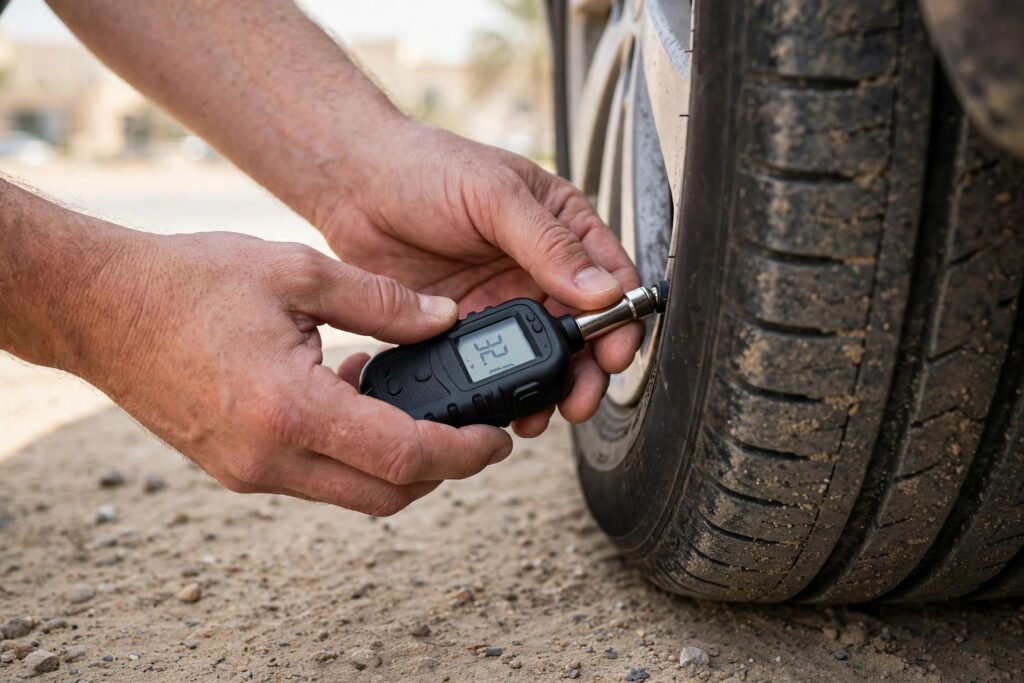
Pressure is the key. A tyre at the correct pressure resists flat spots far better than a soft tyre, because the air inside supports the shape. Before you travel, check all four tyres and the spare, and inflate them to the pressure listed on the sticker inside the driver's door frame or in the owner's handbook — not the maximum pressure written on the tyre sidewall, which is a different number. If you will be away for a month or more, many mechanics suggest adding a small amount of extra air above the normal pressure, because the tyres will lose a little air while you are away and the extra air helps them hold their shape. This is a sensible precaution, but do not overdo it. A small increase is enough, and you must remember to let the pressure back down to normal when you return, before you drive at speed. Check the pressure again when the tyres are cold after you are back, and set them to the normal figure. If you are not sure how much extra is sensible for your car and your tyres, ask a tyre shop or a mechanic — it is a thirty-second question.
The parking surface matters too. A tyre sitting on hot tarmac or concrete in direct sun ages faster than a tyre sitting on a cool, shaded surface. If you have a choice, choose shade. A basement car park is usually the kindest place for tyres, because it is cooler and out of direct sun. An open lot in full sun is the hardest. If you must park in the sun, a car cover helps the paint and the interior, but it does not do much for the tyres themselves. What helps the tyres is shade, correct pressure, and not leaving the car for months without moving it.
Tyre age matters more than most people think. Rubber ages even if the tread looks good. A tyre that is five or six years old has harder, less flexible rubber than a new tyre, and it is more likely to develop a flat spot and less likely to recover from one. You can check the age of your tyres from the DOT code on the sidewall — a four-digit number that tells you the week and year the tyre was made. We explain how to read it in our guide to tyre age and DOT code in Dubai. Before a long trip, have a quick look at each tyre: the tread depth, the sidewall for cracks or bulges, and the general condition. A tyre with a visible bulge, a deep crack, or a cut should not be left for a month and then driven at speed. Get it checked before you travel.
If you will be away for a very long time — two or three months — and the car is in your own garage, some owners choose to put the car on axle stands so the tyres carry no weight at all. That is a proper solution for long storage, but it is not a casual job. The car must be lifted safely, supported properly, and lowered again safely. If you do not know how to do that, do not attempt it. For most holidays of two to six weeks, correct pressure and a good parking spot are enough, and a weekly drive by a trusted person is even better, because it moves the tyres to a new position and keeps them round.
When you return, do not just jump in and drive off at speed. Check the pressures first, look at each tyre for any obvious flat spot, bulge, or damage, and drive gently for the first few kilometres. If you feel a vibration that fades after a few kilometres, it was very likely a temporary flat spot. If the vibration stays, or if the car pulls to one side, slow down and get the tyres checked before a long drive. A tyre problem at low speed in your neighbourhood is an inconvenience. The same problem at motorway speed is a safety issue.
One more thing about the spare tyre. People forget the spare completely, and then need it on the first day back. Check its pressure before you travel, and check it again when you return. A spare that has been sitting flat for months is no help to anyone. If your car has a space-saver spare, remember it is for short, slow driving only, to get you to a tyre shop. If your car has a tyre repair kit instead of a spare, check that the sealant has not passed its date and that the compressor works.
For choosing a replacement when the time comes, our guide on how to choose tyres in Dubai walks through the options in plain language, without pushing any particular brand.
Fluids: Oil, Coolant, Brake Fluid, and Washer Fluid
Fluids are the quiet workers of a car. You do not see them, you do not think about them, and then one day a level is low and a warning light comes on. Before a long park, fluids deserve a few minutes of attention, because a fluid that is low when you leave will be lower when you return, and a leak that is small today can be a puddle in three weeks.
Start with engine oil. When the engine has been off for a while, the oil drains down into the sump. That is normal. What matters is the level and the condition. Check the oil on a level surface, with the engine warm but switched off for a few minutes, using the dipstick. Wipe it, dip it again, and read it properly. The level should be between the minimum and maximum marks. If it is at or below the minimum, top it up with the correct grade of oil for your car — the grade is listed in the handbook and often on the oil filler cap — and then ask yourself why it was low. A car that uses a little oil between services is normal for many engines. A car that has lost a lot of oil in a short time has a leak or a consumption problem, and that should be looked at before a long park, not after.
Do not overfill the oil. More is not better. Oil above the maximum mark can cause its own problems. Fill to the correct mark, no higher. And if the oil on the dipstick looks very dark, gritty, or smells strongly of fuel, or if the car is due for a service soon anyway, consider getting the service done before you travel rather than after. Fresh oil protects an engine that is about to sit still far better than old, dirty oil does. Old oil contains acids and contaminants from combustion, and leaving those sitting in the engine for weeks is not ideal. It will not destroy the engine in a month, but fresh oil is a small kindness that pays off.
Next is coolant. Coolant is the fluid that keeps the engine from overheating, and it also protects against corrosion inside the cooling system. Check the level in the coolant reservoir — the translucent plastic tank under the bonnet, usually with minimum and maximum marks on the side. The level should be between those marks when the engine is cold. Never open a coolant cap or a radiator cap when the engine is hot. The system is pressurised, and hot coolant can cause a serious burn. Wait until the engine is completely cold. If the level is low, top it up with the correct coolant for your car. Do not just add water, and do not mix different types of coolant unless you know they are compatible. If you have to add a lot, or if the level keeps dropping, there is a leak somewhere, and that leak will not fix itself while you are away. Get it checked.
Coolant also ages. Over years, its corrosion protection weakens. If your car has not had a coolant change in a long time, and the coolant in the reservoir looks rusty, brown, or full of particles, mention it at the next service. For a holiday park of a few weeks, the level is the main thing. For a park of months, the condition matters more, and a mechanic can advise you.
Brake fluid is different. You cannot check its condition just by looking, and you should be careful about opening the reservoir. Brake fluid absorbs moisture from the air, and that moisture lowers its boiling point and can cause corrosion in the brake system over time. That is a slow process, measured in years, not weeks, so a few weeks parked will not ruin your brake fluid. What you can do before you travel is check the level in the reservoir — it should be between the marks — and look at the colour through the reservoir if you can. Fresh brake fluid is usually pale and clear. Old brake fluid is dark. If the level is low, do not just top it up and forget it. Low brake fluid usually means the brake pads are worn or there is a leak in the system. Both need a mechanic. Brakes are not a do-it-yourself guess. If anything about the brakes feels wrong — a soft pedal, a pedal that sinks, a warning light — get it checked before you travel.
Windscreen washer fluid is the simplest one. Top it up before you leave. Use proper washer fluid, not just plain water, because washer fluid cleans better and helps prevent the nozzles from clogging. When you return, the windscreen will be dusty, and you will want to wash it properly before you drive, not smear dust across it with dry wipers. A full washer bottle is a small thing, but you will be glad of it on the first morning back.
Power steering fluid and transmission fluid are on many cars sealed or checked in a different way, and on some modern cars they are not checked by the owner at all. If your car has a dipstick or a reservoir for them that you can check easily, have a look. If it does not, or you are not sure, leave them alone and mention them at the next service. Do not open things you do not recognise under the bonnet. If you see a fluid you cannot identify, or a level you cannot read, ask a mechanic. That is always better than guessing.
One general rule for fluids before a long park: fix leaks before you travel, not after. A small oil drip that leaves a coin-sized stain on the ground each night will leave a much bigger stain after three weeks, and the oil level will be lower. A small coolant leak can leave the system low enough to cause overheating on the first drive back. A small leak is cheap to find early and expensive to find late. If you are not sure whether what you see under the car is a leak or just water from the air conditioning — air conditioning condensation is normal and is just clear water — put a piece of cardboard under the car overnight and look at the colour and feel of any stain in the morning. Oil is dark and slippery. Coolant is often coloured — green, pink, or orange — and feels slightly slippery. Brake fluid is pale and oily. Fuel smells strongly. If you are unsure, take a photo and show it to a mechanic. A photo is worth a long description.
Fuel: How Much to Leave, and Why It Matters
Fuel is one of those things people get wrong in both directions. Some people leave the car nearly empty, thinking it is safer or cheaper. Others fill it to the brim. For a park of a few weeks, the sensible answer is in the middle, leaning towards fuller.
A fuel tank is never completely full of fuel. Above the fuel there is air, and that air contains moisture. When the temperature changes between day and night, that moisture can condense on the inside walls of the tank. The more air in the tank, the more moisture can form, and over time that moisture can get into the fuel and, in the worst cases, cause corrosion in the tank and the fuel system. A fuller tank leaves less room for air, and so less room for condensation. That is the main reason to leave the car with a good amount of fuel, not nearly empty.
Modern fuel also changes when it sits. Petrol and diesel both degrade slowly over time, and the additives in them break down. For two or three weeks, this is not something to worry about. Your fuel will be fine. For two or three months, it is worth thinking about, and for six months or more, the fuel may not be as good as it was. It may still run, but it may not run as smoothly, and it can leave deposits. If you know the car will sit for several months, talk to a mechanic about whether a fuel stabiliser is sensible for your car and your fuel type. Do not add anything to the tank on the basis of a label alone. Different cars and different fuels need different treatment, and the wrong additive can do more harm than good.
There is also a practical reason to leave fuel in the car. When you land back in Dubai, tired and with bags, the last thing you want is to drive straight to a petrol station on a low tank, or worse, to run out on the way home because the gauge was lower than you remembered. Leave enough fuel to get home comfortably and to run the car for a day or two after you return, without a stressful first stop.
Do not fill the tank right to the very top and then leave the car in extreme heat. Fuel expands when it gets hot, and a tank filled to the neck can overflow or put pressure on the system. Fill to the normal full mark, where the pump clicks off, and stop there. That is full enough.
If the car will be parked for a very long time and you are worried about the fuel, the best protection is the same as for the battery and the tyres: ask someone to drive the car properly once a week or once a fortnight. A car that is driven uses fuel, gets fresh fuel added, and never lets a tank sit untouched for months. If nobody can drive it, a fuller tank and a conversation with a mechanic before you leave is the next best thing.
Brakes: Rust, Sticking, and the Handbrake Question
Brakes are simple when a car is used every day, and a little troublesome when it sits. The reason is rust, and it starts faster than most people expect.
Brake discs are made of bare metal. They have to be, because the brake pads grip them to slow the car. Bare metal in humid air rusts. You can see it after a single night in some conditions — a light orange film on the disc. On a car that is driven daily, the first few brake applications wipe that film away, and you never notice it. On a car that sits for three weeks, the film gets thicker. It is still usually just surface rust, and it will still wipe away, but the first few stops after you return may feel rough, noisy, or grabby. That is normal, and it usually clears within a few kilometres of gentle driving.
What can be more troublesome is the brake pads sticking to the discs. If the pads sit pressed against a rusting disc for weeks, they can bond lightly to it. When you try to drive away, the car may feel as if it does not want to move, or it may move with a clunk as the pads break free. In most cases that clunk is harmless and the brakes are fine afterwards. In a smaller number of cases, especially if the car was parked with wet brakes after a wash or after rain, the bond can be stronger, and forcing the car to move can damage a pad or score a disc. That is why you should never rev the engine hard and force the car to break free if it feels stuck. Try a gentle forward and reverse rock — a small movement forward, then back — and if it does not free easily, stop and call a mechanic. A little patience in the car park is far cheaper than a damaged brake.
The handbrake is part of this story. On many cars, the handbrake works on the rear brakes, holding the pads or shoes against the disc or drum. If you leave the handbrake pulled on tightly for weeks, especially in damp conditions, those rear brakes are more likely to stick. Some mechanics suggest leaving the handbrake off when a car is parked for a long time on flat ground, and leaving the car in gear instead — first gear or reverse for a manual, Park for an automatic — with chocks behind the wheels if you have them. Others say to leave the handbrake on as normal, because safety comes first.
Here is my honest view. If your car is parked on flat ground, in a secure place, and it will not be moved, leaving the handbrake off and the car in gear is a sensible way to reduce the chance of the rear brakes sticking. But only do this if the ground is truly flat, the car cannot roll, and you are comfortable with it. If the parking place is on a slope, even a gentle one, leave the handbrake on. Safety is more important than a sticking brake. A sticking brake can be fixed. A car that rolls away cannot be undone. If you are in any doubt, leave the handbrake on as normal and accept that the brakes may need a few gentle stops to clear when you return. And if your car has an electronic parking brake that applies automatically, do not try to override it unless your handbook tells you how. Let the car do what it is designed to do, and deal with any sticking gently when you are back.
Before you travel, pay attention to how the brakes feel on that last drive. A soft pedal, a pedal that goes further down than usual, a grinding noise, or a car that pulls to one side when you brake are all signs that the brakes need attention before a long park, not after. Brakes are not a thing to leave and hope. If anything feels wrong, have them checked.
When you return, the first few brake applications should be gentle and at low speed. Drive slowly around the car park or your street, brake gently a few times, and listen and feel. A little noise and roughness at first is normal and should fade. A grinding noise that does not fade, a vibration through the pedal or the steering wheel that does not fade, a pedal that feels spongy, or a car that pulls hard to one side when you brake are not normal. Slow down, do not drive at speed, and get the brakes checked before you go further. Your brakes are the one system where a careful first drive matters most.
Sun, Dust, and Heat: Protecting the Paint, Glass, and Interior
Dubai sun is not gentle, and it does not take a day off while you are on holiday. A car left in direct sun for weeks will come back with faded paint on the top surfaces, a dashboard that has baked, and an interior that smells hot and stale. None of that is usually permanent after a few weeks, but it is avoidable with a little thought.
Shade is the best protection, and it is free if you can find it. A basement car park is the best place to leave a car for weeks in Dubai, because it is cooler, out of direct sun, and out of the worst of the dust. A shaded car park, under a roof or a shade structure, is the next best. An open lot in full sun is the hardest place, and if that is your only option, you need to do more to protect the car.
A sunshade for the windscreen is a simple, cheap thing that makes a real difference. It keeps the dashboard and the steering wheel cooler, it protects the dashboard from direct sun, and it makes the car much more bearable when you get back in. Put it up properly, so it covers the windscreen fully. If you have sunshades for the side windows, use those too, especially on the side that faces the afternoon sun. Close the sunroof blind if you have one. The goal is to keep direct sunlight off the dashboard, the seats, and the steering wheel as much as you can.
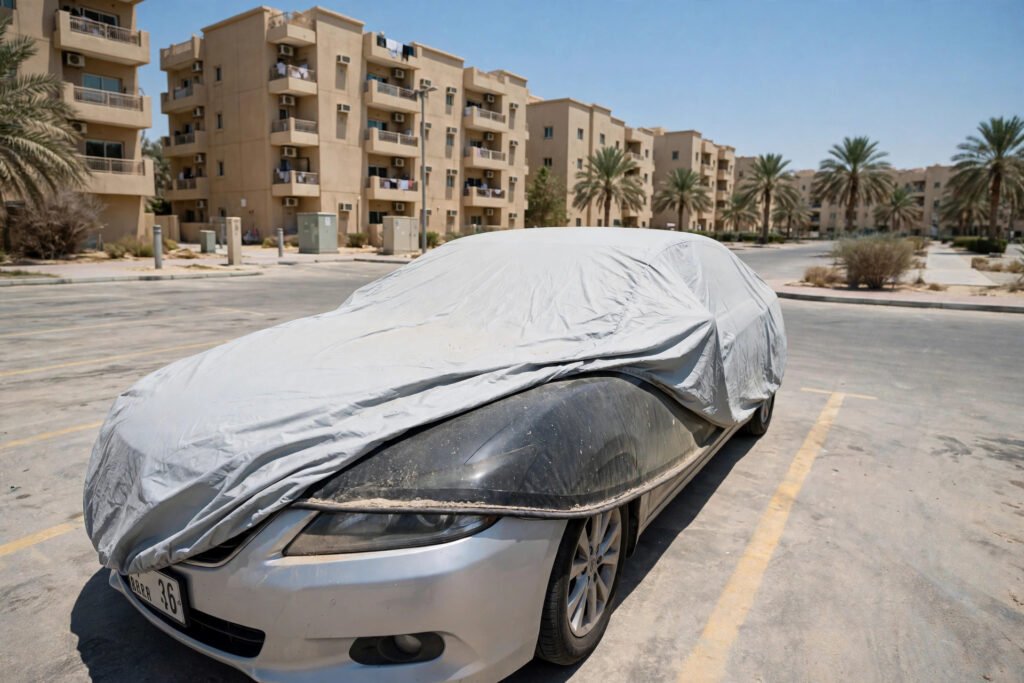
A car cover is the next step. A good, breathable car cover protects the paint from sun, dust, and bird droppings, and it keeps the car cooler. But the key word is breathable. A cheap plastic cover that does not breathe can trap moisture underneath, and moisture trapped against paint in heat can cause marks and, over time, damage. A proper car cover made for outdoor use, fitted correctly so it does not flap in the wind, is a good investment if you park outside regularly. Fit it carefully, make sure it is clean underneath, and make sure it is secure so it does not blow off or rub the paint in the wind. If your car has just been washed, make sure it is fully dry before you put the cover on. A cover on a wet car traps moisture.
Do not use a cover as a substitute for a wash. If the car is dirty when you put the cover on, the dust and grit under the cover can scratch the paint as the cover moves in the wind. Wash the car before you travel, let it dry completely, and then cover it. When you return, do not pull the cover off and drive away with a dusty car. Remove the cover carefully, shake it out away from the car, and wash the car properly before you drive, or at least wash the windscreen and windows so you can see clearly.
Dust will get on the car no matter what you do. That is Dubai. A thin layer of dust is not a problem. What is a problem is wiping it off dry. Dry dust is abrasive. If you wipe a dusty windscreen with a dry cloth or a dry wiper blade, you can scratch the glass and the paint. When you return, wash the car with water first, or at least rinse the windscreen thoroughly, before you use the wipers. Use the washer fluid, let it soak for a moment, and then wipe. The same goes for the paint: rinse before you wash, wash with a proper car shampoo and a clean cloth, and do not scrub dry dust into the paint.
Wiper blades suffer in the sun. The rubber hardens and can take a set, pressed against the hot windscreen for weeks. When you return, the wipers may judder, squeak, or leave streaks. Sometimes they recover after a few uses. Often they need replacing, especially if they were already old before you left. Wiper blades are a small, inexpensive part, and new blades make a big difference to visibility. If your wipers were already streaking before you travelled, replace them before you go, so you come back to blades that work.
Inside the car, heat does its work quietly. Leather seats can dry out, plastic can fade, and anything left in the car can melt, warp, or leak. Take out everything you do not need: sunglasses, pens, bottles, cans, electronics, and anything with a battery. A can left in a hot car can burst. A bottle of water left in direct sun can act like a lens — that is rare, but it is a real risk, and it is one more reason to empty the car properly. Leave the interior clean and empty, and the car will smell far better when you return.
If your car has leather seats, a light leather conditioner applied before you travel can help keep the leather from drying out, but only use a product made for your type of leather and follow its instructions. Do not apply heavy oils or home remedies. If you are not sure, leave the leather alone and have it conditioned properly after you return. The same goes for the dashboard: a proper interior protectant can help, but a thick layer of a shiny product applied before a long park in the sun can do more harm than good. Keep it simple. Clean, shade, cover, and empty is enough for most cars.
One more heat point that people forget: the tyres and the fuel system are also affected by heat, as I have already said, but so is the air conditioning system. The air conditioning will not be damaged by sitting still for a few weeks, but the seals in the system like to be used. When you return, run the air conditioning for a good stretch on your first drive, and check that it blows cold air properly. If it blows warm, or if it smells musty for more than a few minutes, there may be a problem that needs looking at. A musty smell that fades quickly is often just dust and moisture in the vents. A smell that stays, or a system that does not cool, needs a mechanic.
Pests, Smells, and Small Creatures
This is not a pleasant subject, but it is a real one, and it is better to prevent it than to deal with it after you return.
A quiet, warm, dark engine bay is an attractive shelter. Insects, and in some areas small rodents, will explore it. They are looking for warmth, shelter, and sometimes food. A car that is used every day is noisy and hot and moving, and it is not a good home. A car that sits still for weeks is a much better one. In a busy basement car park, this is less common. In a villa compound near landscaping, near a waste area, or near a quiet, overgrown corner, it is more common.
The signs are usually obvious when you open the bonnet after you return: droppings, nesting material like leaves or paper, chewed wires or hoses, or a smell that was not there before. Chewed wires can cause all sorts of electrical problems, from a warning light to a car that will not start. A nest in the air filter box can restrict airflow and make the engine run poorly. Droppings in the ventilation system can cause a smell every time you switch on the air conditioning.
Prevention is mostly about removing the reasons for creatures to move in. Clean the car inside and out before you leave. Take out all food, including crumbs, wrappers, and anything that smells of food. Clean the boot properly. Do not leave pet food, bird seed, or any food in the garage near the car. Keep the area around the car clean and clear. If you park in a villa garage, make sure there is no rubbish or clutter piled against the car.
Do not leave the windows open even a crack while you are away, thinking it will keep the car cooler. An open window is an invitation, and it also lets in dust and, if it rains, water. Keep the car closed and locked. Make sure the bonnet, boot, and doors are properly shut.
Some people use pest repellents in the engine bay or the garage. There are products made for this, and some people swear by simple measures like keeping the area clean and well lit. I will not recommend a particular product here, because what works in one place does not always work in another, and some products can damage paint or rubber if used in the wrong place. If pests have been a problem for you before, talk to a pest control professional or a mechanic about what is safe to use around your car. Do not spray household insecticide all over the engine bay. It is not designed for that, and it can damage wiring and rubber.
When you return, open the bonnet and have a look before you start the engine. It takes a minute. Look for nesting material, droppings, chewed wires, or anything that looks out of place. Check the air filter box if you can see it, and look around the battery and the wiring. If you see signs of nesting or chewing, do not start the engine until you have had a look properly, or had a mechanic look. Starting an engine with a nest in the wrong place, or with a chewed wire shorting out, can cause damage. A quick look first is always worth it.
Smells inside the car after a long park are usually simpler. A stale, hot smell is normal after weeks in the sun, and it usually clears after you air the car out and run the air conditioning for a while. A sweet smell can mean a coolant leak. A smell of fuel can mean a fuel leak. A smell of rotten eggs can mean a battery problem. A musty smell that does not clear can mean mould in the air conditioning or a water leak. If a smell is strong, unusual, or does not clear after a day of normal use, get it checked. Your nose is a good diagnostic tool, and you should trust it.
Where You Park Matters More Than You Think
A basement car park in your own building is usually the best choice. It is cooler than the outside, it is out of direct sun, it is out of the worst of the dust, and it is secure. The temperature is more stable, day and night, which is kinder to the battery, the tyres, and the fluids. If you have a basement space, use it. If you have a choice between a basement space and an open space, take the basement, even if it is a little further from the lift.
A shaded outdoor car park, under a roof or a shade structure, is the next best. It keeps the sun off the car, which is the biggest single protection you can give it. It is still hot, and it is still dusty, but the sun is not baking the paint, the dashboard, and the tyres directly.
An open lot in full sun is the hardest place to leave a car for weeks. If that is your only option, use a sunshade, consider a proper car cover, and be extra careful about the tyre pressures and the battery, because both will suffer more in the heat. Park with the front of the car facing away from the afternoon sun if you can, so the dashboard gets a little less direct sun in the hottest part of the day. It is a small thing, but it helps.
A villa garage is good if it is clean, dry, and ventilated. A garage that is damp, or full of clutter and rubbish, is not good. Keep the garage clean, keep the car away from stored chemicals or paint tins that could leak or give off fumes, and make sure the garage door closes properly. If the garage gets very hot, because it has no ventilation and faces the sun, it may not be much cooler than parking outside. Open a vent if you can, and do not leave the car in a sealed, baking garage for months without a thought.
Airport parking deserves a special mention, because many people leave their cars at the airport for the whole holiday. Airport car parks in Dubai are generally secure and well managed, but they are often open or partly open, and the car will be in the sun and the heat for the whole trip. That is not a reason to avoid airport parking — it is convenient, and for many people it is the right choice — but it is a reason to do the checks in this article before you leave the car there, and to do the return checks carefully when you land. If you are leaving the car at the airport for a month or more, think even more carefully about the battery, because nobody will be there to start it for you.
Wherever you park, make sure the car is parked legally and that you have paid for the parking for the full period. A car that gets clamped or towed while you are away is a problem nobody needs. Check the rules of your building, your community, and the airport or parking operator before you travel. Make sure your parking permit, if you need one, covers the whole trip. Tell your building security or watchman that you will be away and the car will not move, so they do not worry about it, and so they can tell you if anything happens to it.
And a practical point: park in a way that leaves room around the car. If you park too close to a wall or another car, you will not be able to walk around it and check the tyres properly when you return, and a mechanic who needs to jump start the car or change a tyre will have no room to work. Leave space, and note exactly where you parked — the level, the bay number, the area — so you can find the car quickly when you land, tired, at night.
What Not to Do Before You Travel
Do not start the car for five minutes every day, or ask someone to do that, thinking it will keep the battery charged. A five-minute idle does not charge the battery properly. The alternator needs time and engine speed to put charge back, and a short idle can leave the battery lower than it was, because starting the engine uses a lot of power and idling does not replace it. It also leaves moisture in the exhaust system and in the engine, because the engine never gets hot enough to dry itself out. If someone is going to start the car, they should drive it properly, for a good stretch, as I said in the battery section. If nobody can drive it, leave it switched off and deal with the battery when you return. A car that is left alone is better than a car that is started badly.
Do not leave the car with the air conditioning on, or with any electrical accessory running, while you are away. It sounds obvious, but people have left cars with a phone charging, a cooler box plugged in, or a light on, and come back to a flat battery. Check everything is off before you lock the car. Walk around, look through the windows, and make sure no light is on inside, in the boot, or in the glove box.
Do not wash the car and then park it wet in a closed garage. Water trapped in door seals, in the boot seal, and around the brakes can cause the brakes to stick more firmly and can leave water marks on the paint. Wash the car, dry it properly, and then park it. If you wash the car at a car wash on the way to the airport, drive for a few minutes afterwards so the brakes dry out, and dry the car as well as you can before you leave it.
Do not over-inflate the tyres to a very high pressure thinking it will protect them. A small increase above normal is sensible for a long park. A very high pressure is not. Over-inflated tyres wear unevenly, give a harsh ride, and are more vulnerable to damage from a pothole or a sharp object on the first drive back. Stick to the normal pressure, plus a small amount if you will be away for a month or more, and remember to set the pressure back to normal when you return.
Do not disconnect the battery, remove fuses, or change any setting on the car on the basis of a video you watched, unless you have checked it against your car's handbook or asked a mechanic. Modern cars have complex electronics, and a well-meaning change can trigger a warning light, a security lockout, or a setting that is difficult to restore. If you are unsure about anything involving the battery or the electrics, ask a mechanic. I have said this before, and I will say it again, because it is the one piece of advice that saves the most trouble.
Do not leave food, drink, or anything that can melt in the car. Do not leave a spare key in the car, or in an obvious place near the car. Do not leave the car unlocked, even in a secure building, thinking it is safe. Lock it, take the key, and keep the spare in a safe place.
Do not ignore a warning light before you travel. If a warning light is on, or if the car has been behaving differently — a noise, a vibration, a smell, a pull to one side — get it looked at before you leave. A car that is already unwell will not get better by sitting still for a month. It will get worse. A small repair before a holiday is usually cheaper and simpler than a bigger repair after it.
And do not leave the car with a nearly empty fuel tank, a low oil level, or soft tyres, thinking you will sort it out when you get back. Sort it out before you leave. The few minutes it takes now save you a stressful first morning back.
How Long Is Too Long? Two Weeks, a Month, Three Months
Two weeks is a short park. A healthy car, in a basement car park, with a healthy battery and correct tyre pressures, will usually start and drive normally after two weeks. You should still do the before and after checks in this article, but you do not need to take special measures. If the battery was already weak, or the car has a lot of extra electronics, two weeks can still be enough to cause a problem, so do not ignore the warning signs I described in the battery section.
Three to four weeks is a medium park. This is where most holiday parks sit, and this is where the advice in this article matters most. A healthy battery may still start, but it will be lower than it was. Tyres will have lost a little pressure. The brakes may feel rough for the first few stops. The car will be dusty. None of that is a disaster, but it is all worth checking. A weekly drive by a trusted person is a very good idea at this length. If nobody can drive the car, make sure the battery is healthy before you leave, the tyres are at the right pressure, and the fluids are at the right level.
Six to eight weeks is a long park. At this length, you should plan for the battery, not hope for it. Have the battery tested before you travel. Consider a maintainer if you have a power socket, or arrange a weekly drive. Check the tyres carefully when you return, and expect the brakes to need a few gentle stops to clear. Expect the car to need a wash, and expect the first start to be slower than usual. If the car will sit for this long in full sun, a cover and a sunshade are worth using.
Three months or more is storage, not parking. At this point, the advice changes. The battery will very likely be flat unless it is on a maintainer or disconnected properly by a mechanic. The fuel may have degraded. The tyres may have flat spots that do not clear. The brakes may have stuck more firmly. The fluids should be fresh before you leave, and the car should ideally be in a cool, dry, shaded place. If you know the car will sit for three months or more, talk to a mechanic before you travel. They can advise you on the battery, the fuel, the tyres, and whether the car should be put on stands, and they can do the work properly. Do not try to store a car for months on the basis of a checklist alone. A short conversation with a mechanic before you leave is the best investment you can make.
The same thinking applies in reverse. If you have just bought a car, or the battery is new, or the tyres are new, the car will cope better with a long park than an older car with a tired battery and old tyres. Age and condition matter more than the calendar. A well-maintained car is a forgiving car. A neglected car is not.
If you are planning a long road trip after you return — for example, driving to Oman or Saudi Arabia — the return checks are even more important. You do not want to discover a flat spot, a low fluid level, or a weak battery on a long journey. Read a proper road-trip checklist before you plan a long drive straight after a holiday.
When You Return: The First Ten Minutes
Start with a walk around the car, before you unlock it. Look at each tyre. Is any tyre visibly flat or much lower than the others? Is there any damage, a bulge, or a nail or screw in the tread? Look at the ground under the car. Is there a puddle or a stain that was not there when you left? Look at the body. Any new scratches, dents, or signs that something has happened to the car while you were away? Check the windows and lights. Any cracks or damage? If you see anything you do not recognise, take a photo before you move the car.
Open the bonnet and have a look. This is the minute that matters most. Look for nesting material, droppings, or chewed wires. Look at the fluid levels — oil, coolant, washer fluid — and check whether any level has dropped noticeably since you left. Look at the battery terminals. Any white or green corrosion on the terminals? Any loose connection? Look at the belts and hoses you can see. Any cracks, splits, or loose connections? You do not need to be a mechanic to spot something that looks wrong. You just need to look, and to trust what you see. If something looks wrong, do not start the engine until you have had a proper look, or had a mechanic look.
Check the tyre pressures with a gauge, not just by looking. A tyre can look fine and still be low. Set the pressures to the normal figure for your car, remembering that you may have added a little extra before you left. If a tyre is very low, or if it goes flat again quickly after you inflate it, there may be a slow puncture, and you should get it checked before a long drive. Check the spare tyre pressure as well, while you are there.
Clean the windscreen and windows before you drive. Rinse the dust off with water, use the washer fluid, and wipe with a clean cloth. Do not use the wipers on a dry, dusty windscreen. Check that the wipers work properly and do not judder or streak badly. Check all the lights — headlights, indicators, brake lights, hazard lights — and make sure they work. It is easier to check with a second person, but you can check the indicators and brake lights by looking at their reflection in a wall or a window.
Now get in the car, but do not start it yet. Check the dashboard. Are there any warning lights that stay on? Is the mileage what you expected? If someone was driving the car while you were away, does the mileage match what you agreed? Check the fuel gauge. Is there enough fuel to get home? Check the seats, the mirrors, and the steering wheel position, especially if someone else has driven the car. Adjust them before you move.
Start the engine. Listen. A healthy engine after a long park may turn over a little more slowly than usual, and then catch. It may run a little roughly for a few seconds while the oil circulates. That is normal. What is not normal is a rapid clicking, a very slow turn that stops, or an engine that starts and then dies. If the battery is flat, do not keep trying. Call for help.
Let the engine idle for a short while — a minute or two, not ten — while you check the dashboard again. Are any warning lights still on after a few seconds? The oil pressure light and the battery light should go out shortly after the engine starts. If they stay on, switch off and call a mechanic. Check that the air conditioning blows cold air, and listen for any unusual noises — a squeal from a belt, a grinding from the brakes, a knocking from the engine. A few small noises at first are normal as the car wakes up. A loud, persistent noise is not.
Before you drive off, test the brakes gently at very low speed. Roll forward slowly in the car park, press the brake pedal gently, and feel what happens. The pedal should feel firm, not soft or spongy. The car should stop in a straight line, not pull to one side. There may be a little roughness or noise from surface rust on the discs, and that should fade after a few gentle stops. If the car does not want to move at all, or if it moves with a loud clunk, the brakes may have stuck. Try a gentle rock forward and back. If it does not free easily, stop and call a mechanic. Do not force it.
Now drive gently for the first few kilometres. Keep your speed low, keep a good distance from the car in front, and brake gently a few times to clear the discs. Listen for vibrations, feel for pulling to one side, and notice any warning lights. If the car feels normal after a few kilometres, you can drive normally. If you feel a vibration that does not fade, a pull to one side, a noise that does not fade, or a warning light that stays on, slow down and get the car checked before you drive further. The first few kilometres after a long park are the time to find out if something is wrong, at low speed, near home, not on a motorway.
A few more things for the first day back. Fill the fuel tank if you need to, and check the tyre pressures again after the tyres have cooled, because pressures change as tyres warm up. Wash the car properly, including underneath if you can, to remove the dust that has settled over weeks. Run the air conditioning for a good stretch. And if the battery went flat while you were away, even if it is working now, have it tested properly in the next few days. A battery that has gone flat once may do it again, and a test will tell you whether you can trust it.
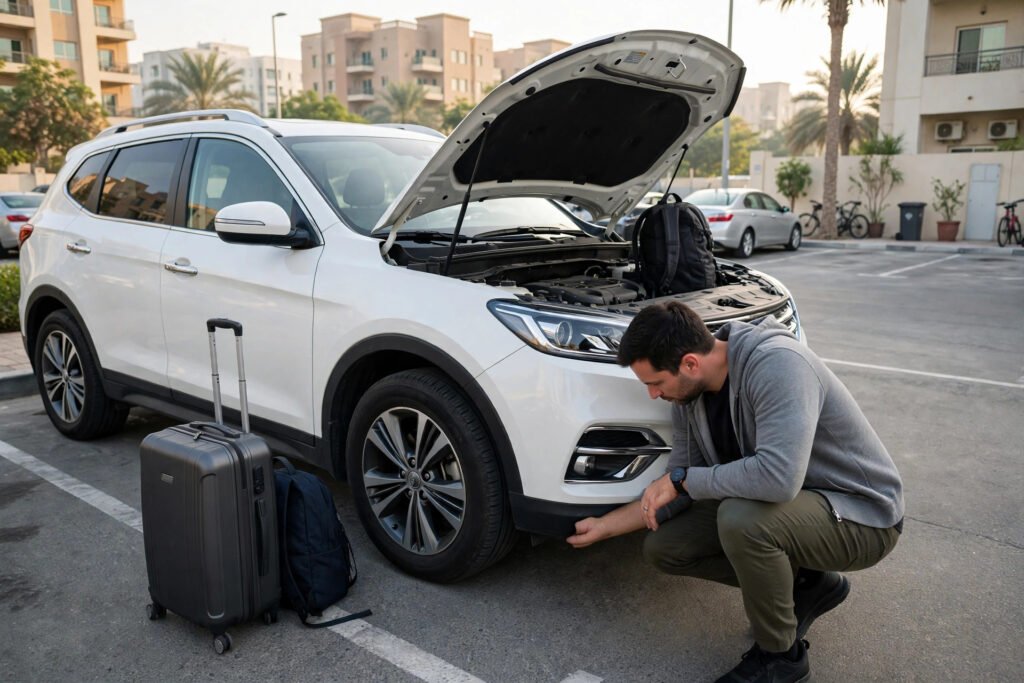
If the Car Will Not Start When You Return
First, check the simple things. Is the key fob battery flat? Try the spare key if you have it with you, or hold the fob close to the start button as your handbook describes. Is the car in Park for an automatic, or in neutral with the clutch pressed for a manual? Is a door or the boot not quite closed, so the car will not start? Is the steering lock on? These sound simple, and they are, but they are also the things people forget when they are tired after a flight.
If the dashboard lights are dim, or you hear a rapid clicking sound, the battery is very likely flat. The clicking is the starter trying to work without enough power. Do not keep turning the key. That will only drain the battery further and can damage the starter.
If you have jump leads and another car, and you know the safe way to jump start your car, you can try it, following your car's handbook exactly. The handbook matters, because the correct procedure and the correct connection points are different on different cars, and a wrong connection can damage the electronics or cause a spark. If you do not know the safe way, or you are not comfortable, do not guess. Call a mobile mechanic. A professional can test the battery on the spot, jump start the car safely, and tell you whether the battery needs a charge or a replacement. That is a much better outcome than a jump start that works for a day and then leaves you stranded again.
If the engine turns over normally but does not start, the problem may not be the battery. It could be fuel, it could be a sensor, or it could be something else entirely. Do not keep cranking the engine. Switch off, and call for help. A mechanic can diagnose it properly, rather than you guessing and possibly causing more damage.
If the car starts with a jump, do not assume everything is fine. Drive the car for a proper run, at normal road speeds, so the alternator can charge the battery, and then have the battery tested as soon as you can. A battery that has gone flat may not hold a charge properly afterwards, especially if it is older. A test will tell you the truth. If the battery needs replacing, replace it. A new battery is far cheaper and less stressful than a second breakdown.
One thing to avoid: do not push start a modern automatic car, and do not try to bump start a car with complex electronics unless your handbook specifically says you can. Modern cars are not designed for that, and you can cause damage. Call for help instead.
Leaving the Car With Someone While You Are Away
Agree who has the key, and where the spare key is. Agree whether they will drive the car, and if so, how often and for how long. A proper drive once a week is ideal. Agree what they should do if a warning light comes on, if the car will not start, or if something happens to the car — who they should call, and how they should reach you. Make sure they know how to reach you, and make sure you will have phone signal and data where you are travelling.
Leave them the car's basic information: the registration, the parking location, and any quirks the car has — a sticky door, a particular way the handbrake works, a key fob that needs a new battery. Leave them a little fuel in the tank, or enough to drive the car properly, so they do not have to fill it up just to help you.
If a building watchman or a valet will move the car, ask about the arrangement before you travel. Who is responsible if the car is damaged while it is moved? Is there a record of when the car is moved and by whom? A short, clear conversation before you leave avoids a difficult conversation when you return.
And a word about trust. Only leave your car key with someone you trust completely. A car key is not just a key to the car. On many modern cars, it is also a key to your home address in the navigation system, and to your personal information in the car's computer. If you are leaving the car with someone you do not know well, clear the navigation history and any personal information from the car's system before you travel, and take out any personal items, documents, and valuables from the car.
A Simple Plan for Your Next Trip
A few days before you travel, give the car a proper drive and listen to it. Is it starting normally? Is it driving normally? Are there any warning lights, noises, or smells? If there are, get them checked now.
The evening before you travel, check the tyre pressures, check the oil and coolant levels, top up the washer fluid, fill the fuel tank to a good level, clean the car inside and out, take out food and valuables, and take a photo of the car and the dashboard. Park in the best place you can — basement first, shade second, open sun last. Put up a sunshade, and use a cover if you park outside. Lock the car, check every door and the boot are shut, and make sure nothing is left on inside.
While you are away, if someone can drive the car properly once a week, let them. If nobody can, do not worry about it. The car will wait for you. It is designed to wait, as long as it was healthy when you left it.
When you return, give the car ten minutes. Walk around it, look under the bonnet, check the tyre pressures, clean the windscreen, start the engine gently, test the brakes at low speed, and drive gently for the first few kilometres. If anything feels wrong, slow down and get it checked before you drive further. If the battery is flat, call for help rather than guessing. If the battery went flat, have it tested in the next few days.
That is it. That is the whole plan. It is not complicated, it is not expensive, and it does not need special tools. It just needs ten minutes before you leave and ten minutes when you return. Those twenty minutes are the difference between a car that starts and drives normally, and a car that leaves you stranded in a car park at midnight after a long flight.
Cars in Dubai work hard. They work in heat, in dust, and in traffic, and they do it every day. A few weeks of rest is not a punishment for a car. It is just a pause. Give it a little care on each side of the pause, and it will be ready when you are.
Frequently Asked Questions
How long can I leave my car parked in Dubai without a problem?
For most healthy cars, two weeks is usually fine. Three to four weeks is the point where the battery, the tyre pressures, and the brakes deserve attention, especially in summer. Six weeks or more is a long park, and you should plan for the battery and arrange a weekly drive if you can. Three months or more is storage, and it is worth talking to a mechanic before you leave. The condition of the car matters more than the exact number of days — a new battery and good tyres will cope far better than an old battery and worn tyres.
Will my car battery die if I leave it for a month?
It might, and it is the most common problem after a long park. A healthy battery in a newer car will often still start after a month, but an older battery, or a car with extra electronics like a dash camera in parking mode, is much more likely to go flat. Have the battery tested before you travel if you have noticed slow starts, dim lights, or a battery warning light. If you are unsure about disconnecting the battery or fitting a maintainer, ask a mechanic.
Should I disconnect the battery before I travel?
It can help a battery hold its charge, because a disconnected battery loses charge more slowly. But on many modern cars, disconnecting the battery can reset settings, trigger warning lights, or cause security issues, and it must be done safely. Do not do it on the basis of a video for a different car. Ask a mechanic whether it is sensible for your car model, and if it is, let them do it or show you the safe way. If you are unsure, do not disconnect it.
Should I leave the handbrake on or off when I park for weeks?
On flat ground, in a secure place, leaving the handbrake off and the car in gear can reduce the chance of the rear brakes sticking. On any slope, leave the handbrake on — safety comes first. If your car has an electronic parking brake that applies automatically, do not try to override it unless your handbook tells you how. When you return, test the brakes gently at low speed and let them clear with a few gentle stops.
What tyre pressure should I leave my car on?
Check the pressure on the sticker inside the driver's door frame or in your handbook, and inflate the tyres to that figure before you travel. If you will be away for a month or more, a small amount of extra air above normal can help the tyres hold their shape, because they will lose a little air while you sit. Do not over-inflate them by a lot, and remember to set the pressure back to normal when you return. Check the pressures with a gauge, not just by looking, and check the spare as well.
Will my tyres get flat spots if I leave my car for three weeks?
They can, especially if the pressure was low when you left, or if the tyres are old. On a short park with correct pressure, any flat spot is usually temporary and fades after a few kilometres of driving as the tyre warms up. If the vibration does not fade, or the car pulls to one side, get the tyres checked before a long drive. Correct pressure, shade, and a weekly drive are the best protection.
Should I fill the fuel tank before I leave my car parked?
Yes, leave it more than half full, or fill it to the normal full mark where the pump clicks off. A fuller tank leaves less room for air and moisture inside the tank. Do not fill it right to the neck, because fuel expands in heat. And leave enough fuel to get home comfortably when you land, without a stressful first stop at a petrol station.
What should I check first when I come back from holiday?
Walk around the car and look at the tyres and the ground underneath. Open the bonnet and look for leaks, nesting material, or chewed wires. Check the oil, coolant, and washer fluid levels, and check the tyre pressures with a gauge. Clean the windscreen before you use the wipers. Start the engine, let it idle briefly, check that warning lights go out, and test the brakes gently at low speed. Drive gently for the first few kilometres and listen for anything unusual. If something feels wrong, slow down and get it checked.
My car started, but it vibrates for the first few kilometres. Is that normal?
Often, yes. That vibration is very likely a temporary flat spot in the tyres, and it usually fades as the tyres warm up and regain their shape. If it fades after a few kilometres, and the car then drives normally, it was probably just that. If the vibration stays, gets worse at speed, or the car pulls to one side, do not ignore it. Get the tyres and the wheels checked before a long drive.
Is it safe to jump start my car after a long park?
It can be, if you know the safe way for your car and you follow your handbook exactly. If you do not know the safe way, or you are not comfortable, call a mobile mechanic instead. A wrong connection can damage the car's electronics or cause a spark near the battery. After a jump start, have the battery tested properly, because a battery that has gone flat may not hold a charge well afterwards.
What should I take out of the car before I travel?
Take out all food, drink, rubbish, and anything that can melt, leak, or smell. Take out valuables, documents, electronics, and anything with a battery that could leak. Take out sunglasses, pens, bottles, and cans. Leave the car clean and empty. It takes five minutes, it keeps pests away, and it means you come home to a car that smells clean, not stale.
Do I need a service before I leave my car for a long time?
Not always, but it is a good idea if a service is due soon anyway. Fresh oil protects the engine better while it sits than old oil does, and a service is a chance to spot a small leak, a worn tyre, or a weak battery before you travel. If the car has a warning light on, or anything feels wrong, get it checked before you leave, not after. A small repair before a holiday is usually simpler than a bigger repair after it.
Call 95 Services
If your car will not start after a holiday, if the battery has gone flat, if a tyre is low or has a flat spot that will not clear, or if you just want someone to check the car properly before you travel or when you return, call 95 Services.
We are a mobile car service across the complete UAE, and we come to you — at your home, your building car park, or the airport car park. Our response time is 15–20 minutes, and our prices are low. Whether it is a battery test, a jump start, a battery replacement, a tyre check, or a full check before a long trip, we will look at the car honestly and tell you what it needs, in plain language, without pushing work you do not need.
Do not wait until a small problem after a holiday becomes a breakdown on the road. Call us before you travel for a quick check, or call us when you return for a first-drive check, and get back on the road with confidence.
Call 95 Services on +971 54 344 3513 — we will come to you, anywhere in the UAE, and get your car going again.
