

Run-Flat Tyres in Dubai: How They Work, How Far You Can Drive After a Puncture and When to Replace
I have worked on cars all over Dubai for years now, and I can tell you one thing with complete honesty: most drivers have no idea what kind of tyres are on their own car until the day one of them goes flat. They drive up and down Sheikh Zayed Road every day, they take the long drive out to Abu Dhabi on the weekend, they park in the sun outside a mall in the middle of summer, and they never once stop to look at the side of the tyre. Then one afternoon a warning light comes on, or the car starts to feel strange, and suddenly they are standing at the side of a busy road wondering what to do next. If that has happened to you, or if you have just bought a car and someone told you it has run-flat tyres, this article is for you. I am going to explain the whole thing in plain words, the way I would explain it to a friend standing next to me in the workshop, with no confusing terms and no guessing.
A run-flat tyre is one of those things that sounds simple when you first hear about it, and then gets confusing the moment you start reading about it online. One website tells you one thing, another website tells you the opposite, and a third one uses words that only a tyre engineer would understand. I have seen drivers in Dubai get stuck because of that confusion. Some of them drove on a flat tyre for far too long because they thought a run-flat could go on forever. Others stopped the car in a dangerous place and waited for hours because they thought a run-flat could not move at all. Both of those mistakes come from the same problem: nobody explained the tyre properly in the first place. So let me do that now, slowly and clearly, so that by the end of this article you know exactly what you have under your car, what it can do, what it cannot do, and what to do when something goes wrong.
Dubai is a special place for tyres, and I say that from experience, not from a book. The heat here is not like the heat in other places. In summer the road surface gets so hot you can feel it through your shoes when you step out of the car. That heat works on your tyres every single day, even when the car is just parked. Then you add the long straight highways, the high speeds on Sheikh Zayed Road, the sand and dust that blows across the road, and the small pieces of metal and debris that fall off trucks and building sites. All of that is hard on a tyre. A tyre that might last a long time in a cool country can wear out much faster here, and a small puncture that might be a small problem somewhere else can become a big problem here if you do not handle it the right way. That is why I wanted to write this article specifically for Dubai drivers, not a general article copied from somewhere else.
I remember a driver who called me from the side of the road near Dubai Marina one evening. His car had a warning light on the dashboard, and he could feel the car pulling slightly to one side. He told me his car had run-flat tyres, and he had heard that run-flats can drive with no air in them, so he thought he could just keep driving home and deal with it in the morning. I told him to stop where it was safe, put his hazard lights on, and wait for us. When we got there and looked at the tyre, it was already badly damaged on the inside, even though from the outside it still looked almost normal. That is the tricky part about run-flats, and it is the reason I keep coming back to the same point in this article: a run-flat gives you a chance to get to safety, it does not give you a free pass to ignore a puncture. If you understand that one idea, you will already be ahead of most drivers.
What a Run-Flat Tyre Actually Is
A run-flat tyre looks, from the outside, very much like a normal tyre. If you parked two cars next to each other, one with normal tyres and one with run-flat tyres, most people walking past would not be able to tell the difference just by looking at the tread, which is the part of the tyre that touches the road. The difference is hidden inside the tyre, in the sides. To understand it, you first need to understand what a normal tyre does, and why it fails when it loses air.
A normal tyre is basically a strong rubber ring filled with air. The air inside is what holds the weight of the car. Think of it like a balloon, but a very tough balloon made for a car. When the tyre is full of air at the right pressure, it keeps its round shape, it supports the car, and it lets you steer and brake properly. The rubber itself is strong, but on its own, without air, it is not strong enough to hold up a car. That is why, when a normal tyre gets a puncture and the air escapes, the tyre goes flat and soft. The side of the tyre, which we call the sidewall, collapses and folds under the weight of the car. If you try to drive on it like that, the tyre gets crushed between the wheel and the road, the rubber tears, the wheel itself can get damaged, and the car becomes very hard to control. That is why everyone tells you never to drive on a flat normal tyre.
A run-flat tyre is built differently. The sidewalls, which are the smooth sides of the tyre between the tread and the wheel, are made much thicker and much stronger. Inside those sidewalls there is extra rubber and extra layers of strong material. I often explain it to drivers like this: imagine a normal tyre is like a soft wall, and a run-flat tyre is like a wall with a strong pillar built into it. When the air is there, both walls do their job. When the air goes out, the soft wall falls down, but the wall with the pillar inside can still stand up for a while and hold the weight. That is, in simple words, what a run-flat tyre does. The reinforced sidewalls, which just means the sides have been made stronger on purpose, hold the tyre up even when there is little or no air left inside it. The tyre keeps its shape, the wheel does not sit directly on the road, and the car can still be steered and stopped, for a limited time and under limited conditions, so the driver can get to a safe place.
It is also important to understand what a run-flat tyre is not. It is not a tyre that cannot get a puncture. It can get a puncture just like any other tyre. A nail, a screw, a sharp piece of metal on the road, a broken piece of debris from a building site, all of those can go through a run-flat tyre and let the air out. The rubber on the tread is not bulletproof, and the tyre is not magic. What is different is what happens after the air starts to escape. With a normal tyre, the car quickly becomes very difficult to drive, and you have to stop almost straight away. With a run-flat, the tyre holds its shape, and you get a window of time to drive carefully to safety. That window is limited, and I will explain the limits carefully later, but the fact that the window exists at all is the whole point of the tyre.
Another thing a run-flat tyre is not is a tyre that fixes itself. Some people hear the name and think the tyre will seal the hole on its own and keep going as if nothing happened. That is a different kind of tyre, and it is not what we are talking about here. A run-flat does not repair the hole. The air is still escaping, or it has already escaped. The tyre is still damaged. The strong sidewalls are just holding the car up while you get to help. Once you have driven on a run-flat with no air, that tyre has been through a lot of stress, and in most cases it will need to be replaced, not repaired. I will explain that in detail in the section on repairs, because it surprises a lot of drivers, and it is better to know it now than to find out at the workshop when you were expecting a simple fix.
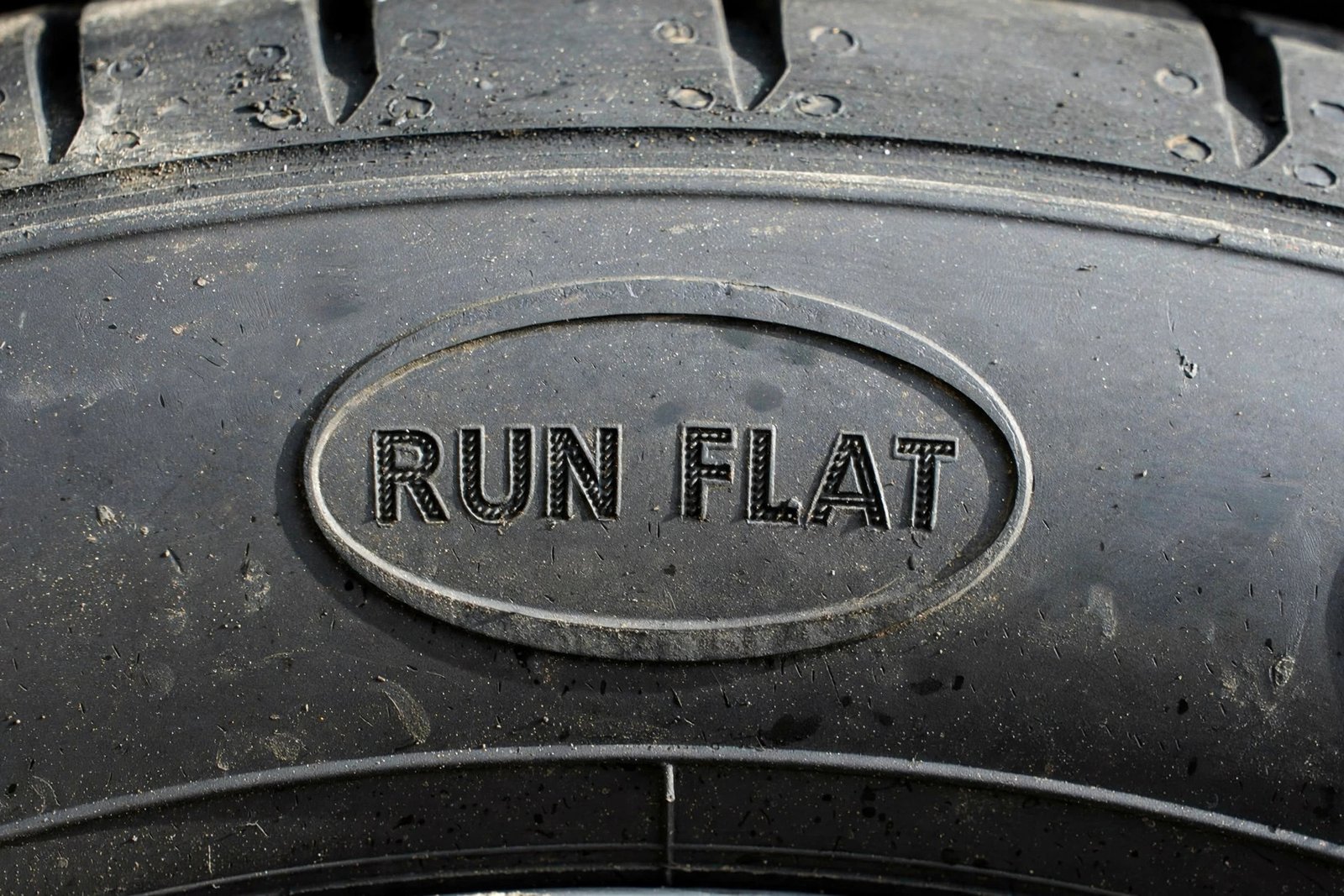
How a Run-Flat Tyre Works When It Loses Air
Now that you know what a run-flat tyre is, let me explain what actually happens inside it when it loses air, step by step, because once you can picture it in your head, everything else in this article will make more sense. I will keep the language plain, and I will explain every part as I go.
Picture a normal tyre again. It is full of air, and the air pushes outwards in every direction. That pressure pushes the tread out against the road, and it pushes the sidewalls out so they stay straight and firm. The car sits on a cushion of air, and the rubber is there to hold the air in and to grip the road. Everything is in balance. Now imagine a nail goes through the tread and the air starts to leak out. As the air escapes, the pressure drops. The sidewalls have nothing pushing them out any more, so they start to bend and fold. The tyre sags, the wheel drops closer to the road, and the rubber gets pinched and crushed. If you keep driving, the sidewall gets chewed up, the tyre can come off the wheel, and the metal wheel itself can hit the road. That is why a flat normal tyre is so dangerous to drive on, and why the car feels so strange and wobbly when it happens.
Now picture a run-flat tyre in the same situation. The nail goes in, the air starts to leak, and the pressure drops, just like before. But this time the sidewalls do not fold. They are thick, stiff, and full of extra strong material. They stand up on their own, even without the air pushing them out. They act like a support inside the tyre, holding the tread up and keeping the tyre round. The wheel stays off the road, the tyre stays on the wheel, and the car can still be steered. It will not feel normal, and I will talk about that feeling in a later section, but it will still be drivable in a careful, slow, controlled way, for a limited time, so you can get off a busy highway and reach a safe place or a workshop.
The key word here is support. The reinforced sidewall is doing a job that the air normally does, and it is doing it under very difficult conditions. The weight of the car is pressing down, the road is hot, the tyre is turning, and the sidewall is bending a little with every turn of the wheel. It can do that job for a while, but it cannot do it forever. Every turn of the wheel puts more stress on the sidewall, and the heat builds up inside the tyre because there is no air to help cool it and cushion it. That is why the limit on how far and how fast you can drive is so important, and why going past that limit is so damaging. The sidewall is strong, but it is not unbreakable, and if you push it too far, it will start to break down from the inside, even if it still looks fine from the outside. I have taken run-flat tyres off wheels and found the inside completely torn and burnt, while the outside looked almost normal. That is a sight that stays with you, and it is the reason I always tell drivers to take the warning seriously and to get help early.
It also helps to know that not every car with run-flat tyres is the same. The suspension, which is the system of springs and parts that connects the wheels to the car and smooths out the bumps, is often set up differently on cars that come with run-flats, because the stiff sidewalls change how the car rides. The handbook for your car will have a section about the tyres, and it will tell you what kind of tyres your car was designed for. If you ever change from run-flat tyres to normal tyres, or the other way around, you need to think about that, and you need to talk to someone who knows your car. I will come back to that in the section about run-flats versus normal tyres, but I mention it here because it shows that a run-flat is not just a tyre on its own. It is part of a system that includes the wheel, the suspension, the warning system, and the way the car was designed. When all of those parts work together, the system does its job well. When one part is missing or ignored, the system does not work the way it should.
The Difference Between a Run-Flat Tyre and a Normal Tyre
The difference between a run-flat tyre and a normal tyre is easy to understand once you know where to look, and it is worth understanding properly, because it affects how the car feels, how much the tyres cost, and what you do when something goes wrong. I will go through the differences one by one, in plain words, so you can see the full picture.
The first difference is in the sidewall, which I have already talked about. A normal tyre has a sidewall that is made to be flexible. It bends and moves as the tyre rolls, and it works together with the air inside to absorb bumps and keep the ride smooth. A run-flat tyre has a sidewall that is made to be stiff and strong. It has extra rubber and extra layers inside it, and it is designed to hold the weight of the car even when the air is gone. That extra strength is the whole point of the tyre, but it also changes how the tyre behaves when it is full of air and working normally. Because the sidewall is stiffer, it does not bend as easily, and it does not absorb bumps in quite the same way. That is why many drivers say that cars with run-flat tyres feel a little firmer, a little harder, on the road. You feel the bumps a little more, especially on rough roads or over speed bumps. Some drivers notice it a lot, some drivers hardly notice it at all, and a lot depends on the car, the suspension, and the kind of roads you drive on every day. In Dubai, where most main roads are smooth but where you also have speed bumps in residential areas and uneven surfaces near building sites, that firmer feeling is something you will notice from time to time, especially if you are used to a softer ride.
The third difference is in what happens after a puncture, and this is the most important difference of all. With a normal tyre, a puncture means the tyre goes flat quickly, the car becomes hard to control, and you have to stop. You cannot drive on it, and you should not try. You have to change the wheel at the roadside, or call for help, and the car stays where it is until the wheel is changed. With a run-flat tyre, a puncture means the tyre loses air, but the sidewalls hold it up, and you can drive on, carefully, for a limited time, to reach safety. That is a big advantage, especially in Dubai, where stopping on a busy highway in the middle of summer is not just inconvenient, it can be dangerous. Being able to drive off the highway, into a petrol station, or to a safe parking area, instead of stopping in a live lane, is a real benefit, and it is the reason many drivers like run-flats. But it is a benefit that only works if you understand the limits and respect them. A run-flat is not a tyre that lets you ignore a puncture. It is a tyre that gives you a chance to deal with a puncture safely.
The fourth difference is in how you can tell something is wrong. With a normal tyre, you can usually see it and feel it straight away. The car leans, the steering pulls, the tyre looks flat, and there is no doubt in your mind that something is wrong. With a run-flat tyre, it can be much harder to tell. Because the tyre holds its shape, it might still look almost normal from the outside. The car might feel a little different, a little heavier on one side, a little less responsive, but a driver who is not paying attention might miss it, especially on a smooth highway. That is why the warning system is so important, and why you should never ignore a tyre pressure warning light in a car with run-flats. I will talk about that light in detail soon, but for now, remember that with run-flats, you cannot rely on your eyes alone. You need to rely on the warning system, and on paying attention to how the car feels.
None of these differences make run-flats good or bad on their own. They make them different, and different means you need to understand them and use them in the right way. A driver who understands run-flats and drives a car that was designed for them can be very happy with them. A driver who does not know what they have, or who treats them like normal tyres, can have a bad experience. My job in this article is to make sure you are in the first group, not the second.
Run-Flat Tyres and the Spare Tyre: What You Actually Have in the Boot
One of the first things I ask a driver when they call me about a puncture is a simple question: do you have a spare tyre in the boot? You would be surprised how many drivers do not know the answer. They have owned the car for months or even years, and they have never opened the boot and lifted the floor to look underneath. With run-flat tyres, that question matters even more, because in most cases the answer is no, there is no spare, and that is by design.
Let me explain how we got here. For many years, almost every car came with a spare tyre in the boot. It might have been a full-size spare, which is a normal tyre and wheel just like the ones on the car, or it might have been a small temporary spare, which is a narrow tyre that is only meant to get you to a workshop at a slow speed and for a short distance. The idea was simple: if you get a puncture, you stop, you jack the car up, you take the flat wheel off, you put the spare wheel on, and you drive to get the flat tyre fixed. It was a system that worked, but it had problems too. Changing a wheel at the side of a busy road is hard work, it is hot work in Dubai, it can be dangerous if cars are passing close by, and many drivers, quite understandably, did not want to do it, or did not know how to do it safely. The spare tyre also takes up space and adds weight to the car, which affects fuel use and boot space.
Car makers started looking for a different answer, and run-flat tyres were one of the answers they found. If the tyres themselves can keep the car moving after a puncture, you do not need to carry a spare tyre, a jack, and a wheel wrench in the boot. You can use that space for luggage, or you can make the car lighter, or you can design the boot differently. That is why many cars that come with run-flat tyres from the factory have no spare tyre at all. Instead, they might have a small kit in the boot, or nothing at all, because the run-flat system is meant to replace the spare. Some cars have a tyre repair kit, which is a small bottle of sealant and a pump, but that is not the same as a spare, and it is not a replacement for a run-flat system. It is a different solution for a different kind of car.
So if your car has run-flat tyres, the first thing to do is to check the boot. Lift the floor, look underneath, and see what is actually there. Is there a spare wheel? Is there a jack? Is there a repair kit? Is there nothing at all? Knowing the answer before you need it is one of the simplest and most useful things you can do as a driver. I have seen drivers at the roadside open the boot for the first time and find nothing, and then they feel stuck and helpless. I have also seen drivers who knew there was no spare, who knew they had run-flats, and who stayed calm because they knew the car could still move and they just needed to get to safety. The difference between those two drivers was not luck. It was preparation.
For now, the practical step is simple. Go and check your boot today, when you are at home and it is cool and safe, not when you are at the roadside in the heat. See what is there, and see what is not there. Check the sidewall of your tyres for the run-flat marking, which I will explain how to find in the next section. Read the part of your handbook that talks about tyres and punctures. Keep our number in your phone, so that if you do get a puncture, you are not searching for help while you are stressed. Those small steps take only a few minutes, and they make a huge difference when something goes wrong.
What Happens When You Get a Puncture
A puncture is one of those things that every driver worries about, but few drivers have really thought through until it happens to them. Let me walk you through what actually happens, moment by moment, when a run-flat tyre gets a puncture in Dubai, so that you are not frightened or confused when it happens to you, and so that you know what to look for.
It often starts with something very small. You might be driving along Sheikh Zayed Road, or on a quiet street in your area, or on the road out to Abu Dhabi, and you drive over a nail, a screw, or a sharp piece of metal. You might not even feel it. The object goes through the tread, which is the part of the tyre that touches the road, and it makes a small hole. At first, the object itself might block the hole, so the air leaks out slowly. Or the object might fall out, and the air leaks out more quickly. Either way, the pressure inside the tyre starts to drop. With a normal tyre, you would feel that drop very quickly, because the tyre would start to sag and the car would pull to one side. With a run-flat tyre, the drop in pressure is still happening, but the tyre holds its shape, so the change in how the car feels is much more subtle, especially at first.
The first sign for most drivers is the warning light on the dashboard. This is the tyre pressure monitoring system doing its job. The system watches the pressure in each tyre, either by measuring the pressure directly with a small sensor inside the tyre, or by watching how fast each wheel is turning and noticing when one wheel starts to turn differently because its tyre has lost pressure. When the pressure in one tyre drops below the level it should be at, the system turns on a warning light. The light usually looks like a tyre with an exclamation mark in the middle of it, and it is often yellow or amber. On some cars, a message also appears on the screen, telling you that the tyre pressure is low, or telling you which tyre is affected. On some cars, the light comes on and stays on. On others, it might flash at first and then stay on. The exact look of the light is different from car to car, and your handbook will show you what it looks like in your car. If you have never looked at that page in your handbook, I suggest you do it today, so that you recognise the light when you see it.
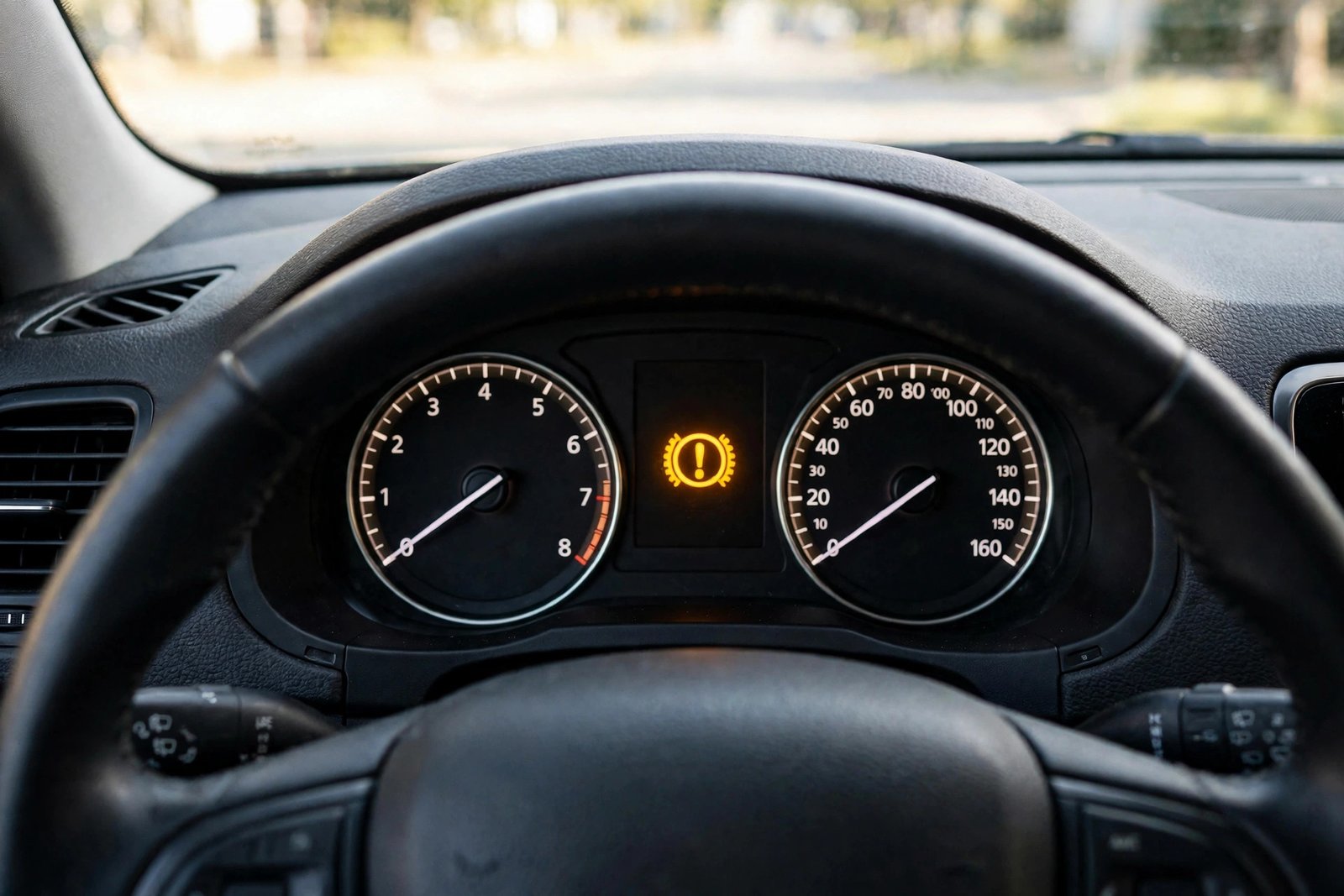
When that light comes on, it is telling you something important, and you should take it seriously. It is not a light you can ignore and deal with later. It means one of your tyres has lost pressure, and you need to find out which one, and what to do about it. The first thing to do is to stay calm, keep both hands on the steering wheel, and look for a safe place to stop or to slow down. Do not brake suddenly, and do not swerve. Just ease off the accelerator, keep the car straight, and look ahead for a safe place to pull over, like a petrol station, a parking area, or a wide hard shoulder where you are away from moving traffic. If you are on a busy highway, do not stop in a live lane if you can avoid it. Use the run-flat system for what it was designed for: to get you to safety.
As you drive, you might start to notice how the car feels. With a run-flat tyre that has lost air, the car can feel a little different in several ways. The steering might feel heavier, or it might feel a little vague, as if the car is not responding as quickly as it normally does. The car might pull slightly to one side, towards the tyre that has lost pressure. You might feel a vibration through the steering wheel or through the seat, especially as the speed changes. You might hear a noise, like a thumping or a flapping sound, which gets faster as the car moves faster. Or you might feel that the car is not braking as smoothly as normal, or that it takes a little longer to stop. None of these feelings mean the car is about to lose control, but they all mean the tyre is damaged and you need to be careful. Slow down, increase the distance between you and the car in front, avoid sudden movements, and get to safety as soon as you can.
When you get to a safe place, stop the car, put the hazard lights on, and get out and look at the tyres, if it is safe to do so. Walk around the car and look at each tyre. With a run-flat, the damaged tyre might still look almost normal, or it might look slightly lower than the others. Look for a nail or a screw sticking out of the tread, look for a cut or a tear in the sidewall, and look for any sign that the tyre is sitting lower on the road. Put your hand near the tyre, without touching a hot surface, and see if you can feel heat coming from it. A tyre that has been driven on with no air will often feel hot, because the sidewall has been working hard and generating heat. Do not try to drive the car again to test it, and do not try to pump the tyre up and carry on as if nothing happened, unless you have been told to do so by someone who has looked at the tyre properly. Pumping air into a damaged tyre might make it look normal for a short time, but the damage is still there, and the tyre can fail again without warning.
If you are not sure which tyre is damaged, or you are not sure what to do next, call us. Tell us where you are, what the warning light looks like, and how the car feels. We will talk you through what to do, and we will come to you. That is what mobile service is for. You do not have to work it out on your own at the side of a hot, busy road. We have seen this many times, we know what to look for, and we can check the tyre properly and tell you honestly what needs to happen next. Sometimes that means a new tyre. Sometimes it means the car needs to be moved to a workshop. Sometimes it means the tyre can be looked at more closely before a decision is made. Whatever it is, we will tell you plainly, in words you can understand, and we will not leave you guessing.
How Far and How Fast You Can Drive After a Puncture
This is the question every driver asks me first, and it is the question I have to answer most carefully, because there is no single answer that is true for every car, every tyre, and every situation. If you search online, you will find many different numbers. One website will give you one distance, another website will give you a different distance, and a third will give you a speed. Those numbers might be true for a particular tyre on a particular car in a particular test, but they are not true for every run-flat tyre in Dubai. I am going to explain why that is, and how to find the right answer for your own car and your own tyres, because that is the only answer that matters when you are at the roadside with a warning light on.
First, let me be very clear about the principle. A run-flat tyre is designed to let you drive for a limited distance at a limited speed after it loses air, so that you can get to a safe place. The words limited distance and limited speed are the most important words in that sentence. The tyre is not designed to let you drive normally. It is not designed to let you finish a long journey. It is not designed to let you drive for days. It is designed to give you a window to reach safety, and that window has an end. If you drive further than the tyre is designed for, or faster than it is designed for, you risk destroying the tyre from the inside, damaging the wheel, and losing control of the car. I have seen tyres that were driven too far after a puncture, and the inside was completely torn apart, even though the outside still looked like a tyre. I have also seen wheels that were damaged because the tyre had broken down and the metal wheel was hitting the road. Those are not small problems. They are expensive, and they are dangerous.
So why can I not just give you a number? The reason is that the limit depends on several things, and those things are different for every driver. The first thing it depends on is the tyre itself. Different tyre brands make their run-flat tyres in different ways. Different models of tyre, even from the same brand, have different designs, different sidewall strengths, and different limits. A tyre that is made for a small family car will have a different limit from a tyre that is made for a large, heavy car. The size of the tyre matters too, and so does the load the car is carrying. A car that is fully loaded with people and luggage puts more weight on the tyres than a car with only the driver in it, and that extra weight puts more stress on a damaged tyre.
The second thing it depends on is the car. The car maker designs the car, the suspension, the wheels, and the tyres to work together as a system. When the car maker approves a particular run-flat tyre for a particular car, they set a limit for how that tyre should be used on that car after a puncture. That limit is written in the car's handbook, and it is specific to that car. A different car, even one that looks similar, might have a different limit. That is why you cannot take the number from a friend's car, or from a website about a different car, and apply it to your own car. You need the number for your car, from your handbook.
The third thing it depends on is the conditions. The road you are on, the weather, the temperature, and the way you drive all affect how much stress the tyre is under. In Dubai, the heat is a big factor. A tyre that has lost air is already generating extra heat inside, because the sidewall is bending and working hard. When the road is also very hot, and the air is hot, that heat builds up even faster. Driving faster makes the tyre turn more times in the same time, which means more bending, more heat, and more stress. Driving on a rough road, or hitting bumps and potholes, adds more stress. Carrying a heavy load adds more stress. All of those things can shorten the distance a damaged tyre can safely cover. That is why the handbook limit is a maximum under good conditions, not a promise that you can always go that far in every situation. If the conditions are bad, you should go less far, and more slowly, and get to safety sooner.
So how do you find the right limit for your car? There are two places to look, and you should look at both of them. The first place is the sidewall of the tyre itself. The sidewall has markings on it that tell you the size of the tyre, the brand, the model, and whether it is a run-flat. It will have a marking that shows it is a run-flat tyre, and different brands use different letters for this. I will explain those markings in the section about how to tell if a tyre is a run-flat, but for now, just know that the sidewall is where the tyre tells you what it is. Some tyres also have a marking that gives you information about the limit, and your tyre specialist can help you read it.
The second place, and the most important place, is the car's handbook. The handbook is the book that came with your car, and it has a section about tyres, tyre pressure, and what to do after a puncture. That section will tell you, for your car, how far you can drive and how fast you can drive after a puncture on a run-flat tyre. It will also tell you what to do and what not to do. If you have lost your handbook, you can usually find a copy online from the car maker, using the model and year of your car, or you can ask us, and we can help you find the right information. The handbook is the authority for your car. Not a website, not a friend, not a video. Your handbook.
If you cannot find the handbook, and you cannot read the sidewall marking, then the safe thing to do is to drive as little as possible, as slowly as possible, and to get to the nearest safe place as soon as you can. Do not try to guess a distance. Do not think that because you have driven a certain distance before, or because someone told you a number, you can do the same again. Drive to the nearest petrol station, parking area, or safe place where you can stop and call for help. If you are on a highway, get off at the next exit if you can do so safely, or pull into the nearest safe area. If you are already in a safe place, stay there and call for help. It is always better to stop early and call for help than to drive further and risk destroying the tyre and the wheel, or losing control of the car.
I also want to talk about speed, because speed matters just as much as distance. When a tyre has lost air, driving fast puts much more stress on it than driving slowly. The tyre turns faster, the sidewall bends more times, the heat builds up faster, and the car is harder to control if something goes wrong. That is why the handbook will give you a speed limit for driving on a run-flat after a puncture, as well as a distance limit. That speed limit is low, much lower than normal driving speed on a highway. It is a slow, careful speed, the kind of speed you would drive in a residential area, not the kind of speed you would drive on Sheikh Zayed Road. If you drive faster than that limit, you are putting the tyre under stress it was not designed for, and you are reducing the distance it can safely cover. Slow down, keep your distance from other cars, and drive smoothly. Avoid sudden braking, sudden acceleration, and sudden steering. Every smooth, gentle movement helps the tyre last a little longer. Every harsh movement hurts it.
How to Tell a Run-Flat Tyre Is Damaged
Knowing how to tell if a run-flat tyre is damaged is one of the most useful skills a driver can have, because run-flats can be sneaky. As I said earlier, a normal flat tyre is usually obvious. The car leans, the tyre looks flat, and there is no doubt. A run-flat tyre that has lost air can look almost normal, and the car can feel almost normal, especially at first. That means you need to look more carefully, and you need to know what signs to look for. I am going to go through them one by one, so you can check your own tyres with confidence.
The first sign is the warning light. I have talked about this already, but it is worth repeating, because it is the most reliable early sign. If the tyre pressure warning light comes on and stays on, or if a message appears telling you that a tyre has low pressure, take it seriously. Do not assume it is a mistake. Do not assume it will go away. The system is telling you that a tyre has lost pressure, and you need to find out which one and why. Even if the car feels fine, even if the tyres look fine, the light means something is wrong. The only time you can ignore it is if you have just had the tyres checked and the pressure set correctly, and the system needs to be reset, which is a job for someone who knows the system. In every other case, treat the light as a real warning.
The second sign is how the car feels. I talked about this in the section on punctures, but let me go through it again in more detail, because it is a skill you can develop. A car with a damaged run-flat tyre might feel different in several ways. The steering might feel heavier, as if you have to work harder to turn the wheel. Or it might feel lighter and less precise, as if the car is not responding as quickly as it should. The car might pull to one side, especially when you brake or when you drive in a straight line. You might feel a vibration through the steering wheel, through the floor, or through the seat, and that vibration might get stronger as you go faster, or it might change as you slow down. You might hear a noise, like a thumping, a flapping, or a rumbling sound, which was not there before. You might notice that the car does not brake as smoothly as normal, or that it takes longer to stop. Any one of these signs on its own might not mean much, but if you notice two or three of them together, or if you notice a change that was not there yesterday, pay attention to it. Your car is telling you something, and it is worth listening to.
The third sign is what you can see when you look at the tyre. Park the car on flat ground, in a safe place, and walk around it. Look at each tyre from the front and from the side. Is one tyre sitting lower than the others? Does one tyre look a little flatter at the bottom, where it touches the road? Does the sidewall look different, with a bulge, a wrinkle, or a crease that was not there before? Look at the tread, which is the part that touches the road. Is there a nail, a screw, or a piece of metal sticking out of it? Is there a cut, a tear, or a hole in the tread or in the sidewall? Is there any sign of damage, like a scuff mark, a chunk missing, or a piece of rubber peeling away? Look at the wheel as well. Is the wheel damaged, bent, or scratched? Is there any sign that the tyre has been rubbing against the wheel or against the car? If you see any of these things, do not drive the car. Call for help, and let someone look at it properly.
The fourth sign is heat. A tyre that has been driven on with no air will often feel hot, because the sidewall has been working hard and generating heat. If you have just stopped the car, and one tyre feels much hotter than the others, that is a sign that something is wrong. Be careful when you check this. Do not touch a tyre that is very hot, and do not touch the wheel or the brakes, which can also be hot after driving. Just hold your hand near the tyre, without touching it, and see if you can feel heat coming from it. If one tyre is much hotter than the others, that is a warning sign. It means the tyre has been under stress, and it needs to be checked.
The sixth sign is time. If you know you have driven on a tyre after the warning light came on, even for a short distance, that tyre needs to be checked. It does not matter if the tyre looks fine now, or if the car feels fine now. The tyre has been through stress that it was not designed to handle for a long time, and the damage might be on the inside, where you cannot see it. The only way to know for sure is to take the tyre off the wheel and look at the inside. That is a job for a workshop, not something you can do at the roadside. So if you have driven on a run-flat after a puncture, even if it was only a short distance to safety, get the tyre checked before you drive the car again. It is the safe thing to do, and it is the honest thing to do.
There is one more thing I want to say about damage, and it is about the sidewall. The sidewall is the part of the tyre that does the hard work in a run-flat, and it is also the part that is most at risk. A cut, a tear, or a bulge in the sidewall is a serious problem, much more serious than a small puncture in the tread. The sidewall is not like the tread. It bends and flexes every time the wheel turns, and a damaged sidewall can fail suddenly, without warning. If you see a bulge in the sidewall, which looks like a bubble or a swelling in the rubber, do not drive on that tyre. A bulge means the structure inside the sidewall has been damaged, and the tyre could burst. The same is true for a deep cut or a tear in the sidewall. If you see any damage to the sidewall, stop, call for help, and do not try to drive the car to a workshop on that tyre. It is not worth the risk.
Can a Run-Flat Tyre Be Repaired?
This is one of the most common questions I get asked, and it is also one of the questions where the answer surprises people the most. Most drivers, when they get a puncture, expect that the tyre can be repaired. They have had a normal tyre repaired before, maybe more than once, and they think a run-flat will be the same. I understand why they think that. It seems logical. A small hole, a simple repair, and the tyre is as good as new. But with run-flat tyres, it is not that simple, and I need to explain why, so you are not disappointed or confused when you get a different answer at the workshop.
Let me start with the general position, which is what most tyre manufacturers and most tyre shops will tell you. In general, most manufacturers and tyre shops do not repair a run-flat tyre that has been driven on after it lost air. I am saying that as general guidance, not as a rule that applies to every brand, every tyre, and every situation. Different brands have different policies, and different situations are different. A tyre specialist needs to look at the tyre properly before making a decision. But the general position is that a driven-on run-flat is not repaired, it is replaced. That is a big difference from a normal tyre, and it is important to understand why.
The reason is what happens inside the tyre when it is driven on with no air. I have talked about this already, but it is worth explaining again here, because it is the key to the whole question. When a run-flat tyre loses air, the reinforced sidewalls hold the car up, but they do it by bending and flexing under the weight of the car, and by generating heat. Every turn of the wheel puts more stress on the sidewall, and the heat builds up inside the tyre. That stress and that heat damage the structure inside the tyre, in ways you cannot see from the outside. The rubber can start to break down, the layers inside the sidewall can start to come apart, and the tyre can develop weak spots that are invisible from the outside. I have taken run-flat tyres off wheels after they were driven on with no air, and I have seen the inside completely torn, burnt, and damaged, while the outside still looked almost normal. If you repaired the small hole in the tread and put that tyre back on the car, you would be putting a tyre back on that is damaged on the inside, and it could fail suddenly, without warning, at a later time. That is a risk that most manufacturers and most tyre shops are not willing to take, and I agree with them. A tyre is the only part of the car that touches the road, and if it fails, the consequences can be very serious.
That does not mean that no run-flat tyre can ever be repaired. There are situations where a repair might be possible, and I want to be fair about that. If a run-flat tyre gets a small puncture, and the driver stops straight away, before driving on it with no air, and the tyre is taken off and inspected properly, and the hole is in the tread, in the right place, and the tyre has not been damaged on the inside, then some manufacturers and some tyre shops might consider a repair. But that is a very specific set of conditions, and it depends on the brand, the model, the size of the hole, where the hole is, and what the inspection finds. It is not a decision you can make at the roadside, and it is not a decision you can make by looking at the outside of the tyre. It is a decision that can only be made after the tyre has been taken off the wheel and the inside has been looked at carefully by someone who knows what to look for. Even then, many manufacturers will still say no, and many tyre shops will still recommend replacement, because they cannot be sure the tyre is safe.
There is also the question of how many times a tyre has been repaired. A tyre that has already been repaired once is different from a tyre that has never been repaired. Each repair is a weak spot, and too many repairs make the tyre unreliable. With run-flats, this is even more important, because the tyre is already under more stress than a normal tyre. Most manufacturers and tyre shops will be very cautious about repairing a run-flat tyre that has already been repaired before, and in many cases they will recommend replacement instead.
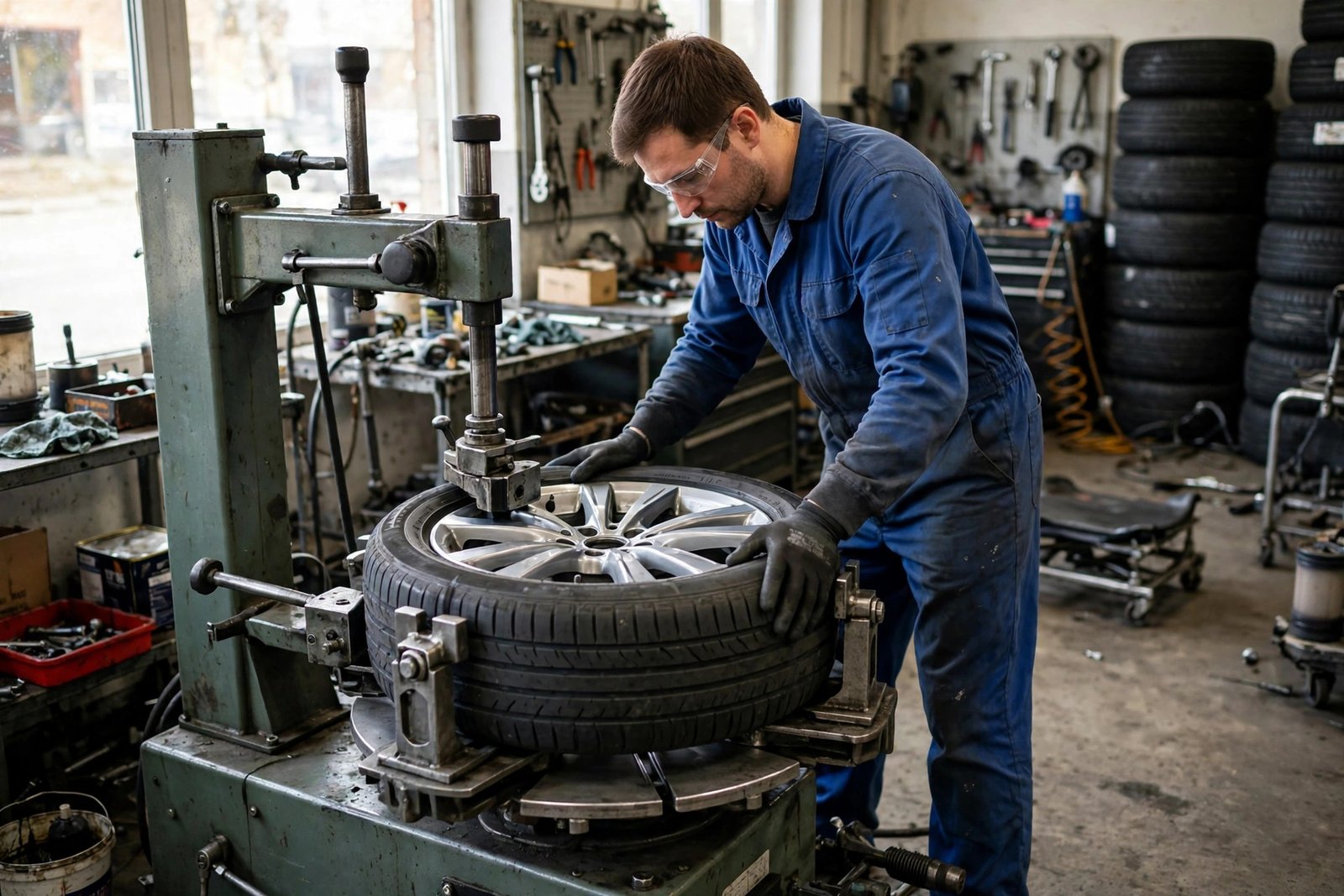
There is one more point I want to make about repairs, and it is about who does the repair. Not every tyre shop has the right equipment or the right experience to work on run-flat tyres. Run-flat tyres are stiffer and harder to take off and put on a wheel than normal tyres, because of the reinforced sidewalls. They need special equipment, and they need someone who knows how to handle them without damaging the tyre or the wheel. If a shop tries to force a run-flat tyre off a wheel with the wrong equipment, they can damage the bead, which is the edge of the tyre that sits on the wheel and seals the air in, or they can damage the wheel itself. That is why I always tell drivers to go to a shop that knows run-flats, and to ask if they have the right equipment before they start work. Our team works on run-flats every day, and we have the right equipment and the experience to do it properly. If you are not sure where to go, call us, and we will help you.
Dubai Heat, Road Debris and What They Do to Run-Flat Tyres
Dubai is a tough place for tyres, and I say that as someone who has worked on tyres here for years. The heat, the roads, the building sites, and the long drives all put extra stress on tyres, and run-flat tyres are no exception. In fact, in some ways, run-flats are more affected by the heat and the conditions here than normal tyres, because of the way they are built. Let me explain what I mean, and what you can do about it.
The first and biggest factor is heat. In summer in Dubai, the temperature is high, and the road surface gets even hotter. When you park your car in the sun, the tyres sit on hot tarmac, and the rubber gets hot. When you drive, the tyres get hotter still, because the rubber bends and flexes as the tyre turns, and that movement generates heat inside the tyre. That is normal for any tyre, but it is more of a problem for a run-flat tyre that has lost air. When a run-flat loses air, the sidewall has to work much harder to hold the car up, and it generates a lot more heat than normal. That heat builds up quickly, especially on a hot day on a hot road. The hotter the tyre gets, the more the rubber breaks down, and the shorter the time the tyre can safely support the car. That is one of the reasons why the distance you can drive after a puncture is limited, and why it is even more limited on a very hot day. It is also a reason why you should not leave a punctured run-flat tyre in the sun and come back to it later, thinking it will be fine. Get help as soon as you can, and get the tyre checked as soon as you can.
The second factor is road debris. Dubai is a city that is always building, always changing, and always moving. There are building sites everywhere, there are trucks carrying materials, and there are roads that are being repaired or resurfaced. All of that means there is debris on the roads: small pieces of metal, nails, screws, pieces of wood, broken glass, and small stones. Any of those can puncture a tyre. I have seen tyres punctured by nails that fell off a truck, by screws from a building site, and by sharp pieces of metal that were left on the road after roadworks. It is not something you can always avoid, no matter how carefully you drive. You can reduce the risk by avoiding roads that are under construction when you can, by keeping a safe distance from trucks that might drop debris, and by not driving over piles of rubbish or debris at the side of the road. But you cannot eliminate the risk completely, and that is why it is important to know what to do when you do get a puncture.
So what can you do about all of this? The answer is simple, and it is the same answer I give for most tyre problems: check your tyres regularly, keep them at the right pressure, avoid debris and potholes when you can, and get help early when something goes wrong. Check the pressure at least once a month, and before a long drive. Walk around the car and look at the tyres once a week. Look for cracks, bulges, cuts, and anything sticking out of the tread. If you see something, get it checked. Do not wait until it becomes a bigger problem. And if you get a puncture, act quickly, get to safety, and call for help. The heat and the conditions in Dubai make tyre problems more serious, not less serious, and the sooner you deal with a problem, the better the outcome will be.
Run-Flat Tyres Versus Normal Tyres: Comfort, Cost and No Spare
By now you have a good idea of what a run-flat tyre is and how it works. Now let me put it side by side with a normal tyre, so you can see the full comparison and decide what matters most to you. I am not going to tell you that one is always better than the other, because the truth is that it depends on the driver, the car, and how you use the car. What I will do is lay out the differences honestly, in plain words, so you can make a decision with full information.
Let us start with ride comfort, because that is the difference most drivers notice first. A normal tyre has a flexible sidewall that bends and absorbs bumps. When you drive over a small bump, a speed bump, or an uneven patch of road, the sidewall flexes and softens the impact, so you feel it less in the car. A run-flat tyre has a stiff sidewall that does not bend as easily. When you drive over the same bump, the sidewall does not absorb it in the same way, and you feel the bump more. The ride feels firmer, harder, and a little less smooth. Some drivers describe it as feeling every bump in the road. Others say it feels more sporty and more connected to the road. It really depends on what you are used to and what you like.
The suspension of the car also plays a big part in this. Cars that come with run-flat tyres from the factory often have suspension that is set up to work with the stiff sidewalls. The springs and the parts that absorb bumps are tuned to compensate for the firmer tyre, so the ride is still comfortable. Cars that were not designed for run-flats, but have had run-flats fitted later, might feel firmer, because the suspension was not designed for them. That is another reason why it is important to talk to someone who knows your car before you change tyre types. The tyre is only one part of the system, and the suspension is another part, and they need to work together.
Next, let us talk about cost. Run-flat tyres cost more than normal tyres of the same size, and there are several reasons for that. They use more material, because the sidewalls are thicker and stronger. They are made to a more complex design, which costs more to produce. They are made in smaller numbers than normal tyres, because fewer cars use them, and that also affects the price. And they need special equipment to fit, which can affect the cost of fitting them. I am not going to give you a price here, because prices change, and they depend on the size, the brand, and the shop. But I will tell you honestly that when you go to buy a run-flat tyre, you should expect it to cost more than a normal tyre of the same size, and you should not be surprised by that. If you are on a tight budget, that is something to think about, because you will need to replace all four tyres at some point, and the cost adds up.
There is also the cost of replacement after a puncture. As I explained in the section on repairs, a run-flat tyre that has been driven on after a puncture will in most cases need to be replaced, not repaired. A normal tyre with a small puncture in the tread can often be repaired at a much lower cost. That means a puncture can be more expensive with a run-flat tyre, because you are paying for a new tyre instead of a repair. That is a real cost, and it is one of the reasons some drivers prefer normal tyres. They would rather have a tyre that can be repaired cheaply, and they are happy to change a wheel at the roadside or call for help if they need to. Other drivers would rather pay more for a run-flat, because they do not want to change a wheel at the side of a busy road in the heat, and they value the ability to drive to safety. Again, there is no right or wrong answer. It depends on what matters most to you.
The third part of the comparison is the spare tyre, which I have already talked about, but it is worth coming back to here because it is a big part of the decision. A car with normal tyres usually has a spare tyre in the boot, which means if you get a puncture, you have a backup. You can change the wheel, or someone can change it for you, and you can drive on. A car with run-flat tyres usually has no spare, which means you are relying on the run-flat system. If the run-flat system works, you can drive to safety. If the damage is very severe, for example if the sidewall is torn or the tyre has come off the wheel, the run-flat might not be able to help, and you will need to call for help and have the car moved. That is a rare situation, but it can happen, and it is worth knowing about. With a normal tyre and a spare, you have a different kind of backup, but you also have to be able to change the wheel, which is hard work and can be dangerous at the roadside.
There is also the question of choice and availability. When you need a new normal tyre, you have a wide choice. Almost every tyre shop in Dubai will have a tyre that fits your car, in a range of brands and prices. When you need a new run-flat tyre, the choice is narrower. Not every shop keeps run-flats in stock, and not every brand makes a run-flat in your size. You might need to order one and wait, or you might need to go to a specialist shop. That is not a big problem if you plan ahead, but it can be a problem if you need a tyre urgently. I always tell drivers with run-flats to know their tyre size and marking before they need a new one, so they can ask for the right tyre straight away and save time.
Let me also talk about handling and safety, because that is an important part of the comparison. A run-flat tyre, when it is full of air and working normally, handles very much like a normal tyre. You can steer, brake, and drive normally. The difference comes after a puncture. A normal tyre that goes flat becomes very hard to control, and you have to stop almost straight away. A run-flat tyre that goes flat can still be controlled, for a limited time, at a limited speed, so you can get to safety. That is a safety benefit, and it is the main reason run-flats exist. It is especially valuable in Dubai, where stopping on a busy highway in the heat can be dangerous, and where being able to drive to a safe place is a real advantage. For many drivers, that safety benefit is worth the extra cost and the firmer ride. For other drivers, who mostly drive in the city at low speeds, or who are happy to change a wheel or call for help, the benefit is less important, and they prefer the comfort and lower cost of normal tyres.
If you are thinking about changing from run-flats to normal tyres, or from normal tyres to run-flats, please talk to someone who knows your car first. It is not just a matter of buying a different tyre. You need to think about the spare tyre, the warning system, the suspension, and the handbook. A good tyre specialist will look at your car, check what it has now, and explain the options to you. We do that every day, and we are happy to do it for you. The goal is not to sell you the most expensive tyre. The goal is to make sure you have the right tyre for your car and for how you drive in Dubai, and that you know what to do if you get a puncture.
For drivers who want to learn more about keeping their tyres in good shape, our tyre repair services in Dubai page explains how we check and repair tyres, and our car repair and maintenance services page covers the wider checks that keep a car safe on Dubai roads.
What to Do at the Roadside After a Puncture
Getting a puncture at the roadside is stressful, even if you know what to do. It is hot, cars are passing by, and you are worried about the car and about being late. I have been called to many roadside punctures in Dubai, and I have seen drivers handle it well and handle it badly, often because of one simple thing: they did not have a plan before it happened. Let me give you a plan now, step by step, so that if it happens to you, you will know exactly what to do, and you will stay safe.
The first step is to stay calm and keep control of the car. When the warning light comes on, or when you feel the car change, do not panic. Keep both hands on the steering wheel, look ahead, and do not brake suddenly or swerve. Ease off the accelerator gently, let the car slow down on its own, and start looking for a safe place to stop or to pull over. If you are on a highway, look for the next exit, a petrol station, or a wide safe area away from traffic. If you are on a quiet street, look for a parking area or a wide space where you are not blocking traffic. Do not stop in a live lane if you can avoid it. Use the run-flat system to get to safety, but drive slowly and carefully, and keep your distance from other cars.
The second step is to put your hazard lights on. As soon as you realise you have a problem, turn the hazard lights on, so that other drivers can see that you are having trouble and will give you space. Keep the hazard lights on until you are in a safe place and the car is stopped. If you have a reflective triangle or a high-visibility vest in the car, use them when you get out, if it is safe to do so. In Dubai, the heat and the bright sun can make it hard for other drivers to see a stopped car, especially on a highway, so anything you can do to make yourself more visible helps.
The third step is to get to a safe place and stop. Once you are in a safe place, stop the car, turn the engine off, and apply the handbrake. If you are on a slope, make sure the car is stable and will not roll. Get out of the car carefully, looking for traffic before you open the door. If you are on a busy road, get out on the side away from traffic, if you can, and move away from the road to a safe place. Do not stand in the road, and do not stand behind the car where other drivers might not see you. If you have passengers, especially children, get them out of the car and to a safe place away from the road as well. Your safety, and the safety of your passengers, comes first. The car and the tyre can wait.
The fourth step is to look at the tyres, if it is safe to do so. Walk around the car and look at each tyre. Look for the one that has lost pressure, look for a nail or a screw, look for damage to the sidewall, and look for anything that looks wrong. Do not try to fix the tyre yourself at the roadside, and do not try to drive the car again to test it. Just look, and make a note of what you see, so you can tell us when you call. If you are not sure which tyre is damaged, or if you cannot see any damage, that is fine. Tell us that when you call, and we will check it properly when we get there.
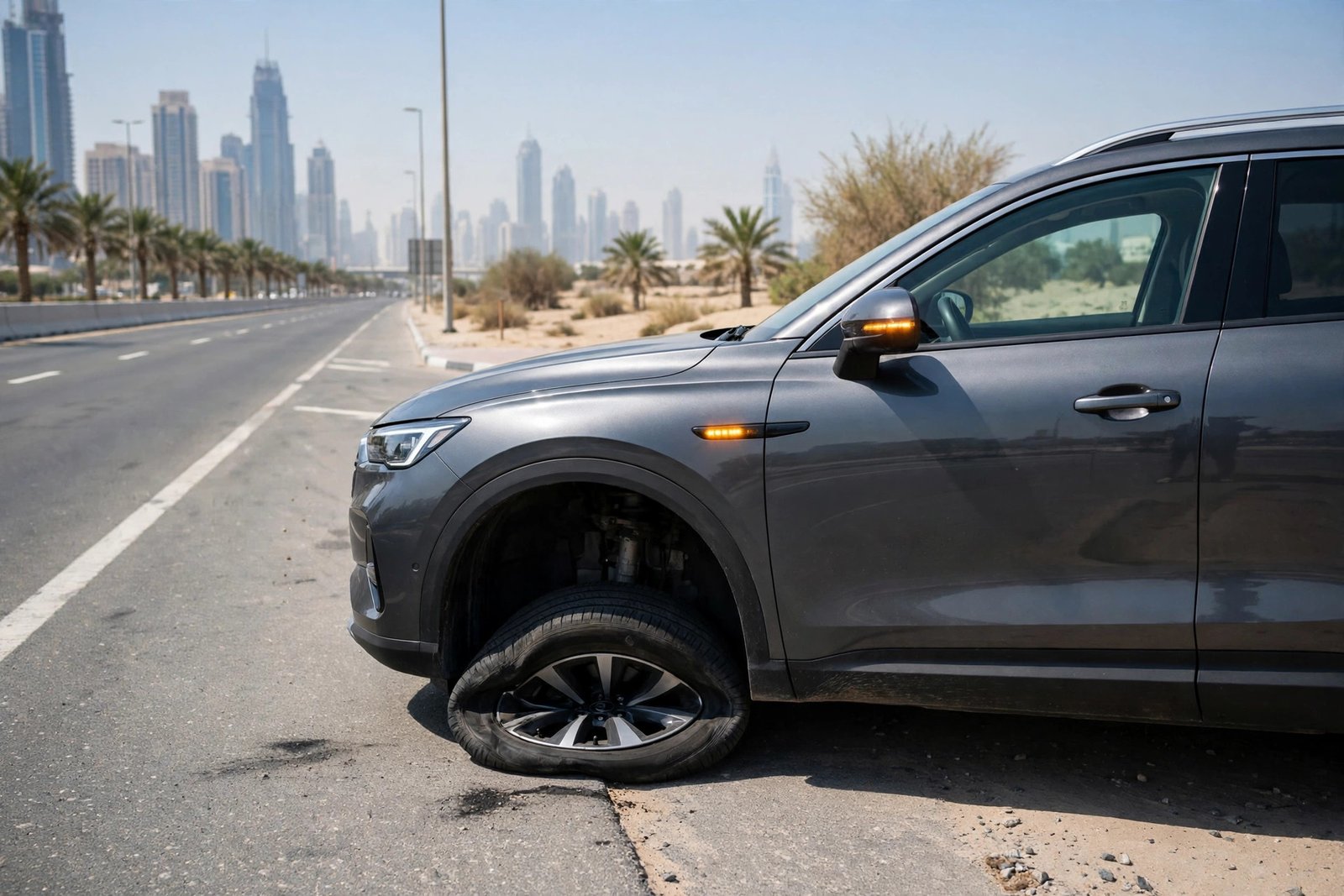
The fifth step is to call for help. Call us on +971 54 344 3513, tell us where you are, what happened, what the warning light looks like, and how the car feels. Give us a landmark if you can, like the name of a petrol station, a mall, a building, or a road exit, so we can find you quickly. Tell us how many people are with you, and if anyone needs help. We will talk you through what to do while you wait, and we will come to you as soon as we can. While you are waiting, stay in a safe place, away from the road, in the shade if you can find it, and drink water if you have it. Dubai heat is serious, and waiting at the roadside in summer can be dangerous, especially for children and older people. If you are feeling unwell from the heat, tell us when you call, and we will prioritise getting to you.
The sixth step is to wait for help and do not try to drive the car again. I know it is tempting to think you can drive a little further, or that you can make it to the next petrol station, or that you can drive home and deal with it later. But once you have stopped in a safe place, stay there. The tyre has already been through a lot of stress, and driving on it again can make the damage worse and can risk a sudden failure. Let us come to you, look at the tyre properly, and decide what needs to happen next. Sometimes we can help at the roadside. Sometimes the car needs to be moved to a workshop. Sometimes the tyre needs to be replaced. Whatever it is, we will tell you plainly, and we will not leave you guessing.
There are a few things you should not do at the roadside. Do not try to change the wheel yourself unless you know how to do it safely, you have the right equipment, and you are in a safe place away from traffic. Changing a wheel on a busy highway is dangerous, and in the Dubai heat it is also exhausting. Do not try to pump air into a damaged tyre and drive on it as if nothing happened. The tyre is damaged, and pumping air into it does not fix the damage. Do not try to use a sealant or a repair kit on a run-flat tyre unless you have been told to do so by someone who knows your car and your tyres, because some sealants can damage the warning system sensor inside the tyre, and they can make it harder to inspect the tyre properly later. And do not let someone at the roadside who you do not know try to fix the tyre for you, especially if they are using the wrong equipment or if they are telling you to drive on a damaged tyre. Wait for proper help.
Finally, let me say something about children and passengers. If you have children in the car when you get a puncture, their safety comes first. Get them out of the car and to a safe place away from the road, in the shade if you can, and keep them with you while you wait for help. Do not leave them in a hot car, even for a short time, because a car in the Dubai sun gets very hot very quickly, and that is dangerous. If you are on your own, stay safe, stay hydrated, and stay in touch with us while you wait. We will keep you updated on when we will arrive, and we will talk you through what to do.
When to Replace Your Run-Flat Tyres
Knowing when to replace your run-flat tyres is one of the most important things you can learn as a driver, because a tyre that is worn out, old, or damaged is not safe, even if it still looks like it has some life left in it. I have seen drivers keep tyres for too long because they were trying to save money, or because they did not know what to look for, and then they have had a failure on the road that could have been avoided. Let me explain what to look for, in plain words, so you can make a good decision about when to replace your tyres.
The first thing to check is the tread. The tread is the part of the tyre that touches the road, and it has a pattern of grooves that help the tyre grip the road, especially when the road is wet. Over time, as you drive, the tread wears down. The grooves get shallower, and the tyre grips the road less well. That is a problem in Dubai, especially when it rains, because the roads can become slippery very quickly, and a tyre with worn tread will not grip as well as a tyre with good tread. It is also a problem on hot, dusty roads, where a worn tyre is more likely to slip.
You can check the tread yourself. Look at the tyre and see if the grooves are deep and clear, or if they are shallow and worn. There are small raised bars inside the grooves, called tread wear indicators, which are there to help you. When the tread wears down to the level of those bars, the tyre is worn out and needs to be replaced. If you are not sure what to look for, ask us to show you next time we look at your car. We will show you where the indicators are, and we will show you what a good tyre looks like and what a worn tyre looks like. Once you have seen it, you will know what to look for in the future. You should also look for uneven wear. If one side of the tyre is worn more than the other side, or if the middle is worn more than the edges, or if there are patches of wear in different places, that can be a sign that the tyre pressure is wrong, or that the wheels are not aligned properly, or that there is a problem with the suspension. Uneven wear is a warning sign, and it should be checked. If your wheels are not aligned, our wheel alignment in Dubai service can check and correct it, which helps your tyres last longer and wear more evenly.
The second thing to check is age. Tyres do not last forever, even if they have not been driven much. Rubber ages over time, especially in the Dubai heat. It gets harder, it loses its flexibility, and it can develop small cracks. Those cracks might start on the sidewall, where the tyre bends, or on the tread, where the tyre touches the road. At first they are very small, and you might need to look closely to see them. Over time they get bigger, and the tyre becomes weaker and less safe. A tyre that is old can fail suddenly, even if it still has plenty of tread left, because the rubber has become brittle and weak. That is why age matters as much as tread.
The third thing to check is damage to the sidewall. I have talked about this already, but it is worth repeating here, because sidewall damage is one of the clearest reasons to replace a tyre. Look for a bulge, which is a bubble or swelling in the rubber, look for a cut, a tear, or a deep scratch, and look for any sign that the sidewall has been hit or damaged. A bulge means the structure inside the sidewall has been damaged, and the tyre could fail suddenly. A deep cut means the tyre is weakened and could fail. Any damage to the sidewall, even if it looks small, should be taken seriously. Do not drive on a tyre with sidewall damage. Get it checked and replaced if needed. The sidewall is the most important part of a run-flat tyre, because it is the part that holds the car up after a puncture. If the sidewall is damaged, the tyre cannot do its job.
The fourth thing to check is damage to the tread. A nail or a screw in the tread is a puncture, and I have already talked about repairs and replacement in that situation. But there are other kinds of tread damage too. A large cut, a chunk of rubber missing, or a tear in the tread are all reasons to replace the tyre. If you drive over something sharp and it cuts the tread, the tyre is damaged, and it might not be safe to repair. Again, a proper inspection is needed, but as a general rule, if the tread is badly damaged, the tyre should be replaced.
The fifth thing to check is how the tyre feels and how the car drives. If you notice a vibration, a noise, or a change in how the car handles, and you cannot see an obvious reason for it, get the tyres checked. A tyre can be damaged on the inside, where you cannot see it, and the only sign might be a vibration or a noise. I have seen tyres that looked fine on the outside but were damaged on the inside, and the driver only noticed because the car felt different. Trust your feelings. If the car feels different, get it checked. It is better to check a tyre that turns out to be fine than to ignore a problem and have a failure on the road.
When you do need to replace a run-flat tyre, there are a few things to remember. First, replace it with the right tyre for your car. That means the right size, the right type, and a run-flat tyre if your car was designed for run-flats. Do not put a normal tyre on a car that was designed for run-flats without thinking through the whole system, including the spare tyre, the warning system, and the suspension. Talk to someone who knows your car before you decide. Second, if one tyre is worn out, check the other three as well. Tyres on the same car often wear at a similar rate, and if one is worn out, the others might be close to worn out too. It is often better to replace tyres in pairs, on the same axle, so that the car handles evenly and safely. Third, make sure the new tyre is fitted properly, by someone with the right equipment for run-flats, and make sure the warning system is checked and reset if needed. A new tyre that is not fitted properly, or a warning system that is not working, is not safe.
Buying and Checking Run-Flat Tyres Before a Long Drive
A long drive in Dubai is different from a short drive around your area. When you drive to Abu Dhabi, to the other Emirates, or out to the desert, you are driving for a long time, at higher speeds, on hot roads, far from home. That puts more stress on your tyres, and it means a small problem that might not matter on a short drive can become a big problem on a long drive. That is why I always tell drivers to check their tyres before a long drive, and to think carefully when they are buying new tyres. Let me walk you through what to do, step by step.
The first step is to check the pressure. Tyre pressure is the amount of air in the tyre, and it needs to be at the right level for your car. If the pressure is too low, the tyre will flex too much, it will get hot, and it will wear out faster. If the pressure is too high, the tyre will be too hard, it will not grip the road as well, and it will wear unevenly. The right pressure for your car is written in the handbook, and it is also often written on a sticker on the driver's door frame or inside the fuel flap. Check the pressure when the tyres are cold, which means the car has not been driven for a while, because driving heats the tyres and changes the pressure reading. Use a reliable pressure gauge, or ask us to check it for you. Check all four tyres, and check the spare if you have one. Make it a habit to check the pressure at least once a month, and always before a long drive.
The second step is to check the tread. Look at the tread on all four tyres. Is it deep and clear, or is it shallow and worn? Are there any signs of uneven wear? Is there any damage, like a cut, a chunk missing, or something sticking out of the tread? If the tread is worn, or if there is damage, get the tyre checked before you go on a long drive. A worn tyre on a long drive, especially if it rains, is a risk, because the tyre will not grip the road as well as it should. A damaged tyre on a long drive is an even bigger risk, because the damage can get worse as you drive, and you might be far from help when it fails.
The third step is to check the sidewall. Look at the sidewall of each tyre for cracks, bulges, cuts, or any damage. The sidewall is the part that does the hard work in a run-flat tyre, and it needs to be in good condition. If you see a bulge, a cut, or deep cracks, do not go on a long drive on that tyre. Get it checked and replaced if needed. It is better to delay a trip by a day and get a new tyre than to risk a failure on the road far from home.
The fourth step is to check the age of the tyres. Look at the date code on the sidewall, or ask us to check it for you. If a tyre is old, with cracks on the sidewall or the tread, it might not be safe for a long drive, even if the tread still looks good. Old rubber is brittle and weak, and it can fail suddenly, especially in the heat and at high speeds. If you are not sure whether your tyres are too old for a long drive, get them checked. We will look at them honestly and tell you whether they are safe, or whether they should be replaced before you go.
The sixth step is to know what you have in the car. Before a long drive, check the boot. Do you have a spare tyre? Do you have a jack? Do you have a repair kit? Do you have nothing at all, because your car has run-flats and no spare? Knowing the answer before you go is important, because it tells you what your options are if you get a puncture. If you have run-flats and no spare, your plan is to drive carefully to safety and call for help. If you have a spare, your plan might be different. Either way, know the plan before you need it. Keep our number in your phone, keep water in the car, keep a phone charger in the car, and make sure your phone is charged before you leave. Those small things matter a lot when you are far from home.
When you are buying new run-flat tyres, there are a few things to think about. First, buy the right size and the right type for your car. The size is written on the sidewall of your old tyre, and it is also written in the handbook. Do not buy a tyre that is the wrong size, even if it is cheaper, because it will not fit properly and it will not be safe. Second, buy a run-flat tyre if your car was designed for run-flats, and make sure the marking on the sidewall shows that it is a run-flat. Different brands use different letters for the run-flat marking, and your tyre specialist can help you read it. Third, think about the brand and the quality. A good tyre from a reputable brand, made for Dubai conditions, will last longer and be safer than a cheap tyre that is not made for the heat and the roads here. I am not going to tell you which brand to buy, because that depends on your car, your budget, and what is available. But I will tell you to buy from a reputable shop, to ask questions, and to make sure you are getting a genuine tyre, not a fake or a very old tyre that has been sitting in a warehouse for years. Check the date code on the new tyre before it is fitted, and make sure it is not too old. A new tyre that is already old is not a good tyre.
Fourth, make sure the tyre is fitted properly. Run-flat tyres need special equipment to fit, because the sidewalls are stiff and hard to handle. Make sure the shop has the right equipment, and make sure they know how to work on run-flats. Ask them to check the wheel as well, to make sure it is not damaged, and to check the valve and the warning system sensor. After the new tyre is fitted, ask them to check the pressure, and to check that the warning system is working. A new tyre that is fitted properly, with the right pressure, and with a working warning system, is a safe tyre.
If you are buying a used car and you want to know whether the tyres are in good shape before you buy, our pre-purchase car inspection in Dubai service includes a tyre check as part of a wider look at the car, so you do not buy a car with worn or damaged tyres without knowing about it.
Mistakes to Avoid with Run-Flat Tyres
I have worked on many cars in Dubai, and I see the same mistakes with run-flat tyres again and again. Most of them are not made because the driver is careless. They are made because nobody explained the tyre properly. Let me go through the most common mistakes, so you can avoid them.
The first mistake is ignoring the warning light. The tyre pressure warning light is there for a reason, and with run-flat tyres it is your best early warning. If the light comes on, do not ignore it, do not hope it will go away, and do not keep driving as if nothing happened. Slow down, look for a safe place, and get the tyre checked. A driver who acts on the light early usually has a tyre that can be checked and a wheel that is still undamaged. A driver who ignores the light often ends up with a tyre that is ruined on the inside and a wheel that is damaged as well. The light is not an annoyance. It is the car telling you to act.
The second mistake is driving too far or too fast after a puncture. A run-flat tyre gives you a limited window to reach safety, and that window is set by your tyre and your car, in the handbook and on the sidewall. Driving further than that limit, or driving faster than the handbook allows, puts the tyre under stress it was not designed for. The sidewall gets hotter, the inside breaks down, and the tyre can fail. I know it is tempting to try to reach home, or to reach a workshop that is further away, but it is better to stop at the nearest safe place and call for help than to risk the tyre and the wheel. If you are not sure what your limit is, drive as little as possible, as slowly as possible, and call us.
The third mistake is thinking a run-flat tyre cannot get a puncture. It can. A nail, a screw, or a sharp piece of metal can go through it just like any other tyre. The difference is what happens after the air escapes, not whether the air can escape. Drivers who think run-flats cannot be punctured often do not check their tyres, do not look at the warning light, and do not check the pressure. Check your tyres regularly, even if they are run-flats, and especially in Dubai, where debris on the road is common.
The fourth mistake is driving on a damaged run-flat again the next day. Once you have driven on a run-flat with no air, even for a short distance to safety, that tyre needs to be checked before the car is driven again. The damage might be on the inside, where you cannot see it. Driving on it again, even for a short trip to work or to the shops, can make the damage worse and can cause the tyre to fail suddenly. If you have reached safety, stay safe, and call for help. Do not drive the car again until the tyre has been looked at properly.
The fifth mistake is changing to normal tyres without a plan. If your car was designed for run-flats and has no spare tyre, and you put normal tyres on it, you have no backup at all if you get a puncture. You cannot drive on a flat normal tyre, and you have nothing to change it with. If you are thinking about changing, talk to someone who knows your car first, think about the spare tyre, think about the warning system, and make a plan for what you will do if you get a puncture. The same applies if you change from normal tyres to run-flats without checking that the warning system works and the car is set up for them.
The sixth mistake is never checking the tyres. Many drivers never look at their tyres until something goes wrong. They never check the pressure, never look at the tread, and never look at the sidewall. In Dubai, where the heat ages rubber faster and where debris is common, that is a risk. Make it a habit to walk around your car once a week, look at the tyres, and check the pressure at least once a month and before a long drive. It takes only a few minutes, and it can save you a lot of trouble. If you see a crack, a bulge, a cut, or anything sticking out of the tread, get it checked. Do not wait.
Avoid these mistakes, and you will get the best out of your run-flat tyres. You will stay safer, your tyres will last longer, and you will not be surprised by a problem at the roadside. If you are ever unsure about anything in this list, call us, and we will talk it through with you in plain words.
Frequently Asked Questions
What is a run-flat tyre?
A run-flat tyre is a tyre with very strong, thick sidewalls that can hold the weight of the car even when the tyre has lost air. A normal tyre goes flat and soft when it loses air, because the air is what holds the car up. A run-flat tyre is different, because the reinforced sidewalls act like a support inside the tyre, keeping it round and keeping the wheel off the road for a limited time. That lets you drive carefully to a safe place after a puncture, instead of having to stop straight away in a dangerous place. A run-flat can still get a puncture, just like any other tyre, and it does not fix itself. It simply gives you a window to reach safety. You can tell if a tyre is a run-flat by the marking on the sidewall, and your car's handbook will also tell you what kind of tyres your car has.
How far can I drive on a run-flat after a puncture?
There is no single distance that is true for every car and every tyre, and that is the most important thing to understand. How far you can drive depends on the tyre brand and model, the size of the tyre, the car, the load in the car, the road, and the heat. The limit for your car is written in your car's handbook, and the tyre sidewall marking will also give you information about the tyre. You must check those two places for your own car, and you must not use a number you read online for a different car, because it might be wrong for yours. In general, the limit is a short, limited distance at a slow, careful speed, to reach safety, not to finish a long journey. Drive as little as possible, as slowly as possible, avoid sudden braking and steering, and get to the nearest safe place. If you are unsure, stop early and call for help. Driving further than the tyre's limit risks destroying the tyre from the inside and damaging the wheel, even if the tyre still looks fine from the outside.
How fast can I drive on a run-flat after a puncture?
You should drive slowly and carefully, at the speed given in your car's handbook for driving on a run-flat after a puncture. That speed is low, much lower than normal highway driving speed, because a tyre with no air is under a lot of stress, and driving fast makes that stress much worse. The tyre turns faster, the sidewall bends more, the heat builds up faster, and the car is harder to control. Slow down, keep a good distance from the car in front, and drive smoothly. Do not brake suddenly, do not accelerate suddenly, and do not steer suddenly. If you do not know the speed given in your handbook, drive as slowly as you safely can, get to the nearest safe place, and call for help. Do not try to keep up with highway traffic on a damaged tyre.
How do I know if my car has run-flat tyres?
There are three ways to check. First, look at the sidewall of the tyre. A run-flat tyre has a marking on the sidewall that shows it is a run-flat, and different brands use different letters for this. Look for the marking, and if you are not sure what it means, ask a tyre specialist to read it for you. Second, check your car's handbook. The handbook will have a section about tyres, and it will tell you what kind of tyres your car came with and what to do after a puncture. Third, check the boot. Many cars with run-flat tyres have no spare tyre in the boot, because the run-flat system is meant to replace the spare. If there is no spare, no jack, and no repair kit, that is a sign your car may have run-flats, but the sidewall marking and the handbook are the sure ways to know. If you are still not sure, call us, tell us the make and model of your car, and we will help you find out.
Can a run-flat tyre be repaired after a puncture?
In general, most manufacturers and tyre shops do not repair a run-flat tyre that has been driven on after it lost air. That is general guidance, not a rule for every brand or every situation, and a proper inspection is always needed. The reason is that driving on a run-flat with no air puts a lot of stress and heat on the inside of the tyre, and the damage might be invisible from the outside. A tyre that looks fine on the outside can be torn and damaged on the inside. In some cases, if a tyre gets a small puncture in the tread, the driver stops straight away without driving on it, and a proper inspection shows no damage on the inside, a repair might be possible, depending on the brand and the tyre. Damage to the sidewall is not repairable. A large hole is not repairable. The only safe way to decide is to take the tyre off the wheel and look at the inside properly. If a tyre specialist tells you the tyre needs to be replaced, ask them to show you why, and trust their judgement.
What should I do when the tyre pressure warning light comes on?
Stay calm, keep both hands on the steering wheel, and do not brake suddenly or swerve. Ease off the accelerator, put your hazard lights on, and look for a safe place to pull over, like a petrol station or a parking area away from traffic. Drive slowly and carefully to that safe place, then stop, turn the engine off, and get out only if it is safe to do so. Look at the tyres if you can, and call for help. Tell us where you are, what the light looks like, and how the car feels. Do not ignore the light, and do not keep driving as if nothing happened, even if the car feels almost normal. With a run-flat tyre, the car can feel almost normal at first, because the tyre holds its shape, but the tyre is still damaged, and the longer you drive, the more damage you do to the inside of the tyre. Get help early, and do not drive the car again until the tyre has been checked.
Are run-flat tyres good for Dubai roads and summer heat?
Run-flat tyres can work well in Dubai, because they let you drive to safety after a puncture instead of stopping on a busy highway in the heat, which is a real benefit. At the same time, Dubai conditions are tough on tyres. The heat makes rubber age faster, the hot road surface adds heat to a damaged tyre, and debris from building sites and trucks can cause punctures. That means run-flat tyres in Dubai need regular checks, just like any other tyre. Check the pressure, check the tread, check the sidewall for cracks and bulges, and check the age of the tyre. Before a long drive, check the tyres carefully, and make sure the warning system is working. If you get a puncture, act quickly and get to safety, because the heat can make the damage worse faster than it might in a cooler place. With regular checks and early action when something goes wrong, run-flats can be a safe choice for Dubai driving.
When should I replace my run-flat tyres?
You should replace a run-flat tyre when the tread is worn down to the wear indicators, when the tyre is old and has cracks on the sidewall or tread, when there is a bulge, cut, or tear in the sidewall, when there is serious damage to the tread, when the tyre keeps losing pressure, or when it has been driven on after a puncture and a proper inspection shows damage on the inside. You should also replace a tyre if the car feels different, with a vibration or a noise that does not go away, and a check finds a problem with the tyre. Do not wait until a tyre fails to replace it. Check your tyres regularly, and replace them when they are worn, old, or damaged. When you buy a new tyre, make sure it is the right size and the right type for your car, make sure it is a run-flat if your car was designed for run-flats, and make sure it is fitted properly with the right equipment. If you are not sure whether a tyre needs to be replaced, call us, and we will look at it honestly and tell you what we find.
Call 95 Services
If you have a run-flat tyre problem in Dubai, or anywhere in the UAE, call 95 Services on +971 54 344 3513. We are a mobile service, so we come to you, wherever you are, whether you are at home, at work, at the side of the road, or in a car park. We work across the complete UAE, so anyone anywhere in the UAE can call us for help.
When you call, tell us where you are, what happened, and how the car feels. We will talk you through what to do while you wait, and we will come to you. Our response time is 15–20 minutes, and help can arrive within 20 minutes. Our prices are very low, and we will tell you plainly what needs to be done, in words you can understand, with no confusion and no pressure.
Do not drive on a damaged tyre, do not guess about your tyres, and do not wait until a small problem becomes a big one. Call 95 Services on +971 54 344 3513, and we will look after you and your car.
