
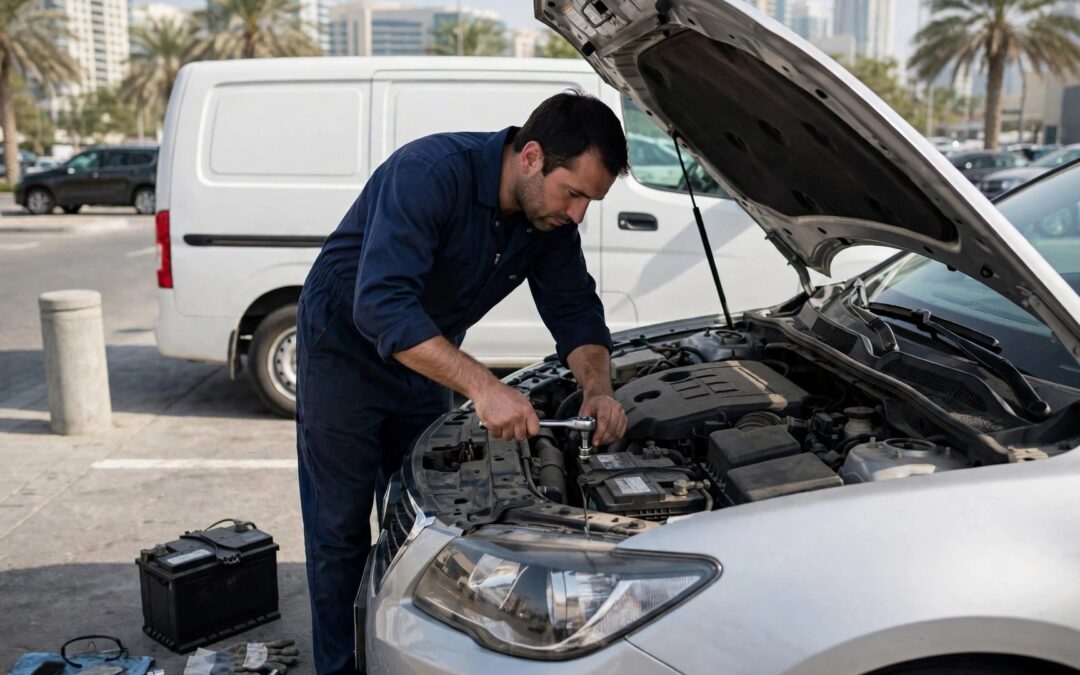
If your car starts after a long drive but is dead again the next morning, the battery is only one of three possible causes. The other two are undercharging — the battery never gets fully refilled — and a parasitic drain, where something keeps drawing current while the car is parked. The pattern of when it dies, and what changed just before the problem started, usually points to the right cause before any testing begins. This guide explains the three-way split behind a car battery draining overnight, the no-tools checks, what a proper drain test involves, and what to note before you book.
Three Causes, Three Different Patterns
A flat battery in the morning is a symptom, not a diagnosis. Treating it as “just a dead battery” is how drivers pay for a replacement and wake up to the same dead car a week later.
| Cause | Distinguishing symptom | What usually gives it away |
|---|---|---|
| Weak or aged battery | Struggles at every start, worse the longer the car sits | Slow cranking, dim lights, old or swollen case |
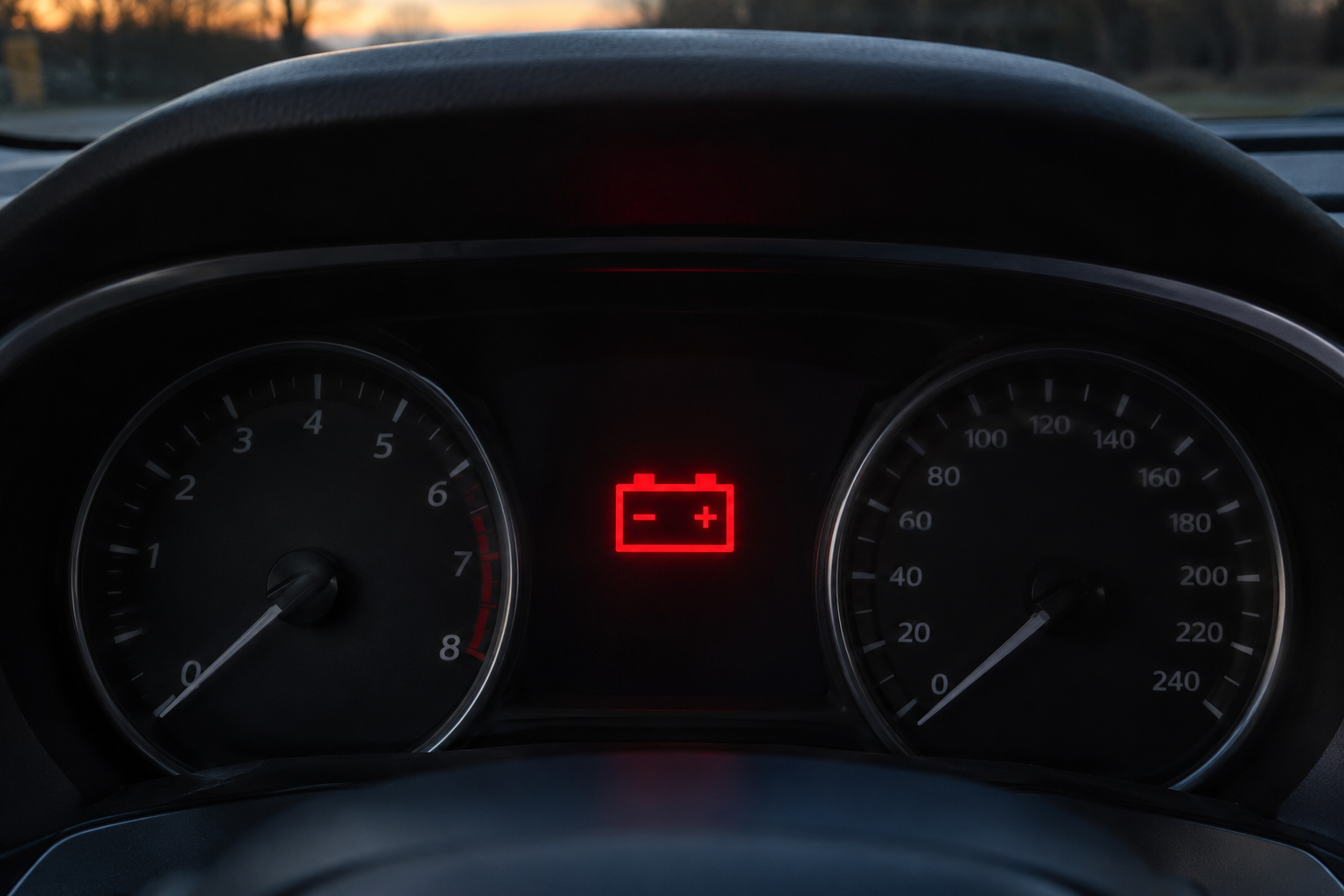
| Undercharging | Fine after a long drive, flat after short trips or a day parked | Short journeys, battery warning light, alternator fault |
| Parasitic drain | Dies overnight even with a healthy or new battery | New battery dying too, recent accessory, light staying on |
Slow cranking at every start points to the battery; a long drive that brings the car back points to charging; a car that dies overnight no matter what happened the day before points to a drain.
Start With the Pattern, Not the Tools
Before anyone opens the bonnet with a meter, spend two minutes on the pattern — the answers cost nothing and steer the whole diagnosis.
- When does it die? Every night, or only sometimes? Does it survive after a long drive but not after a day of short trips?
- What changed recently? Was anything fitted just before the problem started — a dash cam, tracker, alarm, stereo, or charger left plugged in?
- Is anything staying on? Check boot, glovebox, interior, and vanity mirror lights — a boot light that stays on is invisible until you look for it.
- How long does the car sit? Note the longest gap between drives.
- What is the jump-start history? How often, and did the problem return straight away?
- Keyless behaviour: odd locking, warnings, or fans running after lock can mean a module is not shutting down.
Cause 1: A Weak or Aged Battery
Heat is hard on car batteries, and a Dubai summer is about as hard as it gets. High under-bonnet temperatures speed up the chemical wear inside a battery, so one that might last five or six years in a cooler climate can be finished much sooner here. Age alone does not prove it, but a battery several years old that cranks slowly and dims the lights is telling you something.
The early warnings are covered in our mobile battery replacement guide. If they fit the pattern, get a battery test — repeated jump-starting without a check can mask a failing battery or a charging problem.
Cause 2: The Battery Never Gets Fully Charged
Every start takes a large gulp of charge, and the alternator puts it back while you drive. On short trips, the alternator may never get enough running time to replace what the start took out, so the charge creeps down until one morning there is not enough left to crank the engine. The battery is not faulty; it is simply never full.
Dubai driving makes this worse: heat ages the battery and reduces how much charge it can hold, while short urban trips undercharge what capacity remains. An alternator fault adds clues: a battery warning light, headlights dimming at idle, or strange electrics. Our guide to dashboard warning lights explains which lights mean “stop and check”, and a battery, alternator and starting diagnosis separates a charging fault from a weak battery.
Cause 3: Something Is Draining It While Parked
A parasitic drain — the usual cause of a car battery draining overnight with no obvious culprit — is current drawn while the car is switched off and locked. Every modern car draws a small amount for the alarm and keyless receiver, but it should drop to a tiny level once the modules sleep.
- Dash cams in parking mode. A camera hardwired to record while parked is the most common modern cause — and in Dubai, cars sit in hot car parks for long hours. One without a low-voltage cut-off will drain a battery flat.
- Lights left on. Boot, glovebox, and interior lights that stay on because of a faulty switch or latch — hidden when the car is closed.
- Recently fitted accessories. Trackers, alarms, chargers, and stereos wired to a permanent live feed instead of a switched one.
- Modules that fail to sleep. A faulty module, door latch sensor, or keyless-entry fault can keep a circuit awake all night.
- Alternator diode leakage. A faulty diode can let current flow backwards while parked.
The strongest single clue for a drain is a new battery that dies too.
What a Proper Drain Test Involves
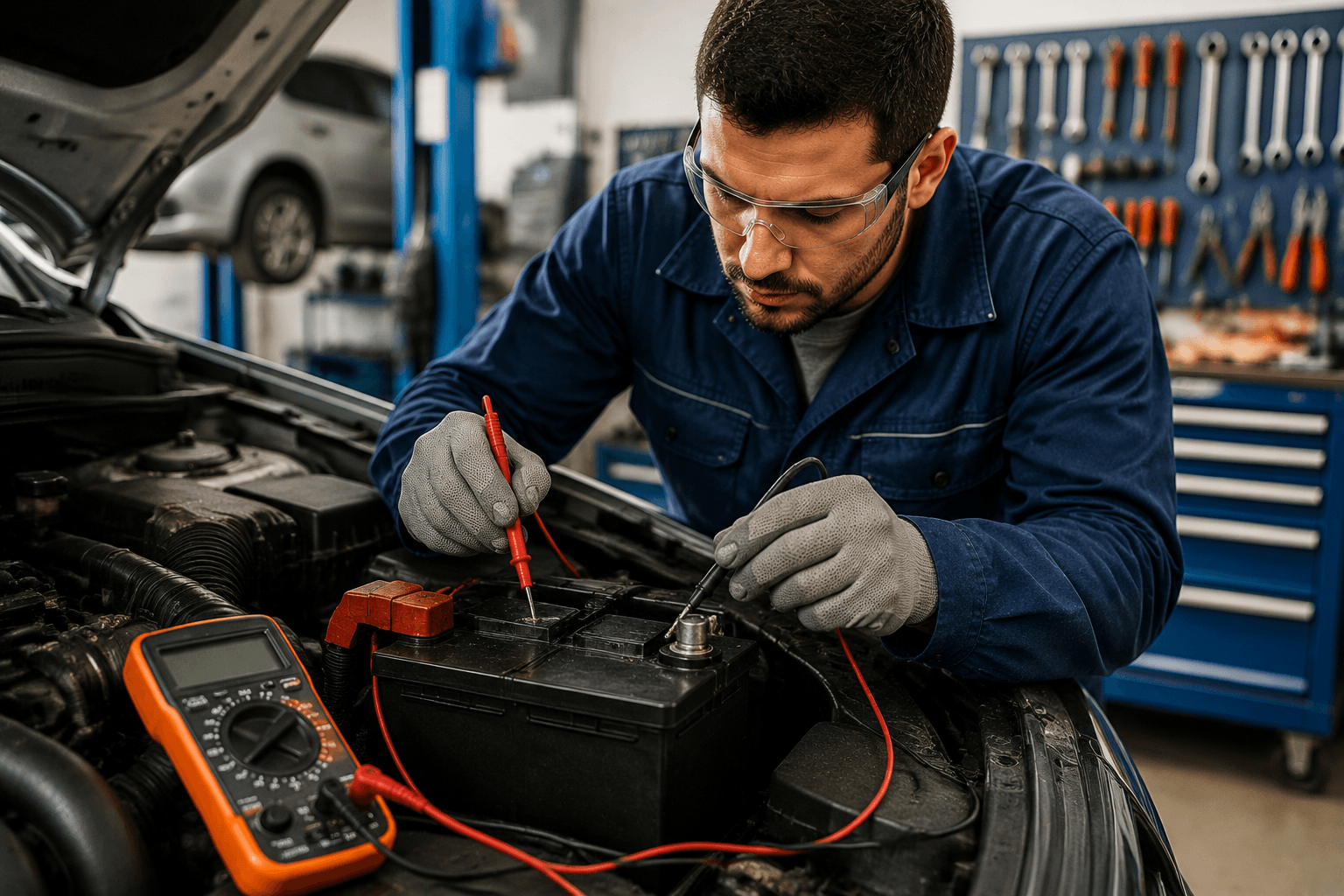
First, the car is left locked and undisturbed while its modules power down — 20 to 45 minutes on most modern cars. A reading taken before the car has slept is meaningless: it shows normal wake-up current. Second, the technician measures the resting draw against the expected figure for that model. Third, if the draw is too high, circuits are isolated one at a time until the draw drops and identifies the responsible circuit.
This is not a casual DIY job: disconnecting a battery with the engine running can damage electronics, and on modern cars the battery, airbag, and module systems interact in ways that make careless testing risky — book a professional test.
No reliable published Dubai figure exists for drain diagnosis — workshops quote diagnostic time, not a fixed price. Ask what the quoted time covers: the sleep wait, the current measurement, and the circuit isolation.
What to Note Before You Book
Tell the workshop before the test: recent accessories (what, when fitted, hardwired or plugged in); lights behaviour; parking duration; jump-start history; keyless behaviour; driving pattern, including whether a long drive temporarily fixes it; and battery age, if known. If a recent replacement is dying too, say that first.
If Testing Shows the Battery Itself Has Failed
If testing confirms the battery will not hold a charge even though the charging system and resting draw are healthy, replacement is the fix. The figures below are indicative market examples from published competitor pages, not 95 Services rates.
Car Battery Squad (crawled 13 November 2026): fitted from AED 400 including VAT (small DIN44), from AED 425 (DIN55L) and AED 475 (DIN60L), and from AED 1,000–1,250 (AGM H6/H8), including delivery, fitting, testing, and disposal. My Car Repair Dubai (updated late September 2026): conventional 12V at AED 300–750, AGM or premium at AED 750–1,600+, including 5% VAT, battery and basic fitting. Car Battery Business Bay (crawled 13 November 2026): fitted bands from AED 249–349 (hatchback) to AED 549–1,200 (luxury/AGM), VAT included.
When requesting a quote, give the make, model, year, and engine, and ask whether the price includes VAT, fitting, testing, and disposal.
Get It Tested Before You Replace Anything
Get the charging system and resting draw tested before spending money on parts. Contact 95 Services on +971 54 344 3513 or by WhatsApp to arrange flat battery assistance in Dubai or a battery and charging check.
Frequently Asked Questions
My car starts after a long drive but is dead the next morning — battery or drain?
That points to undercharging: a long drive refills the battery, and short trips let it fall again. A drain kills the car overnight regardless of the previous day’s driving.
I replaced the battery and it still dies overnight — what now?
Book a drain test. A new battery dying overnight is the strongest sign of a drain while parked, or a charging fault. Tell the workshop the battery is new.
What is parasitic drain, and what usually causes it?
Current drawn while the car is off, beyond what the alarm and keyless receiver need. Common causes: dash cams in parking mode, lights staying on, accessories on a permanent live feed, modules failing to sleep, alternator diode leakage.
How long does a proper drain test take?
Well over an hour. Modules need 20 to 45 minutes to sleep after locking, and a reading taken before that is meaningless. Then the resting draw is measured and circuits isolated one at a time.
Can Dubai heat and short trips kill a battery that is not actually faulty?
Yes. Heat ages a battery and reduces the charge it can hold, while short trips never let the alternator refill it. The combination wears a battery down with no electrical fault.
