
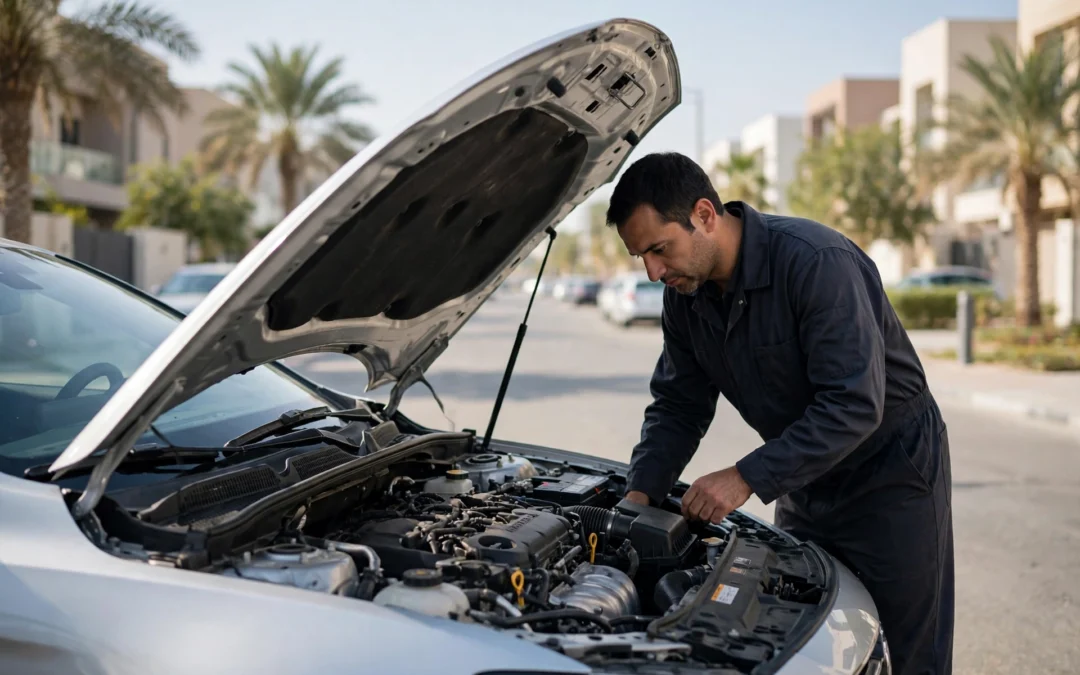
It usually starts with something small. The headlights look a little dimmer than they did last week. The dashboard battery light flickers on for a second, then goes out, and you tell yourself it was nothing. A week later the radio cuts out at a traffic light, or the windows crawl up slower than they should. By the time the car refuses to start one morning in a mall car park, the alternator has been failing for weeks — it just never shouted about it.
The alternator is one of those parts drivers never think about until it stops working, and then suddenly it is the only thing that matters. It is a small, hard-working component buried in the engine bay, and its job is simple: keep the battery charged and power everything electrical in the car while the engine is running. When it weakens, the car does not stop straight away. It borrows power from the battery instead, and the battery can only lend so much before it runs dry.
This guide explains how the alternator works in plain language, the warning signs worth noticing early, how to tell an alternator problem from a battery problem, what happens if you keep driving, and what a replacement actually involves. It also covers why Dubai's heat is particularly hard on alternators, and what to do the moment that battery light comes on.
How the Alternator Works — in Plain Language
Think of the battery and the alternator as a team with different jobs. The battery's job is to start the car. It delivers a big burst of power to turn the engine over, and then its main work is done. The alternator's job is everything after that: it generates electricity while the engine runs, recharges the battery after starting, and powers the lights, the air conditioning, the radio, the wipers, the phone charger, and every sensor and computer in the car.
The alternator is driven by the engine itself. A rubber belt — the serpentine belt — runs from the engine's crankshaft pulley around the alternator's pulley, so whenever the engine is turning, the alternator is spinning. Inside the alternator, that spinning turns a rotor inside a set of copper windings, and the movement creates alternating current — hence the name. A set of components called diodes then converts that alternating current into the direct current the car's electrical system uses, and a voltage regulator keeps the output steady at roughly 13.5 to 14.5 volts.
That voltage range matters. Below it, the battery slowly drains instead of charging. Above it, the electrical system is being overfed, which can damage the battery and sensitive electronics. A healthy alternator holds the middle ground all day, in traffic and on the highway, with the air conditioning running full blast or switched off.
It is worth understanding one more thing: the alternator does not store anything. It only generates power while the engine is running. The moment the engine stops, the alternator stops too, and the battery takes over completely. That is why a car with a dead alternator can still start fine in the morning — the battery is full from the night before — and then die twenty minutes into the drive, once the battery's stored charge has been spent on the lights, the AC and the ignition.

The Warning Signs — What Your Car Tells You Before It Stops
Alternators rarely fail without warning. They usually fade over days or weeks, and the car gives off a series of small clues. The trouble is that each clue on its own is easy to dismiss. Together, they tell a clear story. Here are the signs, in the order most drivers notice them.
Dimming or flickering lights
This is usually the first sign, and the easiest to spot at night. The headlights look slightly yellow or dim, the dashboard lights pulse faintly, or the interior lights brighten and fade as the engine revs change. What is happening is that the alternator is no longer producing a steady voltage, so the lights are running partly off the battery — and the battery's voltage drops as it drains.
Pay attention to how the lights behave when you use something electrical. If the headlights dim noticeably when you switch the air conditioning on, or when you operate the windows, the charging system is struggling to keep up with demand. In a healthy car, turning the AC on makes no visible difference to the lights at all.
One useful check: park facing a wall at night with the engine idling, and watch the headlight pattern on the wall. Then rev the engine gently. If the lights brighten clearly as the revs rise and dim again at idle, the alternator is probably not producing enough power at low speed — a classic early sign of wear.
A whining or grinding noise from the engine bay
Alternators spin fast — several thousand revolutions a minute — and they rely on small internal bearings to do it smoothly. When those bearings wear out, the alternator starts to make noise: a high-pitched whine that rises and falls with engine speed, or a rough grinding sound that was not there before.
The whine is the sound to learn. It is different from a squealing belt, which is usually a sharp, slipping sound when the engine is cold or the AC kicks in. An alternator whine follows the revs precisely — quiet at idle, higher as you accelerate — because it comes from something spinning at engine speed. If the noise changes when you switch on the headlights or the air conditioning, that is another clue: the extra electrical load makes the alternator work harder, and a worn alternator complains about it.
A grinding noise is more serious. It usually means the bearings are badly worn and the rotor is moving inside its housing. A grinding alternator should not be ignored for long — if a bearing seizes completely, the belt can snap or be thrown off, and that belt often drives other things too, including the water pump on some cars.
The battery warning light
The battery-shaped light on the dashboard is the most direct warning the car gives you — and the most misunderstood. Despite the picture, it is not really a battery light. It is a charging-system light. It comes on when the alternator is not charging the battery properly, and it means the car is now running on stored battery power alone.
Sometimes the light flickers on and off for days before it stays on. That flickering stage is the alternator struggling — charging sometimes, not others — and it is the best time to get the car checked, because the fix is still a planned visit rather than a roadside rescue. Once the light stays on steadily, the countdown has started: the car will keep running until the battery is flat, and nobody can say exactly how long that will take. It depends on how much charge is left, how many electrical things are switched on, and how far you still need to drive.
One thing the light does not mean: that the battery itself is faulty. Plenty of drivers buy a new battery, fit it, and watch the light come straight back on — because the battery was never the problem. The light is telling you about charging, not about the battery's health. That distinction is worth remembering before spending money on the wrong part, and it is covered in more detail in the section below on telling the two apart.

Slow electrics — windows, wipers and the radio
When voltage drops, everything electrical slows down. The windows take noticeably longer to go up. The wipers move sluggishly across the windscreen. The radio cuts out, or the sat-nav screen dims and restarts. The air conditioning blower weakens, so the cabin never quite gets cold even though the AC is on full.
These symptoms are easy to blame on the individual part — a tired window motor, a worn wiper motor — but when several of them appear together, the common cause is almost always the power supply. The car is rationing electricity because there is not enough of it, and the least important things go first.
Modern cars make this more obvious, not less. A car with electric power steering, a dozen sensors, and a screen-based dashboard needs a steady supply of clean power, and it notices a weak alternator sooner than an older, simpler car would. If your dashboard throws up several unrelated warnings at once — ABS, traction control, power steering — and the battery light is among them, suspect the charging system before suspecting each system individually.
Strange smells — burning rubber or hot wires
Two smells point at the alternator. The first is burning rubber, which usually means the serpentine belt is slipping on the alternator pulley. A worn belt, a weak belt tensioner, or an alternator pulley that is starting to seize can all cause slipping, and slipping means the alternator is not spinning fast enough to charge properly. The belt may also squeal on cold starts, which is the same problem announcing itself.
The second smell is hot electrical insulation — a sharp, acrid smell, a bit like overheated wiring. That usually comes from inside the alternator itself, where the windings or the diodes are overheating. An alternator working too hard for too long — because of a failing component inside it, or because it is trying to charge a dying battery — generates heat it cannot shed, and the insulation starts to cook. If you smell that and the battery light is on, switch off everything electrical you can and get the car checked the same day.
Hard starting, stalling, or a car that dies while driving
In the later stages, the symptoms become impossible to ignore. The engine turns over slowly in the morning, or needs two or three attempts before it catches. That is the battery running low because the alternator did not recharge it properly on the last drive. Jump-starting helps — once — because the donor car charges the battery enough to start the engine, but if the alternator is dead, the battery simply drains again on the drive home.
Worse is the car that stalls while driving. The engine needs electricity to run: the fuel pump, the ignition coils, the injectors, the engine computer. When the battery finally runs flat, those things stop, and the engine stops with them — sometimes in the middle of a roundabout or on Sheikh Zayed Road. There is no gentle version of this. If the battery light is on and the engine starts to stumble, pull over somewhere safe as soon as you can, while the car still has enough power to steer and brake properly. Our car won't start guide covers what to check first when the car refuses to start at all, and which of the three usual suspects — battery, alternator or starter — is most likely.
Alternator or Battery — How to Tell Which One Is Failing
This is the question that costs drivers the most money when they get it wrong, because the two problems feel almost identical from the driver's seat. A dead battery and a dead alternator both leave you with a car that will not start. But the fix is completely different, and so is the price. Here is how to tell them apart before you buy anything.
Start with the age and the story. A battery in Dubai typically lasts two to three years — the heat is hard on them — and if yours is approaching that age and the car is slow to start in the morning but fine once it is running, the battery is the likelier suspect. An alternator, on the other hand, usually gives you the warning signs described above while the car is running: dimming lights, the battery light, whining noises, slow electrics. A battery problem shows up at starting time; an alternator problem shows up while driving.
The jump-start test is the most useful thing a driver can do. If the car jump-starts and then runs normally for days, the battery was probably just flat — perhaps from a light left on — and the alternator recharged it fine. If the car jump-starts but dies again the same day, or the battery light comes on during the drive, the alternator is not recharging the battery, and the new charge is simply being spent. If the car will not jump-start at all, or starts and dies within seconds, that also points at the alternator or at the starter — not at a battery that can be saved.
A simple voltage check settles it properly. With the engine off, a healthy battery reads around 12.6 volts. With the engine running, a healthy charging system reads roughly 13.5 to 14.5 volts at the battery terminals. If the running voltage is the same as the resting voltage — or lower — the alternator is not charging at all. If the running voltage is above 15 volts, the regulator has failed and the system is overcharging, which is just as much an alternator problem. Any workshop or mobile technician can do this test in two minutes with a multimeter, and it is the first thing a proper diagnosis should include.
There is one more scenario worth knowing: a bad battery can kill an alternator, and a bad alternator can kill a battery. An old battery with a shorted cell forces the alternator to work far harder than it should, overheating it until it fails. And a failing alternator that undercharges will sulfate and ruin a good battery within weeks. That is why a proper repair checks both parts together — replacing the alternator without checking the battery, or the battery without checking the alternator, is how drivers end up paying twice for one problem. Our mobile car battery replacement service tests the charging system as part of the visit, so a weak alternator is caught before a new battery is fitted.
A quick comparison
- Car slow to start in the morning, fine once running: usually the battery.
- Battery light on while driving, lights dimming: usually the alternator.
- Jump start works, car runs fine for days: usually the battery was flat.
- Jump start works, car dies again the same day: usually the alternator.
- Whining or grinding noise that follows engine revs: usually the alternator.
- Several dashboard warnings at once, plus the battery light: usually the charging system.
- Car clicks once and nothing happens: could be either — test the voltage before guessing.
What Happens If You Keep Driving
The honest answer is that the car will stop, and the only question is where. A car with a failed alternator is running on borrowed time measured in minutes, not days. How many minutes depends on the battery's charge, the time of day, and how much electrical load is running — headlights and air conditioning at night in August will drain it far faster than a daytime drive with everything switched off.
As the voltage falls, things shut down in sequence. First the non-essentials: the radio, the phone charger, the power windows. Then the air conditioning blower weakens and the cabin warms up. Then the dashboard lights dim and the warning lights multiply. Finally the ignition system itself starves, the engine misfires and stalls, and the car will not restart. Power steering and power brakes also weaken once the engine stops, which is why the advice is always the same: pull over while the car is still running properly, not after it has died.
There is also damage to think about beyond the inconvenience. Running a battery flat again and again damages it permanently — deep discharges shorten its life sharply, so a battery that would have lasted another year can be ruined in a week of alternator trouble. The electronics suffer too: modern engine computers and sensors expect a steady 13.5 to 14.5 volts, and running them on a falling voltage can cause fault codes, corrupted settings, and in rare cases damage to the ECU itself. And on some cars, the serpentine belt that drives the alternator also drives the water pump, so if the belt fails along with the alternator, the engine can overheat as well.
None of this is meant to frighten anyone — it is meant to explain why the battery light deserves same-day attention. The difference between a planned alternator replacement at a time you choose and a recovery truck on the hard shoulder is usually a few days of ignoring the light.
Why Dubai's Heat Is So Hard on Alternators
Dubai is an unusually tough place for an alternator to live. The reasons are not mysterious, but they add up, and they explain why alternators here often fail earlier than the same part would in a cooler climate.
Heat is the biggest factor. An alternator already generates a lot of its own heat — it is spinning fast, carrying heavy electrical current, and sitting in an engine bay that is itself extremely hot. In a Dubai summer, the air around it can be 45 degrees or more before the engine even warms up, and the engine bay of a car parked in the sun is hotter still. The diodes and the voltage regulator inside the alternator are electronic components, and electronics age faster the hotter they run. Bearings suffer too: the grease inside them thins at high temperature and breaks down sooner, which is why the whining-bearing failure is so common here.
Then there is the load. The air conditioning in Dubai is not a luxury — it runs at full blast for most of the year, and the AC compressor clutch, the blower fan and the condenser fans all draw heavily on the electrical system. Add headlights during the long summer evenings, phone charging, dash cameras, and the car's own computers, and the alternator is working near its maximum output for hours at a time. An alternator that spends its life at full load wears out faster than one that cruises at half load.
Stop-start traffic makes it worse. The alternator produces its full output at cruising speed, but much less at idle — and Dubai traffic means long stretches of idling with the AC running. During those stretches the alternator may not be producing enough to cover the load, so the battery quietly drains a little, then recharges a little when the car moves again. That constant shallow cycling is hard on the battery, and it masks the early signs of alternator wear, because the system looks fine on the highway and only struggles in traffic.
Dust plays a part as well. Fine desert dust gets into the engine bay and settles on the alternator's cooling vents, insulating it and making it run hotter. It also accelerates wear on the belt and pulleys. A car that spends its life on Dubai's roads accumulates this dust constantly, and it is one of the reasons a periodic engine-bay check — not a wash, just an inspection — is worth doing.
None of this means alternators are unreliable in Dubai. It means they live a harder life here, and the warning signs deserve a quicker response than they might elsewhere. A whine or a flickering battery light that you might watch for a month in a cool climate is worth checking within days here, because the heat does not give a failing part much grace.
What a Replacement Actually Involves
Replacing an alternator sounds like a big job, but for most cars it is a straightforward one — and knowing what is involved helps you judge whether a quote is fair and complete.
It starts with diagnosis, and a good diagnosis is worth more than a fast one. The technician should test the battery voltage with the engine off and running, check the serpentine belt for wear and tension, listen for bearing noise, and look at the wiring connections — a loose or corroded connection can mimic a failed alternator, and it costs almost nothing to fix. The fault codes in the car's computer can also help, since a charging fault often leaves a record there. Only when the tests point at the alternator itself should a replacement be recommended.
The replacement itself usually goes like this: the battery is disconnected, the serpentine belt is slackened and slipped off the alternator pulley, the electrical connections are unplugged, and the alternator is unbolted and lifted out. The new unit goes in the reverse order — bolted in, connected, belt refitted and tensioned — and then the system is tested again: running voltage at idle and at higher revs, with the lights and AC on, to confirm the new alternator is charging properly. On most cars this takes an hour or two. On some, where the alternator is buried low in the engine bay behind other components, it takes longer, and that access is the main reason labour time varies from car to car.
A few things should be checked at the same time, and a thorough technician will mention them. The serpentine belt should be inspected — if it is cracked, glazed or worn, it is sensible to replace it while it is already off, because a new alternator driven by an old belt is a problem waiting to happen. The battery should be tested too, since a battery damaged by weeks of undercharging may need replacing as well. And the belt tensioner and idler pulleys should be checked for wear, because a weak tensioner lets the belt slip and starve the new alternator of drive.
On the question of new versus rebuilt: a new alternator is exactly what it sounds like, while a rebuilt one is a used unit with its worn parts — bearings, brushes, regulator — replaced. A quality rebuilt alternator can be a sensible choice and usually costs less, but the quality depends entirely on who rebuilt it. Whatever is fitted, it should come with a warranty, and the charging system should be tested after fitting — not just assumed to work. If you are arranging the repair, ask what is included in the quote before the work starts: the alternator itself, the belt if needed, labour, and the post-repair test. A confirmed quote before work begins is the simplest way to avoid surprises, and it is how we work at 95 Services.
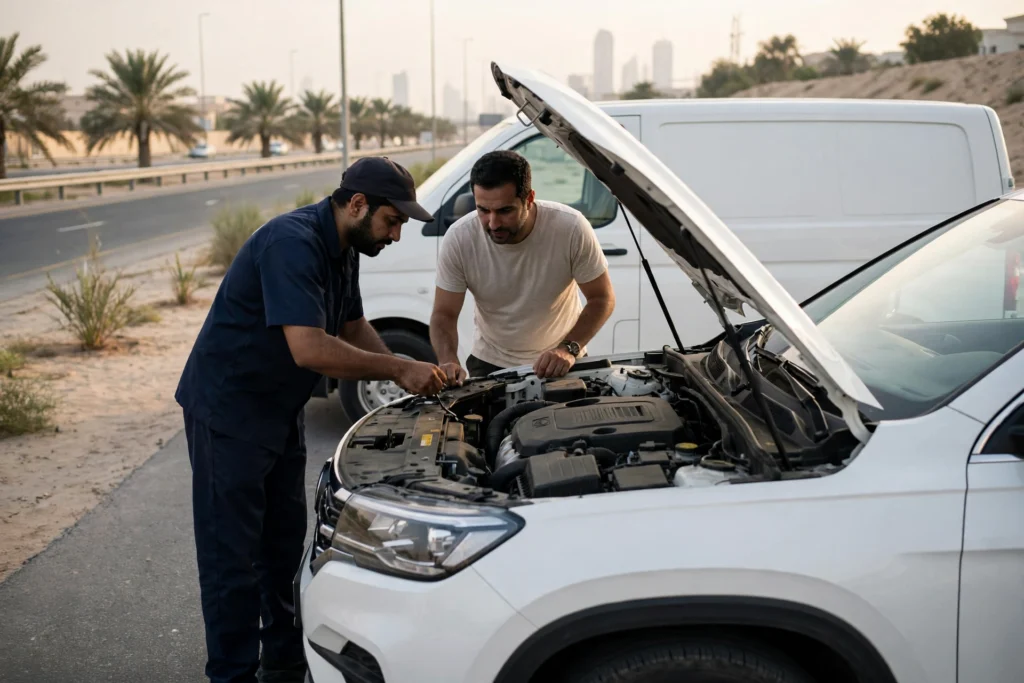
For many drivers, the most convenient option is a mobile visit. Alternator diagnosis and replacement can often be done where the car is parked — at home, at work, or at the roadside — which matters when the car is not safe to drive. If the car has already died, car recovery can bring it to the workshop instead. Either way, help can reach you within 20 minutes anywhere in the complete UAE, and we are open 24 hours.
Looking After Your Alternator — What Actually Helps
Alternators wear out eventually whatever you do — bearings and brushes have a finite life. But a few habits make a real difference to how long they last, and most of them cost nothing.
First, do not ignore the belt. The serpentine belt is the alternator's only connection to the engine, and a worn belt slips, squeals, and under-drives the alternator. Have it looked at during routine servicing: cracks across the ribs, a shiny glazed surface, or fraying at the edges all mean it is due. A belt is a small job; an alternator starved of drive for months is not.
Second, keep the battery healthy. As explained above, a dying battery forces the alternator to work far harder than it should, and that extra load is what overheats the diodes and regulator. If your battery is more than two years old and the car is slow to start, get the battery tested — it is a two-minute job, and catching a weak battery early protects the alternator as well. Our car repair and maintenance checks include the charging system, so both parts are looked at together rather than one at a time.
Third, be sensible about electrical load at idle. Leaving the car idling for long periods with the AC on full, the headlights on, the phone charging and the heated seats running is the hardest possible life for an alternator — maximum demand at minimum output. That is everyday reality in Dubai traffic, so it cannot be avoided entirely, but it is worth knowing that an idling car is not charging its battery the way a moving car is. If you regularly sit in traffic for an hour or more, a periodic charging-system check is cheap insurance.
Fourth, keep the engine bay reasonably clean. You do not need to wash it — in fact, pressure-washing an engine bay is a bad idea — but a visual check now and then is worth it. Dust packed around the alternator's vents, a belt covered in oil from a small leak, or a wiring connector going green with corrosion are all things a quick look will catch. Oil on the belt is particularly worth noting: an oil leak dripping onto the belt makes it slip and degrades the rubber, and the leak itself needs attention anyway. If your car has an oil leak, see our engine repair page for what to check.
Finally, take warning signs seriously the first time you notice them. The battery light flickering once is the cheapest possible moment to act. A charging-system test takes minutes, and if the alternator is fine, you have lost nothing but a few minutes of your day. If it is failing, you have caught it before it strands you — and before it damages the battery as well.
What to Do the Moment the Battery Light Comes On
If the battery light comes on while you are driving, do not panic — but do act. The car is now running on battery power alone, and your priority is to get somewhere safe while the car still has power to steer, brake and indicate.
Switch off everything electrical you do not need: the air conditioning, the radio, the heated seats, the phone charger, the rear demister. Keep the headlights on if it is dark — safety comes first — but everything else can go. That reduces the drain on the battery and buys you time. Then head for the nearest safe place to stop, or for a workshop if one is close and the car is still running well. Do not set off on a long drive hoping the light will go out; it will not, and the car will stop when the battery is empty, wherever that happens to be.
If the engine has already stalled and will not restart, do not keep cranking it — each attempt drains the battery further and achieves nothing. Call for help with your location, your car model, and what happened, and mention that the battery light was on. That detail matters: it tells the technician to bring charging-system test equipment, not just a jump starter, and it means the visit can diagnose the real fault instead of only getting the car moving for an hour. If the car cannot be driven safely, recovery can take it to the workshop.
One last thing: if the battery light comes on and the car is still under warranty or a service plan, check what is covered before paying for anything. Some plans cover the alternator; many do not. Either way, a diagnosis first — before any part is ordered — is the right order of events.
The Serpentine Belt — the Alternator's Lifeline
The alternator cannot do its job without the serpentine belt, and the belt is the part most drivers forget entirely. It is a single long rubber belt that loops around the crankshaft pulley, the alternator pulley, the air conditioning compressor, and usually the power steering pump and water pump as well. One belt, several jobs — which is why a belt problem quickly becomes an alternator problem, and then a bigger problem still.
A healthy belt is flexible, with sharp ribs on its inner face that grip the pulleys. As it ages, the rubber hardens and cracks, the ribs wear smooth, and it starts to slip — first a little, then a lot. A slipping belt cannot spin the alternator fast enough, so charging drops even though the alternator itself is fine. That is the frustrating case: a new alternator fitted onto a worn belt will still undercharge, and the battery light will come straight back on.
The belt tensioner matters just as much. It is a spring-loaded pulley that keeps the belt tight, and when its spring weakens or its bearing wears out, the belt goes slack. A slack belt squeals on startup, slips under load, and wears unevenly. The tensioner is a small part, but it decides whether the belt — and everything the belt drives — works properly.
When the belt fails completely, it usually snaps without much warning, and the car loses several things at once: the alternator stops charging, the air conditioning stops, the power steering goes heavy, and on many cars the water pump stops too, which means the engine starts overheating within minutes. A snapped belt is not a drive-on fault. If it happens, pull over, switch the engine off, and call for help — driving on will overheat the engine and turn a belt replacement into an engine repair.
The good news is that belts give warning, if you know what to look for: a squeal on cold starts that fades as the engine warms up, visible cracks across the ribs, a shiny glazed look on the belt surface, or fraying at the edges. Any of those means the belt is due. It is a small, inexpensive job on its own, and it is the single best thing you can do to protect the alternator — because the finest alternator in the world cannot charge a battery through a belt that is slipping.
How Long Should an Alternator Last?
There is no single answer, because it depends on the car, the climate and how the car is used. As a rough guide, an alternator in a cooler climate can last well over a decade, or the life of the car. In Dubai, the honest expectation is shorter — heat, constant air conditioning and heavy traffic all take their toll, and many alternators here need attention somewhere between seven and ten years, or earlier if the bearings go first.
Mileage matters less than most people think. An alternator on a highway car that cruises at steady speed with a moderate electrical load can outlast one on a city car with half the mileage but twice the idling and twice the AC use. What matters is hours of operation under load, and heat. That is also why a low-mileage car that has spent its life in Dubai traffic can still need an alternator, while a high-mileage car from a cooler place might not.
The practical takeaway is simple: do not wait for a fixed interval. There is no scheduled alternator replacement the way there is for a timing belt. Instead, have the charging system tested at routine services — it takes minutes, and it catches a weakening alternator long before it becomes a breakdown. If your car is over five years old and has never had its charging system tested, that is the single most useful thing to add to the next service.
Alternator Failure — Frequently Asked Questions
Can I drive with the battery light on?
Only as far as somewhere safe. The battery light means the alternator is not charging the battery, so the car is running on stored power that will run out. Switch off the AC, radio and anything else electrical, and head for the nearest safe place or workshop. Do not start a long journey with the light on.
How do I know if it is the alternator or the battery?
A battery problem usually shows up when starting — slow cranking, especially in the morning. An alternator problem shows up while driving — dimming lights, the battery light, whining noises, slow electrics. The reliable test is voltage: about 12.6 volts with the engine off, and roughly 13.5 to 14.5 volts with the engine running. If the running voltage is not higher than the resting voltage, the alternator is not charging.
Will a jump start fix an alternator problem?
No. A jump start gives the battery enough charge to start the engine, but if the alternator is not working, the battery will drain again on the same drive. A jump start is a way to get a car with a flat battery moving; it is not a repair for a failed alternator.
How long does an alternator replacement take?
On most cars, an hour or two, once the diagnosis is done. On some cars the alternator is hard to reach and the job takes longer, because other parts have to be moved out of the way first. The diagnosis itself — voltage tests, belt check, listening for bearing noise — takes only a few minutes.
Can a bad alternator damage other parts of the car?
Yes. It can ruin the battery by repeatedly running it flat, and it can cause fault codes and erratic behaviour in the car's electronics by feeding them unstable voltage. If the serpentine belt fails along with the alternator, other belt-driven parts — including the water pump on some cars — can be affected too. That is why a failing alternator deserves same-day attention.
Does the hot weather in Dubai really affect alternators?
Yes. Heat ages the electronics and bearings inside the alternator faster, the air conditioning puts the charging system under near-maximum load for most of the year, and long spells of idling in traffic mean the alternator is producing less while being asked for more. Alternators in Dubai work harder than the same part in a cooler climate, so the warning signs are worth acting on quickly here.
The alternator is not a part anyone thinks about — until the morning the car will not start, or the evening it dies in traffic. The good news is that it almost always warns you first: a flickering battery light, lights that dim at idle, a whine that follows the revs, windows that crawl. Any one of those is worth a two-minute charging test, and that test is the difference between a planned repair and a roadside rescue.
If your battery light is on, your lights are dimming, or your car is making a new noise from the engine bay, call or WhatsApp 95 Services on +971 54 344 3513 with your location and car details. Help can reach you within 20 minutes, anywhere in the complete UAE, and we are open 24 hours. Prices are kept very low, and the scope and price are confirmed before any work begins — diagnosis first, then the repair, with no surprises on the bill.
