
Car Key Fob Not Working in Dubai? Dead Battery, Key Not Detected and What to Try Before a Replacement
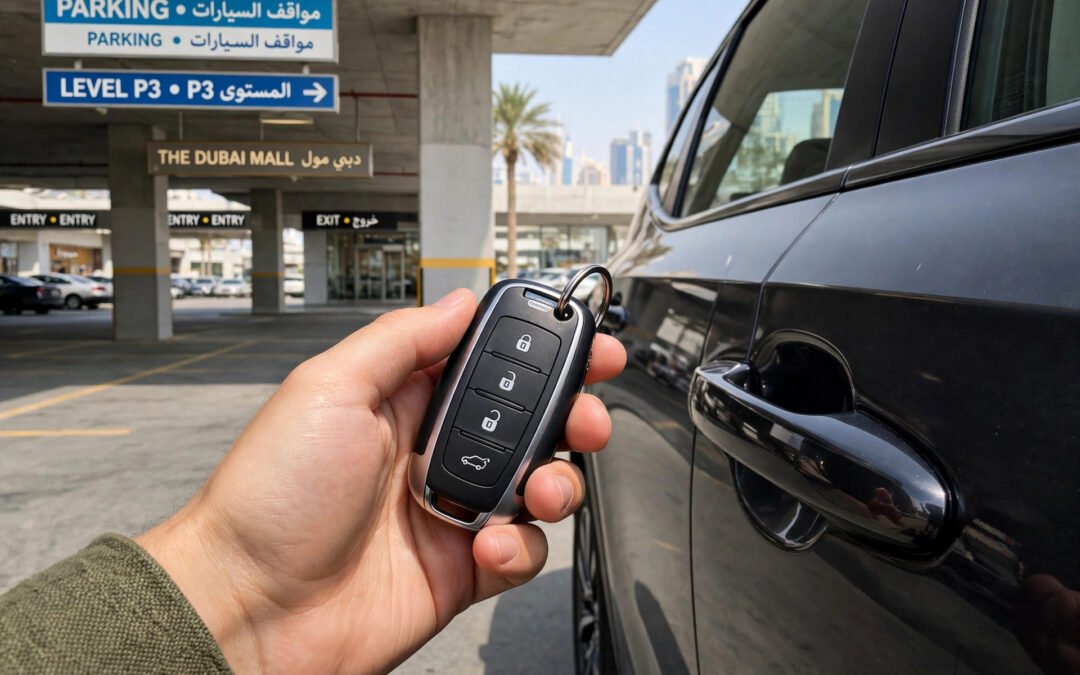
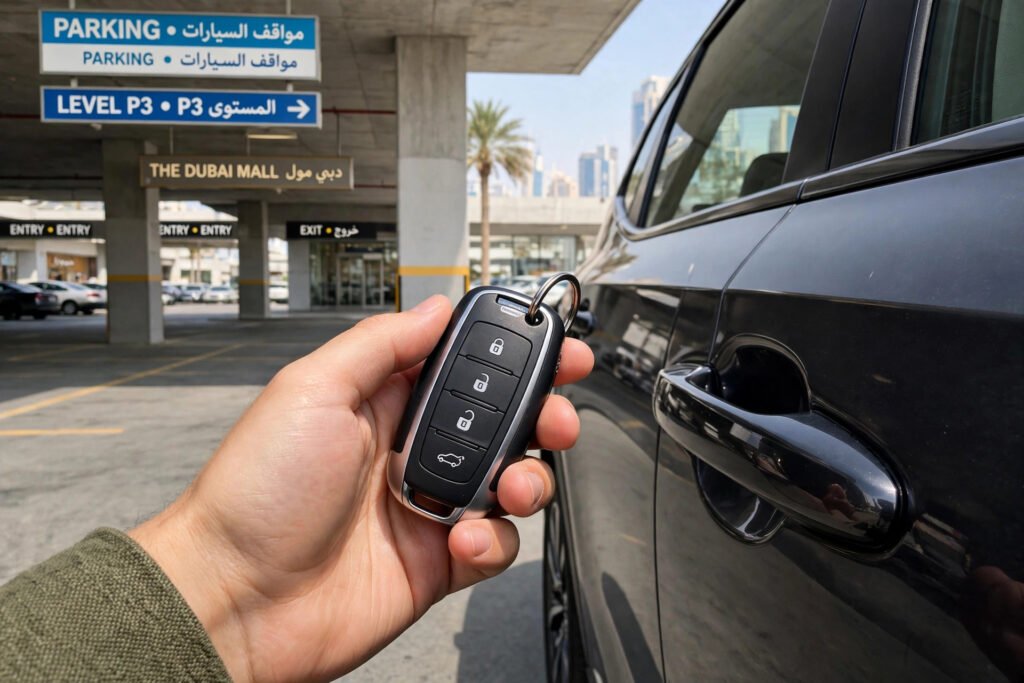
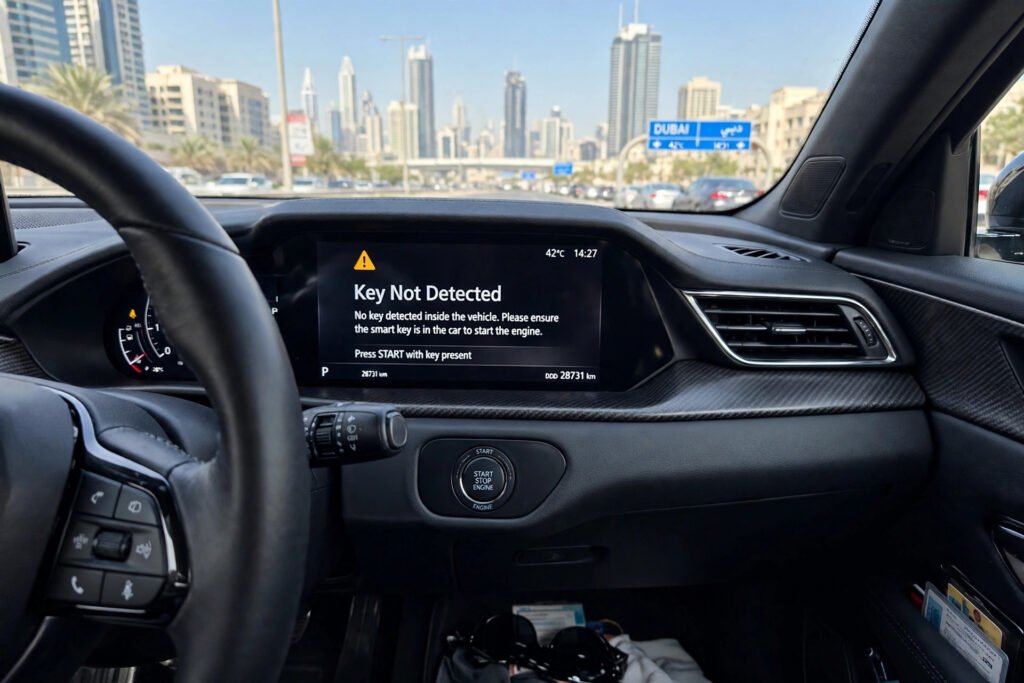
You walk out of a mall in Dubai, arms full of shopping bags, you press the button on your key fob — and nothing happens. No flash of the indicators. No click of the locks. You press it again, harder this time, as if pressing harder will help. It does not. Or you are sitting in the driver's seat, you press the start button, and the dashboard says "key not detected" while the fob is right there in your hand. I have seen that look on drivers' faces many times, and I know exactly how it feels. You are not broken down on a motorway. The car is fine. But you cannot get into it, or you cannot start it, and suddenly a small piece of plastic is standing between you and the rest of your day.
I have spent years working on cars in Dubai, and I can tell you this plainly: most key fob problems are small problems. A dead battery inside the fob. A button that has worn out after years of daily use. A fob that has been dropped one time too many, or left in a hot car in August until the little battery inside gave up. The fob itself is usually fine. The car is usually fine. What you need is a calm, step-by-step way to work out which one it is — and that is what this guide is for.
This guide is written for drivers, not for mechanics. I will not drown you in technical talk about radio frequencies or part numbers. I will tell you what actually goes wrong with key fobs in Dubai, what to try first, what to try second, and when it is time to stop trying things yourself and call someone. Where something varies by car model, I will say so plainly, and I will tell you to check your handbook rather than guess. Because guessing with a key fob is how people end up paying for a replacement they never needed.
First, Slow Down: Is It the Fob, the Car, or Just a Bad Moment?
Before you do anything else, take a breath. A key fob that does not work once is not always a key fob that is broken. I have been called out to cars where the driver was sure the fob had died, and the real problem was that they were standing next to another car with its own fob signal in the air, or they were pressing the button through a thick wallet case, or the fob was at the very bottom of a bag full of metal objects. So the first job is to rule out the simple stuff, and it takes about a minute.
Stand close to the car — within a few steps of the driver's door — and take the fob out of your bag or pocket so nothing is between it and the car. Hold it in your open hand and press the unlock button once, firmly, and wait a second. If the car unlocks, the fob was probably fine and something was blocking the signal. A phone pressed against the fob, a metal water bottle in the same pocket, a thick leather case, a bag full of coins — all of these can weaken the signal enough that the car does not hear it, especially if the fob battery is already getting weak.
If it still does not work, try the lock button too, and then try standing at a different spot — the passenger side, or closer to the front of the car. Some cars listen better from one side than the other, and it costs you nothing to check. If one button works and another does not, that tells you something useful, and I will come back to that in the section on worn buttons. If no button works at all, the most likely cause is the little battery inside the fob, and that is good news, because it is the cheapest and easiest thing to fix.
One more check before you move on: is it possible the problem is the car's battery, not the fob? If the car has been parked for a long time, or if you have already noticed the lights looking dim or the engine turning over slowly, a flat car battery can make the car ignore the fob altogether. The fob is shouting, but the car has no power to listen. If the car will not respond to the fob and the interior lights are dead or very dim when you open a door, think about the car battery first. Our guide on a car that won't start — battery, alternator or starter walks through that in more detail, and a car battery dying overnight is a common Dubai story on its own.
How a Key Fob Actually Works (in Plain Words)
It helps to know, in simple terms, what is happening when you press that button. Your key fob is a small radio. When you press a button, it sends a short radio signal to your car. The car hears that signal, checks that it matches, and then unlocks the doors or lets you start the engine. That is all it is. There is no magic in it, and there is nothing in it that you need a degree to understand.
Inside the fob there are only a few parts: a small round battery, a little circuit board, rubber buttons on top, and an aerial that sends the signal. The battery powers the whole thing. When the battery gets weak, the signal gets weak. The car has to be closer to hear it. The buttons need a firmer press. And one day, the signal gets so weak that the car cannot hear it at all — and that is the day most people decide the fob is broken. It usually is not. It is just out of power.
Most modern cars also have a second system for starting. When you sit in the car with the fob and press the start button, the car looks for the fob nearby. It does this with a short-range signal inside the cabin. If it finds the fob, the car starts. If it does not find it, you get the "key not detected" message. That short-range check is more sensitive than the lock and unlock buttons. So a fob with a weak battery will often still unlock the doors from outside, but fail to start the car — or the other way round. Both of those are normal signs of a dying battery, and both point to the same simple fix.
There is one more thing worth knowing. Your fob also has a small metal key hidden inside it, on almost every modern car. I will show you where to find it and how to use it later in this guide, because it is the single most useful thing to know when a fob stops working at the worst possible moment. Many drivers have owned their car for years and never knew that key was there.
The Dead Fob Battery: The Most Common Cause by Far
If I had to put a number on it from my own working days, I would say the large majority of "my fob has stopped working" calls turn out to be a dead or dying battery inside the fob. It is the first thing I check, and it should be the first thing you check too. A fob battery is a small round coin battery, about the size of a large coin, and it usually lasts a few years of normal use. But Dubai is hard on small batteries. Heat drains them. A fob left on a dashboard in August, or in a car parked in the sun at a mall, is sitting in an oven. The battery inside does not like that, and it will give up sooner than it would in a cooler country. I have changed fob batteries that were only a couple of years old and already flat, simply because the fob lived in a hot car all summer.
The Symptoms of a Dying Fob Battery
A fob battery rarely dies all at once with no warning. Usually it gives you hints for days or weeks first, and most people only notice them in hindsight. Here are the signs I hear about most often.
You have to stand closer to the car than you used to. A few weeks ago the car unlocked from across the car park. Now you have to be right next to the door. That is the signal getting weaker as the battery fades. The range shrinking is the classic first sign, and it is easy to miss because it happens gradually.
You have to press the button twice, or press it harder. The first press does nothing, the second one works. Or you press and hold, where a quick tap used to be enough. Again, that is a weak battery sending a weak signal, and the car only catching it on the second try.
The car unlocks but will not start, or starts only sometimes. The lock and unlock signal works over a longer distance, but the start check inside the cabin is more demanding. A battery that is just strong enough to unlock the doors may not be strong enough for the car to detect the fob when you press start. So you get "key not detected" even though the fob unlocked the car a minute earlier. That mismatch confuses a lot of drivers, but it is a normal battery symptom.
The little red light on the fob is dim, or does not light up at all. Many fobs have a tiny light that blinks when you press a button. If that light used to blink brightly and now it is faint, or it does not blink at all, the battery is telling you it is finished.
One button works and the others do not — sometimes. This one needs care, because it can also mean a worn button, which I cover later. But if all the buttons have become unreliable together, and the range has shrunk at the same time, it is almost always the battery.
If two or three of these signs sound familiar, stop worrying about the fob being broken. It is very likely just the battery, and a fresh one will bring it back to life in minutes.
What to Try First
The first thing to try costs nothing and takes ten seconds: hold the fob right up against the start button, or against the steering column near the start button, and press start. On many cars, holding the fob close to the button lets the car detect it even with a weak battery, because the distance is so short. Some cars have a marked spot — a small key symbol on the steering column or in the centre console — where you hold the fob. Your handbook will show it if your car has one. This is a get-you-going trick, not a fix, but it has got many drivers home from a mall car park when the fob would not work from their pocket.
The second thing is the spare key test, which I will explain properly in its own section, because it is the single best diagnostic step you can do at home. If the spare fob works perfectly and your usual fob does not, you have your answer: the problem is in your usual fob, and the most likely cause inside that fob is its battery.
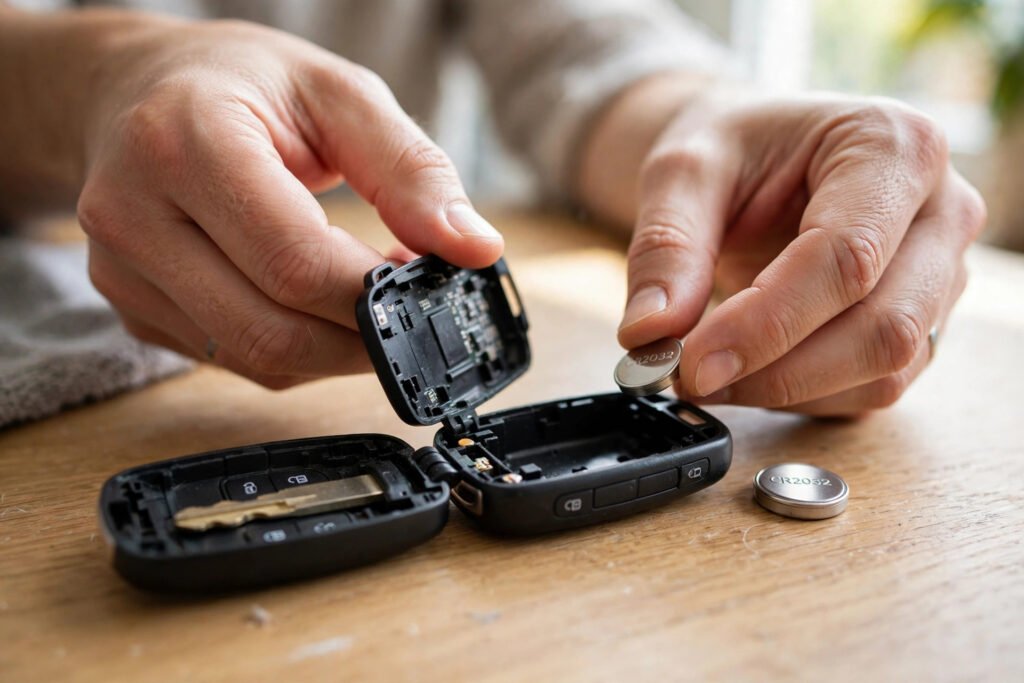
The third thing is to change the battery. On most fobs this is a simple job. There is usually a small slot or seam around the edge of the fob, and the two halves come apart with a gentle twist of a coin or a flat screwdriver. Inside you will see the round battery. Note which way up it sits — the writing on top is usually facing up — and put the new one in the same way. Close the fob up, press a button, and test it at the car. In most cases, that is the whole repair. It takes a few minutes, and the fob works like new again.
A few practical notes from years of doing this. Buy the battery from a proper shop, not from a loose stall where batteries may have sat in the heat for months. A fresh battery from a reputable brand matters, because a stale battery can be nearly as weak as the one you just took out. Keep the fob dry while you work on it, and do not force the case open — if it will not open with gentle pressure, stop and let someone who does it every day take a look. A cracked fob case is a much more expensive problem than a flat battery. And if you are not comfortable opening the fob yourself, or you are worried about breaking it, that is exactly the kind of small job we do. Our car key battery replacement in Dubai service comes to you, changes the battery properly, and tests the fob at your car before we leave, so you know it works.
"Key Not Detected": What It Means and What to Check
"Key not detected" is the message that causes the most panic, and it is also the message that is most often misunderstood. When your dashboard says those words, it is not saying your key is broken. It is not saying your car is broken. It is saying one simple thing: "I looked for the key inside the car, and I could not find it." That is all. The job is to work out why the car could not find it, and the reasons are usually ordinary.
The Usual Checks, in Order
Start with where the fob is. The car looks for the fob inside the cabin, and it looks hardest near the driver's seat, the centre console, and the start button. If the fob is in a bag on the back seat, in a coat pocket thrown on the passenger seat, or in the boot, the car may not be able to hear it. Take it out and put it in the cup holder, or on the centre console, or hold it in your hand near the start button. I have seen "key not detected" fixed by simply moving the fob from a back-seat bag to the front cup holder. It sounds too simple to be real, but it is real, and it happens often.
Next, take the fob out of anything that covers it. A thick leather case, a metal key ring full of other keys, a phone sitting on top of it — any of these can muffle the signal. Hold the fob on its own, in your open hand. If the car starts then, the fob was fine and the cover was the problem.
Then try holding the fob directly against the start button and pressing it. As I said earlier, this short distance can be enough for the car to detect even a weak fob. If the car starts when the fob is touching the button but not when it is in your pocket, the fob battery is weak, and a new battery will almost certainly sort it out.
If none of that works, try the spare key. This is the test that separates a fob problem from a car problem, and I cannot stress enough how useful it is. I will give it its own section next, because it deserves one.
Interference: The Invisible Problem in a Busy Car Park
There is one cause of "key not detected" that surprises people, and it is worth knowing about because it is common in Dubai. Your fob talks to your car by radio. So do a lot of other things: other cars' fobs, automatic gates, wireless chargers, some security systems, and the electronic equipment in a busy mall car park. When too many radio signals are in the air at once, or when a strong signal is nearby, your car's signal can get drowned out. The car cannot hear your fob over the noise.
This is why a fob sometimes works perfectly at home but fails in a crowded underground car park, or near a building entrance with automatic gates. It is also why moving the car a short distance — or just walking a few steps away from a gate motor or a security barrier and trying again — can fix it. I have had drivers call me from a mall basement convinced the fob had died, and by the time I arrived the fob was working again because they had walked to a quieter corner of the car park. If your fob fails in one specific place but works everywhere else, interference is a likely cause, and there may be nothing wrong with the fob at all.
A related problem is other electronics in the car itself. A wireless phone charger, a dash camera, or an aftermarket gadget plugged into the car can sometimes interfere with the fob signal inside the cabin. If "key not detected" started after you fitted a new accessory, try switching it off or unplugging it and see if the problem goes away. If it does, you have found your cause, and you can move the accessory or stop using it while driving.
When the Message Appears While Driving
Sometimes the "key not detected" warning appears while you are already driving. That is a frightening thing to see, because the natural fear is that the car will stop. In almost all cases it will not stop — once the engine is running, the car does not need the fob to keep going, and you can drive on safely to somewhere you can stop and check. Do not panic and do not switch the engine off in moving traffic. Drive to a safe place, park, and then work through the checks. The most common cause is the fob battery getting weak, or the fob having slid out of range inside the car — into a door pocket, under a seat, or into the boot area of a large car. Move it back to the front, near the start button, and the warning usually clears.
If the warning keeps coming back while you drive, or if it appears every time you start the car even with a fresh battery, get it checked. That pattern points to something inside the fob or inside the car that needs a proper look, and it is better to find it on a quiet day than on a day when the car will not start at all.
The Spare Key Test: The Best Check You Can Do at Home
If you remember one thing from this whole guide, make it this: keep your spare key somewhere you can reach it, and use it as a test. The spare key test is the fastest way to find out where the problem lives, and it costs nothing.
Here is how it works. When your usual fob stops working, get the spare fob and try it at the car. There are only two results, and both tell you a lot.
If the spare fob works perfectly — locks, unlocks, starts the car — then the car is fine. The problem is in your usual fob. It is almost always the battery, and sometimes it is a worn button or a fob that has been dropped or got wet. Either way, you now know the car does not need attention, and you can focus on the fob. Put a new battery in the usual fob, test it, and in most cases you are done.
If the spare fob does not work either, then the problem is probably not the fob at all. It may be the car battery, or a problem with the car's own receiver, or a fuse, or interference in that spot. That is the point where you stop trying fob fixes and get the car looked at. Trying a third battery in a second fob will not help if the car is the problem.
This is also why I always tell drivers to test the spare key now and then, even when everything is working. A spare fob that has sat in a drawer for two years may have a flat battery of its own, and you will only find that out on the day you need it. Every few months, take the spare out, press its buttons, and start the car with it. If it works, put it back. If it does not, put a fresh battery in it while you have time, not while you are stuck in a car park. A spare key is only useful if it works, and the only way to know it works is to try it.
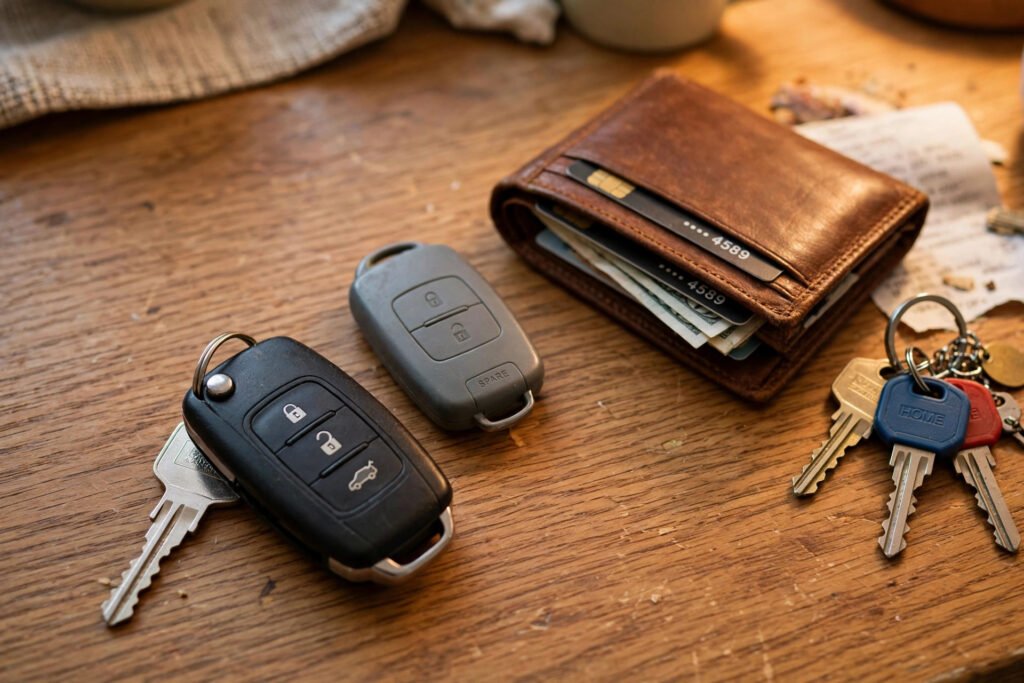
Where you keep the spare matters too. Keep it at home, in a known place — a drawer by the door, a hook in the hallway, somewhere you can find it without thinking. Do not keep it in the car. A spare key in the car is no use when you are locked out of the car, and it is a security risk as well. And do not keep both fobs on the same key ring. If you lose the ring, you lose both keys at once, and that is a much bigger problem than a flat battery. Keep them apart, know where the spare is, and test it now and then. That small habit saves more trouble than any other single thing in this guide.
Worn or Stuck Buttons: When the Battery Is Fine but the Button Is Not
Sometimes the battery is fine and the fob still does not do what you ask. You press unlock and nothing happens, but the lock button works. Or the boot button works but the unlock button needs three hard presses. That pattern — one button failing while the others work — usually means the button itself is worn out, not the battery.
Think about how you use a fob. You press the unlock button every single time you use the car, sometimes several times a day, for years. That is thousands of presses on one small rubber button. Underneath the rubber there is a little contact that presses against the circuit board. Over time, the rubber gets soft and tired, the contact gets dirty or worn, and the press stops registering. The lock button, which you may press less often, can still work perfectly while the unlock button gives up. That is normal wear, and it is not a sign that the fob is cheap or badly made. It is a sign that it has been used a lot, which is what it was made for.
How to Tell a Worn Button From a Dead Battery
The test is simple. If all the buttons have become unreliable at the same time, and the range has shrunk, it is the battery. If one button is bad and the others are fine, and the range is normal, it is the button. If you have to press one button much harder than the others, or press it at an angle, or press the very edge of it to make it work, it is the button.
A stuck button is a different problem with a similar cause. If a button feels jammed, or it stays pressed down, or it feels gritty when you press it, dirt or a small bit of grit may have got under the rubber, or the rubber may have torn. Do not keep forcing it. Forcing a stuck button can damage the circuit board underneath, and that turns a small repair into a fob replacement. If a button is stuck, stop pressing it hard and get the fob looked at.
What You Can Do About a Worn Button
There is not much you can safely do at home for a worn button, and I want to be honest about that. You can clean around the button gently with a dry cloth, and you can make sure no dirt is trapped around the edges. But opening the fob to clean the contacts inside is a job for someone who does it every day, because the parts inside are small and easy to damage, and a slip can break the circuit board. If the fob works with a fresh battery but one button still will not respond, bring it to a workshop. Often the button can be repaired or the fob case can be replaced without replacing the whole fob, and that is a much smaller job than a full replacement. But it needs hands that know what they are doing, and the right parts for your fob.
One practical tip: if the unlock button is the worn one, use the lock button to test the fob, and use the hidden manual key — which I will explain next — to get into the car. You are not stuck just because one button has worn out. There is almost always another way in, and another way to start the car, while you arrange the repair.
The Manual Key Hidden Inside Your Fob
This is the part of the guide that most drivers tell me they wish they had known years earlier. Almost every modern car key fob has a small metal key hidden inside it. It is there for exactly this situation — when the fob battery is dead, or the fob will not work, and you need to get into your car. It is not a spare part. It is part of the design. And once you know it is there, you will never be fully locked out by a dead fob battery again.
Finding the Hidden Key
Look at your fob. On most fobs there is a small button, slider or catch on the side or the back. Press it or slide it, and the metal key pulls out, or the back of the fob opens to reveal it. On some fobs the key is released by pressing a small button on the edge while you pull the metal end. On others you slide a catch and the key comes free. Your car's handbook will show you exactly where it is on your model, with a picture, and it is worth looking at that picture once at home, in comfort, rather than trying to work it out in a dark car park for the first time.
Take the key out now, while you are reading this, and put it back in. Do it once, so your hands know how it works. It takes ten seconds, and it is the kind of thing that is easy in your living room and hard when you are stressed, hot, and carrying shopping bags.
Using the Hidden Key to Open the Door
Once the key is out, look at the driver's door handle. On many cars there is a small cover over the keyhole, or the keyhole is hidden under a cap on the handle. The cover usually pops off with a gentle push from the key itself, or by pulling the handle slightly and sliding the cover away. Again, your handbook will show you. Put the metal key in the lock and turn it. The driver's door will open, even with a completely dead fob battery, because this is a mechanical lock. It does not need power, it does not need a signal, and it does not need the fob battery to be alive.
A few things to expect. The alarm may sound when you open the door this way, because the car was locked with the fob and you have opened it without the fob's signal. Do not panic. The alarm is doing its job. Once you are inside, the next step will usually silence it. If your neighbours look over, just wave. It happens to everyone sooner or later.
The manual key usually only opens the driver's door, not all the doors and not the boot. That is normal. Get in through the driver's door, and then unlock the other doors from the inside switch once you are in, or start the car and let the central locking do its job.
Starting the Car With a Dead Fob
Getting in is only half the job. You still need to start the car. Here is where the fob-position trick comes in. Hold the fob — the whole fob, even with its battery dead — right against the start button, and press the button. On many cars there is a small sensor near the button that can read the fob at very close range even without battery power. Some cars have a marked spot, sometimes with a key symbol, on the steering column, in the centre console, or in a slot near the gear lever, where you place the fob to start. Your handbook will show it. This is the standard backup method, and it works on a wide range of cars, but the exact spot varies by model, so check your handbook for yours rather than guessing.
If the car starts, drive home or drive to a workshop and get a new battery in the fob. Do not switch the engine off again until you are somewhere safe, because it may not start a second time. And when you get home, put a fresh battery in the fob before the next trip. You have used your one free pass. Do not spend it twice.
If the car does not start even with the fob held against the button, and the spare key does not work either, the problem may be the car battery or something in the car itself. That is the point to call for help rather than keep trying. A mobile car battery replacement in Dubai can be the right call if the car battery is the real problem, and a proper check will tell you quickly.
Dubai Heat, Water and Drops: What Really Damages a Fob Here
Dubai is hard on key fobs in ways that drivers in cooler countries never have to think about. The heat is the biggest one. A fob left on a dashboard, on a centre console, or in a car parked in the sun can sit in very high temperatures for hours. The little battery inside drains faster in heat, and the heat can also weaken the fob's casing and the glue that holds it together. I have seen fobs where the case had warped slightly from heat, and the buttons no longer lined up properly with the contacts inside. The fix was a new case, not a new fob, but it started with heat.
The simplest habit that protects a fob in Dubai is to take it with you when you leave the car. Do not leave it on the dashboard, on the seat, or in the cup holder while you go into a mall or an office. Put it in your pocket or your bag and take it into the shade with you. It sounds obvious, but a fob left in a parked car in August is one of the most common reasons I see a battery die early. The same goes for leaving the fob in a hot bag on a beach or by a pool. Shade is your fob's friend.
Water is the second enemy. A fob that has been dropped in a pool, a puddle, or a washing machine is a fob in trouble. The circuit board inside does not like water, and even if it seems to work after it dries out, corrosion can grow on the board over the following days and weeks and kill it slowly. If your fob gets wet, take the battery out as soon as you can, dry the fob gently with a cloth, and leave it open in a dry place to dry fully. Do not use a hair dryer on high heat, and do not put it in the microwave — I have heard of people trying both, and neither ends well. Let it dry naturally. If it works after drying, still get it checked soon, because corrosion is quiet and slow, and it is better to catch it early. And if it went through a full washing machine cycle, be honest with yourself and get it checked before you rely on it again.
Drops are the third enemy. A fob is a small plastic case with a delicate board inside, and a hard fall onto tiles or concrete can crack the board or knock a component loose. One drop is usually fine. Repeated drops add up. If your fob stopped working the day after a hard fall, the fall is probably the cause, and a new battery will not fix it. That is a workshop job, where the fob can be opened and the board inspected properly.
What to Try Before Paying for a Replacement
A new fob is one of the more expensive small items on a car, and it is the last thing you should buy, not the first. Work through this list in order, and only move to the next step when the one before it has not helped. Most drivers will find their answer in the first three steps.
First, change the fob battery. It is the cheapest fix, the most common cause, and it takes a few minutes. Use a fresh battery from a proper shop, put it in the right way up, and test every button at the car. If the fob works again, you are done. There is nothing else to do.
Second, test the spare key. If the spare works and yours does not even with a new battery, the problem is in your fob, not the car. If the spare does not work either, the problem is probably the car, and a new fob would not have helped. This one test can save you from buying a replacement you never needed.
Third, try the fob in a different place. Move away from gates, barriers, and crowded car parks, and try again. Try holding the fob close to the start button. Try it without its case, without a phone pressed against it, and without a pocket full of metal. Interference and blocked signals are real, and they cost nothing to rule out.
Fourth, use the hidden manual key to get in, and the fob-against-the-button trick to start. If both of those work, the car is fine and the fob is talking to it at close range. That points back to a weak battery or a weak signal, not a dead car.
Fifth, check the car battery. If the interior lights are dim, if the engine turns over slowly or not at all, or if the car has been parked for a long time, the car's own battery may be the problem. A fob cannot wake a car that has no power. If you suspect the car battery, get it tested. Our guide on a car battery dying overnight explains the signs to look for, and a test takes only a few minutes.
Sixth, look at the fob itself. Is the case cracked? Is a button stuck or sunken? Has it been dropped recently, or got wet? Does it rattle when you shake it gently? Any of those point to physical damage inside the fob, and that is a repair-or-replace decision, not a battery decision.
Only when you have worked through all of that, and the fob still does not work with a fresh battery, a clean test in a quiet spot, and a working spare key proving the car is fine — only then should you be talking about a replacement. And even then, get the fob inspected first. Sometimes a repair is possible, and sometimes the problem is a fuse or a receiver in the car that a new fob would not fix at all.
When the Fob Itself (Not the Battery) Is the Problem
There comes a point where the battery is not the answer, and it helps to know what that point looks like. Here are the signs that the fob itself is the problem.
A fresh, good battery changes nothing. You put a new battery in, the right way up, from a proper shop, and the fob behaves exactly as it did before. No light, no range, no response. That is the clearest sign. The battery was never the problem. Something inside the fob has failed.
The fob works only sometimes, with no pattern. It works in the morning and not in the afternoon. It works on Monday and not on Tuesday. It works when you hold it one way and not another. Intermittent faults like that usually mean a cracked circuit board, a loose connection inside, or corrosion from water damage. They tend to get worse, not better, and they are not fixed by another battery.
One button is dead while the rest work, even after a battery change. As I covered earlier, that is a worn or damaged button, and it is a fob repair, not a battery job.
The fob is physically damaged. A cracked case, a button that has fallen out, a fob that rattles when you shake it, or a fob that has been through the washing machine and never worked properly again. Physical damage does not heal itself, and it usually needs a proper repair or a replacement.
The car detects the fob sometimes but not others, even with the fob held against the start button, and the spare key works perfectly every time. That comparison is the key. If the spare is reliable and yours is not, your fob has a fault that a battery will not cure.
What should you do then? Get the fob inspected before you buy anything. A workshop that handles keys can open the fob, look at the board, test the buttons, and tell you honestly whether it can be repaired or whether a replacement is the sensible option. Be careful about buying a cheap replacement fob online and expecting it to work straight away. A replacement fob has to be matched to your car, and that matching process varies a lot by make, model and year. Some cars accept a new fob easily, others need specialist equipment and a proper procedure, and a fob that is not matched correctly will not start the car no matter how new its battery is. I am not going to give you brand-by-brand programming steps here, because they vary too much and getting them wrong can leave you with a fob that does not work and a car that will not start. That is a job for someone with the right equipment and the right knowledge for your specific car. What I will say is this: ask for a clear explanation before you agree to anything, ask what is included, and make sure the new fob is tested at your car — locking, unlocking and starting — before you pay and drive away.
One more warning that matters in Dubai. If you lose a fob entirely, tell your workshop and think about the security side, not just the replacement. A lost fob is a key to your car in someone else's hands. Ask what can be done to make sure the lost fob can no longer be used with your car. The answer varies by car, but the question is always worth asking. And if you only have one fob left, get a second one made while you still have a working key. Making a second fob from a working one is almost always easier than making one from nothing after the last fob is lost or broken.
A Simple Routine That Keeps Your Fob Working
You do not need to be a mechanic to look after a key fob. You just need a few small habits, and they take almost no time at all.
Keep the fob out of the heat. Take it with you when you leave the car. Do not leave it on the dashboard or in a hot car. In summer, keep it in a pocket or a bag in the shade.
Keep it dry. Do not take it swimming, do not leave it by the pool edge, and check your pockets before the washing machine. A fob that has never been wet lasts far longer than one that has.
Keep it on its own. Do not carry it pressed against your phone all day if you can avoid it, and do not bury it at the bottom of a bag full of metal. A fob in a pocket on its own works better than a fob fighting for signal through a pile of coins and keys.
Test the spare key every few months. Start the car with it, lock and unlock with it, and make sure it works. Put a fresh battery in it if it is weak. A spare that works is worth more than a spare that sits in a drawer for years and lets you down on the day you need it.
Change the battery at the first sign of weakness, not after it dies completely. If the range is shrinking, or you have to press twice, change the battery that week. It is a small job, and doing it early means you never get stuck in a car park at the worst moment.
Know where your hidden manual key is, and know how to use it. Practise taking it out once at home. Find the keyhole cover on the driver's door. Find the spot where you hold the fob to start the car. Knowing those three things in advance is worth more than any amount of guessing in a hot car park.
And keep a note of your fob battery type. The next time you change the battery, write down the number printed on it — it is usually a short code printed on the battery itself — and keep it in your phone. That way, when the next battery dies, you can buy the right one without opening the fob first to check. It is a small thing, but it saves a trip.
Finally, if you look after your car as a whole, the fob is one less thing to worry about. A car that is serviced on time, with a healthy car battery and clean electrics, is a car that listens to its fob properly. If you want a broader look at keeping your car in good shape, our car repair and maintenance services page explains what a proper service covers, and why catching small things early keeps the bigger things from going wrong.
Frequently Asked Questions
Why has my key fob suddenly stopped working in Dubai?
The most common reason is a dead battery inside the fob, and Dubai heat makes that happen sooner than many drivers expect. A fob left in a hot car, or one that has simply reached the end of its battery's life, will stop sending a strong enough signal for the car to hear. Change the battery first, with a fresh one from a proper shop, and test every button. In most cases the fob works again straight away. If a new battery changes nothing, test the spare key — if the spare works, the problem is in your fob; if it does not, the problem may be the car battery or the car itself.
What does "key not detected" mean?
It means the car looked for the fob inside the cabin and could not find it. It does not mean the fob is broken or the car is broken. The most common causes are a weak fob battery, the fob being too far from the start button — in a bag on the back seat, for example — or something blocking the signal, like a thick case or a phone pressed against the fob. Move the fob to the front cup holder or hold it against the start button and try again. If the message keeps appearing even with a fresh battery and the fob held close, get it checked.
How do I start my car if the key fob battery is dead?
Hold the whole fob directly against the start button and press the button. On many cars there is a sensor near the button that can detect the fob at very close range even without battery power. Some cars have a marked spot, sometimes with a key symbol, on the steering column or in the centre console where you place the fob. Check your handbook for the exact spot on your model. If the car starts, drive somewhere safe and get a new battery in the fob before you switch the engine off again.
Where is the manual key hidden in my key fob?
Almost every modern fob has a small metal key hidden inside it. Look for a small button, slider or catch on the side or back of the fob — press or slide it and the metal key pulls out. Your handbook will show you exactly where it is on your model. Use it to open the driver's door mechanically, even with a dead fob battery. The keyhole is often hidden under a small cover on the door handle. The alarm may sound when you open the door this way; that is normal, and it should stop once you are inside and start the car.
My spare key works but my usual key does not. What does that mean?
It means the car is fine and the problem is in your usual fob. The most likely cause is its battery, so change it first and test again. If a fresh battery does not help, the fob may have a worn button, water damage, or damage from a drop, and it needs to be inspected. Do not buy a replacement until the fob has been checked — sometimes a repair is possible, and sometimes the problem is a small part that can be fixed without replacing the whole fob.
Why does my fob work at home but not in a mall car park?
That is often interference. Your fob talks to your car by radio, and in a busy underground car park there are many other radio signals in the air — other cars' fobs, automatic gates, security systems and wireless equipment. Those signals can drown out your fob. Try moving to a quieter part of the car park, away from gates and barriers, and try again. Also take the fob out of your bag or pocket and hold it on its own. If it works everywhere else and only fails in one specific place, interference is a likely cause and there may be nothing wrong with the fob at all.
Should I buy a replacement fob online?
Be careful with that. A replacement fob has to be matched to your car, and that matching process varies a lot by make, model and year. A fob bought online may not work with your car even with a new battery, and getting the matching wrong can leave you with a fob that will not start the car. Get your existing fob inspected first — it may be repairable — and if a replacement is needed, make sure it is matched properly for your specific car and tested at your car, locking, unlocking and starting, before you pay. And if you have lost a fob entirely, ask what can be done so the lost fob can no longer be used with your car.
How can I make my key fob battery last longer in Dubai?
Keep the fob out of the heat — take it with you when you leave the car instead of leaving it on the dashboard or in a hot car. Keep it dry, keep it away from water and washing machines, and do not carry it pressed against your phone all day. Test the spare key every few months so it is ready when you need it, and change the battery at the first sign of weakness — shrinking range or needing two presses — rather than waiting until it dies completely. Small habits like these are what keep a fob working for years in Dubai heat.
Call 95 Services
A key fob problem is a small problem until it leaves you standing in a hot car park with shopping bags in your hands and a car that will not open. You do not need to work it out on your own, and you do not need to pay for a replacement fob before you know what is actually wrong.
That is what we do at 95 Services. We come to you, anywhere in the UAE, and we sort out key fob problems properly — a fresh battery fitted and tested at your car, a check of the spare key, a look at the fob itself if a battery does not fix it, and honest advice about whether a repair or a replacement is the right next step. If the real problem turns out to be the car battery, we can test that too, and tell you plainly what needs doing now and what can wait.
Call 95 Services on +971 54 344 3513. Our response time is 15–20 minutes, we serve the complete UAE, and our prices are low. If your fob has stopped working, if your dashboard says "key not detected", or if you just want a fresh battery fitted before the old one lets you down, call us now — before a small battery turns into a big day.
