
If you have ever booked wheel alignment and tyre balancing, you probably handed over the keys, waited a while, and drove away in a car that felt subtly better — without ever seeing what was done or why. The service happens out of sight, the language around it is technical, and the result is a feeling rather than a visible change. This article opens up the process. It explains what happens during the service, step by step, what each stage is for, how balancing works, what the alignment angles mean in plain language, when the service is needed, and how your car should feel afterwards. By the end, you will know what good looks like, what to ask, and what to notice on the drive home.
Alignment and balancing are often booked together, and for good reason. They solve different problems, but they affect the same things: how the car steers, how the tyres wear, and how smooth the ride feels. Alignment sets the angles at which the wheels sit and steer. Balancing evens out the weight around each wheel so it spins smoothly. A car can need one without the other, but checking both together gives the full picture, and the two services complement each other in a way that neither achieves alone. If you want the signs-and-benefits side of alignment — how to tell it is out and what correct alignment gives you — read the alignment signs and benefits guide. This article stays with the service itself. For the service page, see wheel alignment and tyre balancing.
Before the Service: What to Tell the Technician
A good service starts before any equipment is touched, with a short conversation. The technician needs to know what you have noticed, because your description shapes what gets checked first and what the measurements are compared against. The most useful details are simple ones: does the car pull to one side, and which side? Does the steering wheel sit off-centre when the car goes straight? Is there vibration, and at what kind of speed does it appear? Is there uneven tyre wear, and which tyres show it? Has anything happened recently — a kerb strike, a pothole, suspension work, new tyres? Has the feeling changed gradually, or did it appear suddenly?
Bring the car as you normally drive it. Remove nothing special, and do not worry about cleaning the wheels. If you have a full load you normally carry, mention it, because load affects how the car sits. If a warning light is showing, or the car has another problem alongside the alignment concern — knocking, pulling under braking, a soft pedal — say so. The service is about the wheels, but the car is one system, and a sign that points elsewhere should be known about before work starts. A clear description takes a minute and saves real time during the check.
Step One: The Inspection Before Any Measurement
No measurement is meaningful if the parts being measured are worn or damaged. That is why a proper alignment and balancing service starts with an inspection, not with the equipment. The technician looks at the car as a whole first: ride height corner by corner, visible damage, leaks, and the general condition of the suspension and steering parts. Then the hands-on part: wheels checked for play by rocking them, bushes and joints inspected for cracking and movement, steering parts checked for looseness, and springs and dampers looked at for sagging, damage, or leaks.
The tyres are inspected at the same stage. Pressures are checked and set correctly, because incorrect pressure distorts every measurement that follows. Tread condition is examined: wear pattern, damage, bulges, cuts, and any sign of a tyre that is no longer serviceable. A tyre with damage or severe uneven wear may need attention before alignment can be set properly, and that is explained before any adjustment begins. The inspection is also when other problems are caught — a worn joint, a damaged part, a tyre issue — and those findings shape what happens next. If a part must be replaced before alignment can hold, the scope and price are confirmed before any work begins, with no work starting without your approval. For the suspension side of this inspection, see the suspension repair guide.
Step Two: Measuring the Wheel Angles
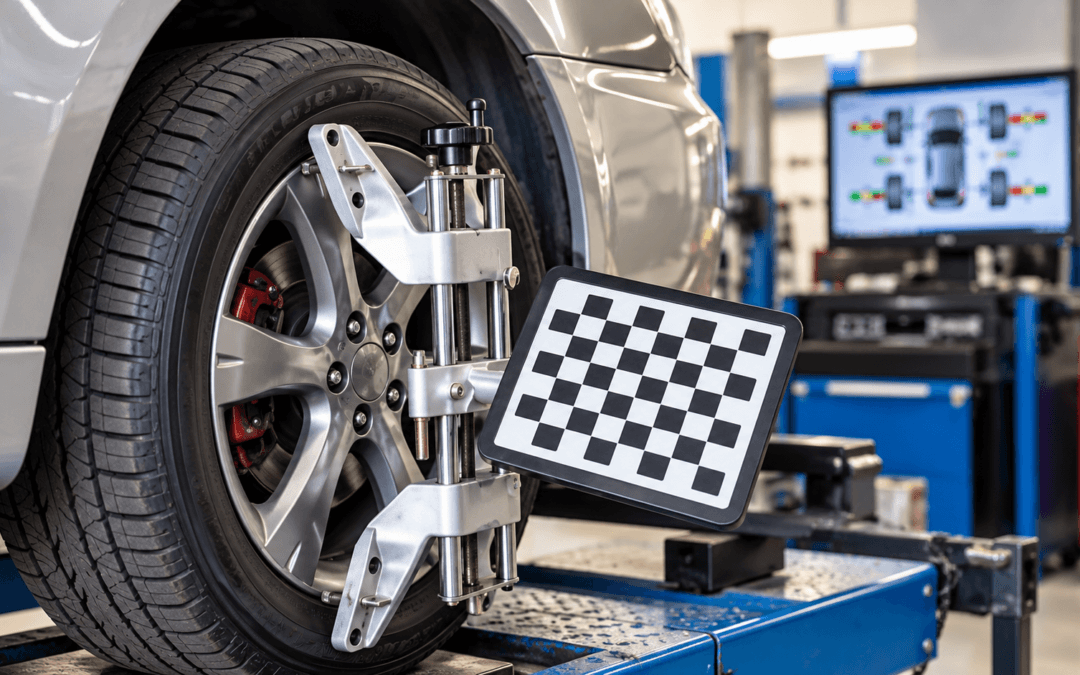
With the car inspected and the tyres correctly inflated, the wheel angles are measured. The car is positioned on level ground or a ramp, and measuring equipment is attached to the wheels. The equipment reads the angles of each wheel in relation to the car and to the other wheels, and the readings are compared with the correct settings for that car. The correct settings are specific to the make and model — every car has its own geometry — and the comparison shows exactly how far each angle has drifted and in which direction.
The measurement stage is quiet and precise. There is little to see from the driver's seat, and that is normal. What matters is what the readings show: whether the wheels point straight, whether they sit squarely, and whether the steering geometry is centred. The technician will explain the findings in plain language — which angles are out, by roughly how much in plain terms, and what that explains about the signs you noticed. A pull to one side, an off-centre wheel, or uneven wear should all make sense against the readings. If the readings are correct and the signs persist, the cause lies elsewhere — tyres, suspension, or brakes — and the inspection findings will point the way.
The angles, in plain language
Three angles matter most, and each has a plain explanation. The first is the toe angle: whether the front edges of the wheels point slightly inward or outward when viewed from above. Think of standing with your toes pointing slightly in or slightly out. Too much toe in either direction makes the tyres scrub sideways as they roll, wearing the edges and making the car feel nervous or draggy. The second is the camber angle: whether the top of the wheel leans inward or outward when viewed from the front. Too much lean in either direction wears one edge of the tyre and affects grip in corners. The third is the caster angle: the tilt of the steering axis, which affects how the steering feels, how it returns to centre after a turn, and how stable the car feels at speed.
You do not need to remember these names. What helps is understanding that each angle has a job, each can drift, and each produces its own kind of sign when it does. The measurement shows all three, the adjustment corrects what is out, and the test afterwards confirms the car behaves as it should. If the technician mentions one of these angles, you now know what it means and why it matters.
Step Three: Adjusting the Angles
Adjustment is the hands-on heart of the alignment service. Using the measurements as a guide, the technician adjusts the suspension and steering settings that control each angle, bringing the wheels back to the correct position for the car. The adjustments are made in small increments, with the equipment re-reading the angles as the work progresses, until the readings sit where they should. It is careful, iterative work: adjust, measure, adjust again, until the geometry is right. Rushing it, or adjusting by eye without measurement, does not produce a reliable result.
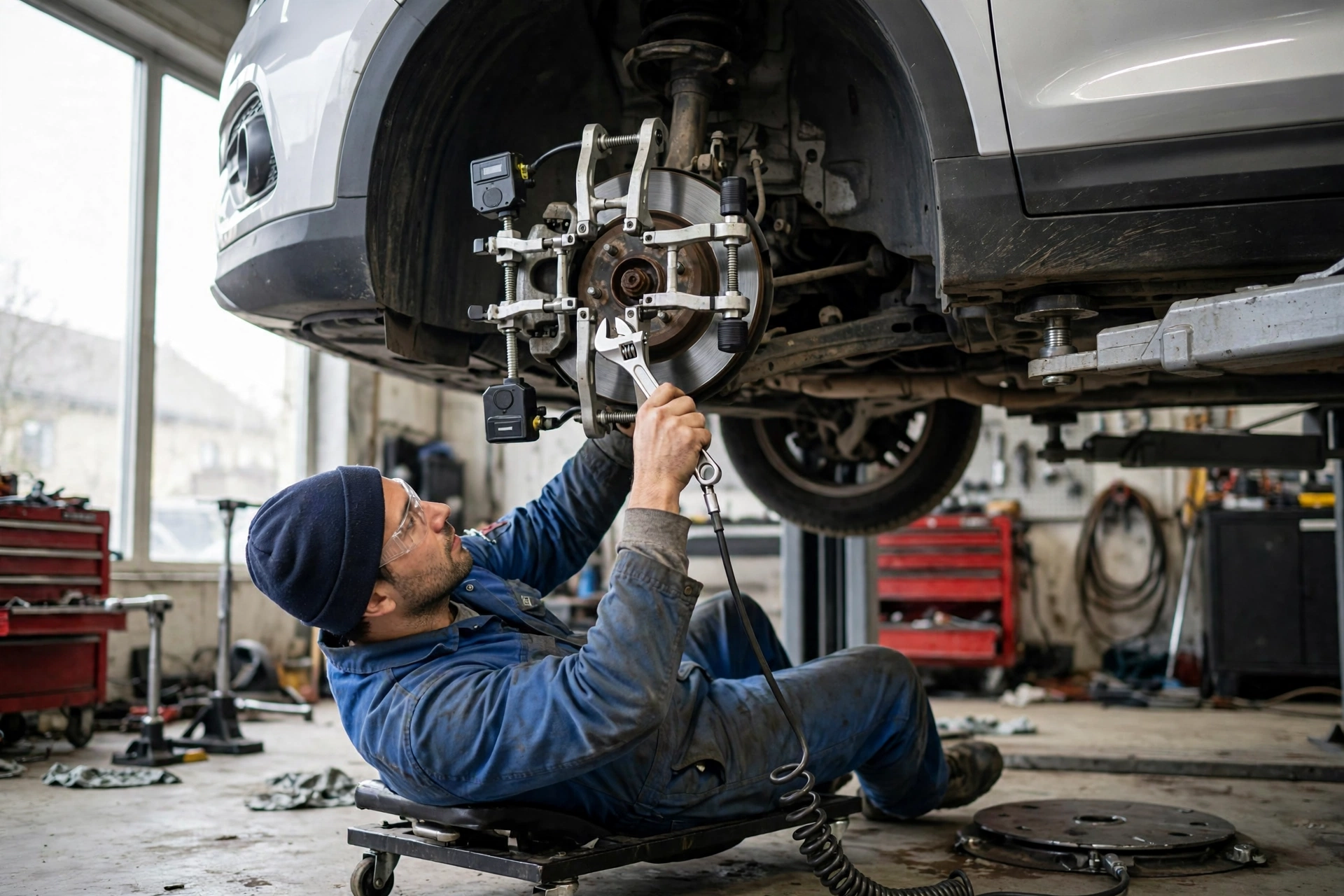
Not every angle is adjustable on every car. Some cars allow adjustment of all the main angles, while others allow adjustment of only some, with the rest fixed by the design of the suspension. Where an angle cannot be adjusted and is out of specification, the cause is usually a worn or damaged part, and that part must be dealt with before the geometry can be correct. The technician will explain what is adjustable on your car and what the readings mean for it. That explanation is part of the service, not an extra. You should leave understanding what was adjusted, what was already correct, and whether anything else needs attention.
During adjustment, the steering wheel position is watched carefully. The goal is not only correct angles but a centred wheel: when the car travels straight, the wheel should sit level. A car with correct angles and a crooked wheel has not been finished properly. The adjustment stage ends when the readings are correct and the wheel is centred, and the car is ready for the road test.
Step Four: Tyre Balancing
Balancing is a separate process from alignment, and it deserves its own explanation, because drivers often confuse the two. A wheel and tyre assembly should have its weight distributed evenly around its centre. In practice, no tyre and wheel are perfectly even — small variations in the tyre, the wheel, and the valve mean one part of the assembly is slightly heavier than the rest. At low speed, that unevenness is unnoticeable. At higher speed, the heavy spot pulls outward with each rotation, and the wheel vibrates. That vibration travels through the steering, the floor, and the seats, and it wears the tyre unevenly over time.
How balancing is done
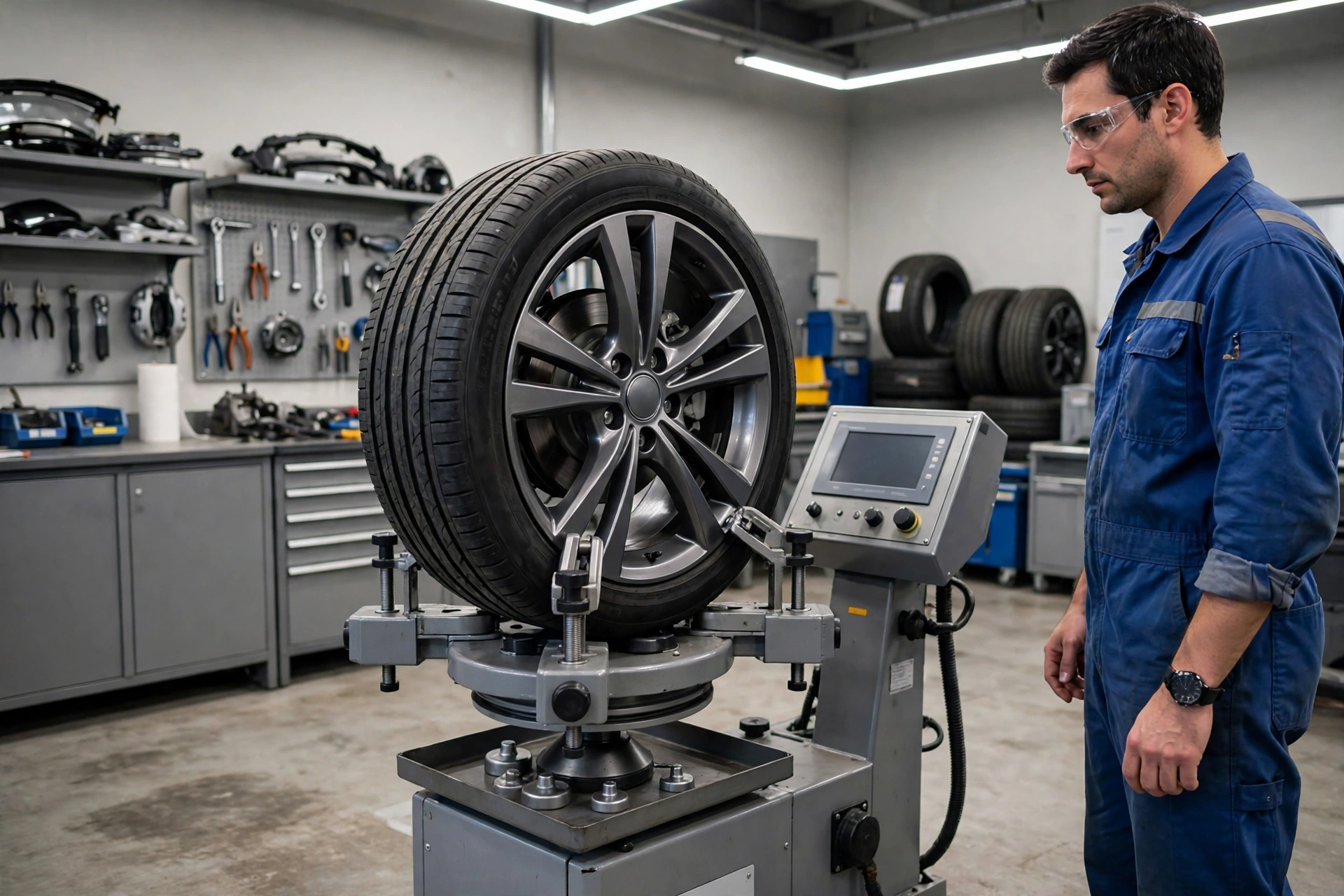
Each wheel is removed from the car and placed on a balancing machine, which spins it and measures where the heavy and light spots are. The machine shows exactly where weight must be added, and how much, to even out the assembly. Small weights are then fitted to the wheel rim at the indicated positions — clipped or stuck on, depending on the wheel type — and the wheel is spun again to confirm it now rotates evenly. The process is repeated for each wheel. It is precise, quick, and measurable: the machine confirms the result before the wheel goes back on the car.
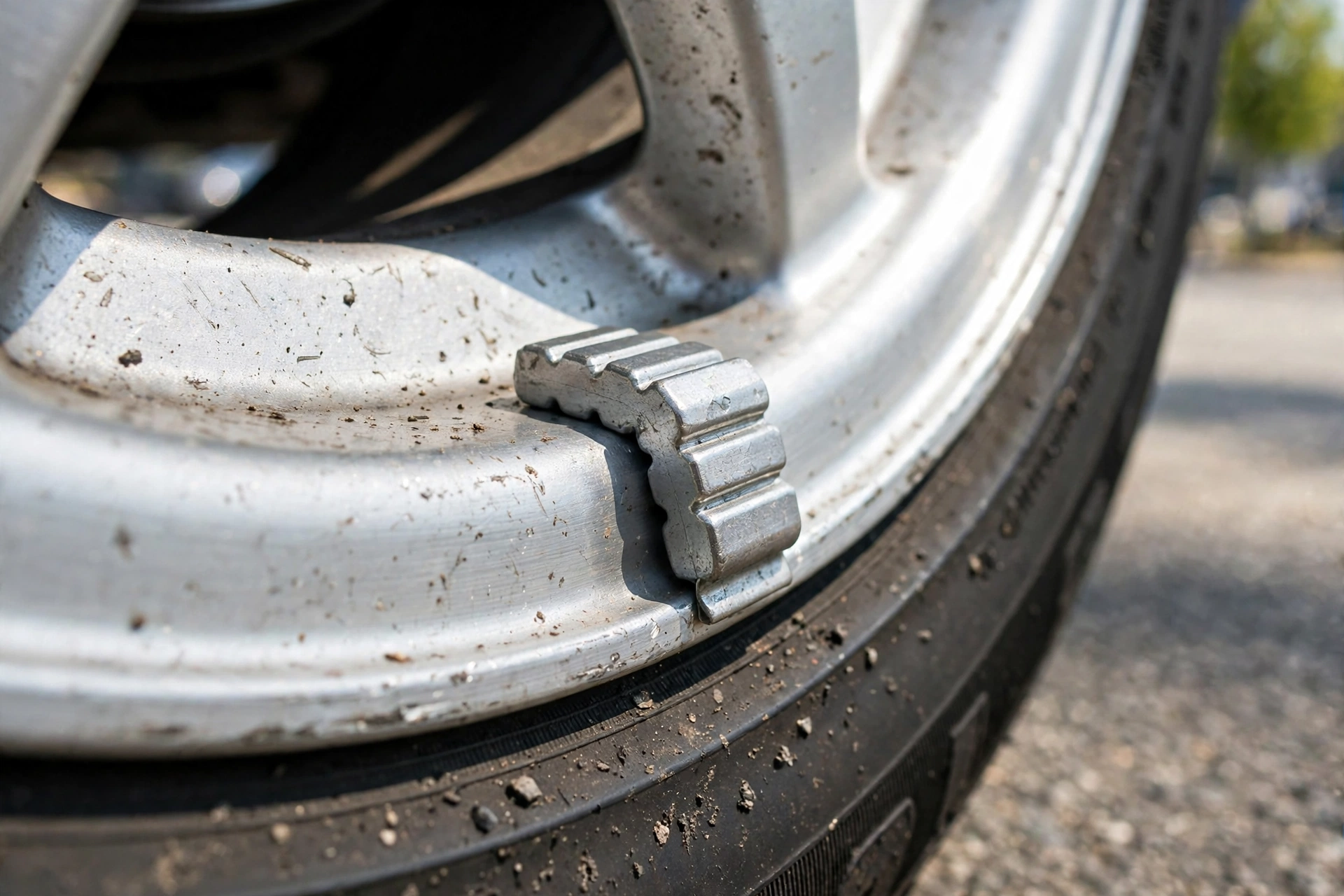
Balancing is needed when new tyres are fitted, because every new tyre has its own weight distribution. It is needed when a wheel weight has come off — weights can be knocked loose by kerbs, car washes, or rough roads — and the vibration returns. It is needed when vibration appears at speed and the tyres are otherwise in good condition. And it is worth checking alongside alignment, because the two services together cover the full range of steering and ride complaints: alignment for pulling and uneven wear, balancing for vibration.
What balancing fixes, and what it does not
Balancing fixes vibration caused by uneven weight distribution around the wheel. It does not fix pulling, which is an alignment matter. It does not fix knocking, which is usually suspension. It does not fix a damaged tyre, a bent wheel, or a tyre with a structural problem — those need their own attention, and the inspection stage is where they are identified. Understanding what balancing does and does not do helps you describe the problem accurately and judge whether the service has addressed it. If vibration persists after balancing, the cause lies elsewhere, and the inspection findings will point to the next step.
Step Five: The Road Test and the Handover
After adjustment and balancing, the car is tested. The road test checks the things you noticed in the first place: does the car track straight on a level road with a light hold on the wheel? Is the steering wheel centred? Is the vibration gone? Does the steering feel even and connected? Does the car feel settled and predictable? The test covers town speeds and, where safe and appropriate, higher speeds, because some signs — vibration, wandering, pulsing — only appear at speed. If anything still feels wrong, the car goes back for a re-check of the measurements before it is handed over. The test is not a formality. It is the confirmation that the service has done what it was meant to do.
The handover is the final stage, and it matters as much as the work. The technician explains what was found, what was adjusted, and what the readings showed. Any other findings — a worn part, a tyre concern, a recommendation for a future check — are explained in plain language. You should leave knowing what was done, why it was done, and what to watch for. If the car feels different on the drive home in a way that worries you, say so straight away rather than waiting. A quick second look costs little and keeps small issues small.
When the Service Is Needed
Alignment and balancing are needed when the signs point to them, and at certain natural moments in a car's life. The signs are covered in full in the alignment signs and benefits guide: pulling, an off-centre wheel, uneven tyre wear, wandering, changed steering feel, vibration at speed. The natural moments are just as important to know. Book the service after a hard impact — a kerb strike, a pothole, a raised cover — even if the car feels almost normal. Book it after suspension work, because new suspension parts change the geometry. Book it when new tyres are fitted, so they start life rolling correctly. Book it if a wheel weight has come off and vibration has returned. And book it if the car has gradually become less settled over a long while, because gradual change is the hardest to notice and the most common reason the service goes overdue.
Dubai conditions add their own reasons. Speed humps, taken daily, shift geometry gradually. Heat ages suspension bushes, which in turn lets geometry drift. Dust works into joints. Motorway driving at sustained speed makes vibration and wandering more noticeable, and more tiring, than town driving does. None of these is a reason to worry. They are reasons to treat alignment and balancing as part of regular car care, checked when the signs appear and at the natural moments, rather than left until the tyres show the damage.
How the Car Should Feel Afterwards
The drive home after alignment and balancing is the moment the service proves itself, and it helps to know what to expect. The car should track straight on a level road with a light hold on the wheel, without pulling to either side. The steering wheel should sit level when the car goes straight. Vibration at speed should be gone, or clearly reduced if another cause is also involved. The steering should feel even and connected, with a natural return to centre after turns. The car should feel settled and predictable, without wandering or nervousness on straight roads. The ride should feel smoother, with less harshness transmitted through the wheel and the floor.
The change is often subtle rather than dramatic, especially if the drift was gradual. Drivers sometimes say the car feels as though a small weight has been lifted, or that it feels new again in a way they cannot quite pin down. That subtle improvement is the point. Alignment and balancing restore the car to how it was designed to feel, and the designed feeling is calm, straight, and settled. If the car still pulls, still vibrates, or still feels wrong after the service, mention it promptly. A persistent sign after the service points to another cause — a tyre, a suspension part, a brake issue — and the inspection findings will guide the next step.
Looking After Alignment and Balancing Between Services
The service restores the geometry and the balance, and everyday habits keep them right for longer. Slow properly for speed humps, every time, even the familiar ones. Avoid kerbs and potholes where you can, and if you hit one hard, note it and listen for new signs afterwards. Keep tyre pressures correct, checking them regularly, because incorrect pressure affects wear, handling, and every alignment measurement. Look at your tyres from time to time for uneven wear, and feel the tread surface for ridges or feathering. Notice changes in steering feel early, and mention them at the next visit rather than waiting until they are pronounced. And after any suspension work or new tyres, ask about alignment and balancing. Small habits and early attention keep the car feeling right, and keep tyre life where it should be. For tyre care in general, see the tyre repair guide.
Combining the Service With Other Work
Alignment and balancing are often combined with other work, and combining them sensibly saves time and protects the investment in parts and tyres. With new tyres, alignment and balancing should be part of the same visit, so the new tyres start correctly. With suspension work, alignment follows the repair as part of finishing the job. With a general service, an alignment check can be added when the signs point to it. The order matters: suspension parts first, then alignment, then the road test. Aligning a car with worn suspension parts does not hold, because the worn parts keep moving. The inspection stage establishes the right order for your car, and the scope and price are confirmed before any work begins. Combining work is about doing things in the right sequence, not about doing everything at once.
How It Works: From Your Call to Service Complete
Every alignment and balancing job follows the same calm sequence. First, the call: phone or WhatsApp with the location, the car details, and what you have noticed — the pull, the vibration, the wear, and whether anything happened before the signs appeared. Second, the response: help dispatched within the 15–20 minute standard, anywhere in the complete UAE. Third, inspection and measurement: the car inspected, the angles measured, the wheels balanced, and the findings explained in plain language. Fourth, the quote: scope and price confirmed before work begins, with no work starting without your approval. Fifth, adjustment, balancing, and the test: the work completed, the car road-tested, and the findings explained at handover. Prices stay very low throughout, and the service is open 24 hours.
Frequently Asked Questions
How long does alignment and balancing take?
The service is a measured, careful process: inspection, measurement, adjustment, balancing, and a road test. The time it takes depends on what the inspection finds and how much adjustment is needed. The scope and the expected time are explained before work begins, and you are kept informed if the inspection finds something that changes the plan. A rushed alignment is not a reliable alignment, so the stages are not skipped.
Will alignment and balancing fix vibration?
Balancing fixes vibration caused by uneven weight around the wheel, which is the most common cause of vibration at speed. Alignment fixes pulling and uneven wear. If vibration persists after balancing, another cause — a tyre, a wheel, or a suspension part — is responsible, and the inspection findings will point to it. Describe the vibration when you call: when it appears, where you feel it, and whether braking changes it.
Do all four wheels need alignment?
The measurement covers all four wheels, because the rear wheels affect how the car tracks just as the front wheels do. Adjustment is made where it is needed and where the car allows it. A check that looks at only the front wheels can miss a rear problem that makes the car track crookedly. The full measurement gives the complete picture.
Can alignment be checked if a suspension part is worn?
The angles can be measured, but adjusting alignment on worn parts does not hold, because the worn parts keep moving. The inspection comes first: if a worn bush, joint, or other part is found, it is explained, and the repair is agreed before alignment is set. That order — parts first, then geometry — is what makes the alignment last. The suspension guide explains the parts side in full.
How fast can help reach me?
The response time is 15–20 minutes. Call or WhatsApp +971 54 344 3513 with a live location, car details, and what you have noticed, and help is dispatched to reach you within 20 minutes, anywhere in the complete UAE. The service is open 24 hours.
Are 95 Services prices low?
Yes — service prices are kept very low as a matter of policy. Inspection and measurement come first, and the scope and price are confirmed before work begins, with no work starting without the customer's approval.
Contact 95 Services: Alignment & Balancing Across the UAE
If your car pulls, vibrates, wears its tyres unevenly, or you have had new tyres or suspension work and want the geometry checked properly, the next step is one call. Contact 95 Services on +971 54 344 3513 by phone or WhatsApp, or email info@95services.com, with the location, car details, and what you have noticed. Help is dispatched within the 15–20 minute response standard, prices stay very low, and the quote is confirmed before any work begins. The service is open 24 hours, across the complete UAE. The office is at Ahmed Ali Al Owais Showroom Building, Office M05, Abu Hail, Al Khabaisi, Dubai, UAE. Call before visiting so the correct service arrangement can be confirmed. Or visit the contact page to send an enquiry.
