
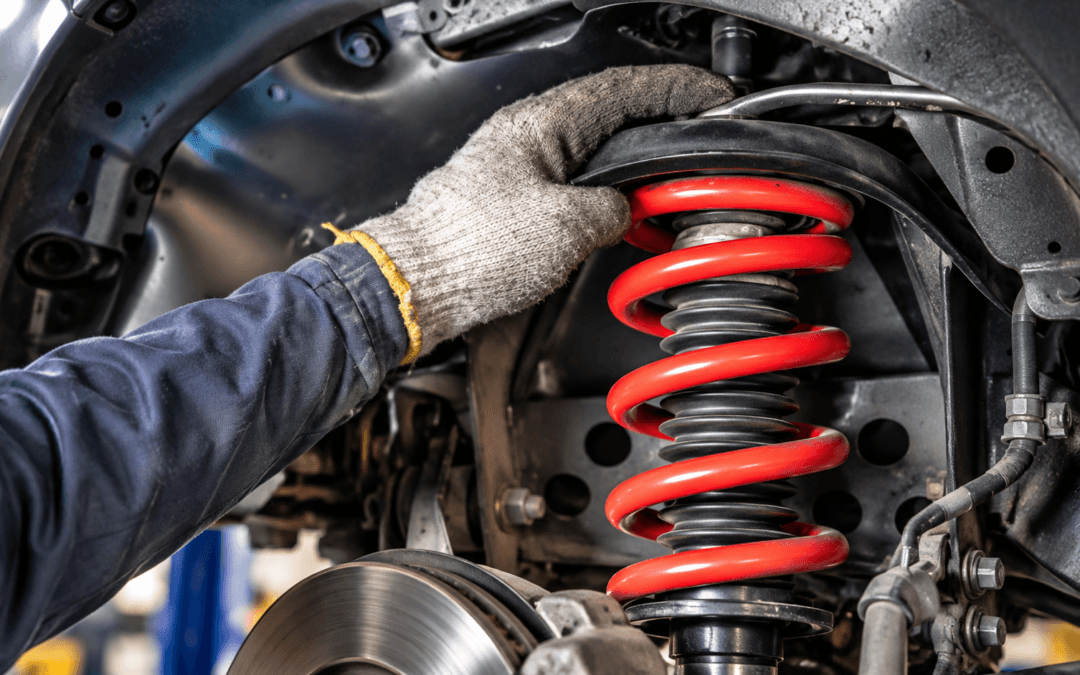
You feel suspension problems before you can name them. The car thumps over a speed hump that it used to take smoothly. There is a knock from one corner on uneven ground. The car leans a little more on roundabouts, or bounces once too often after a dip in the road. Nothing has broken outright. The car still drives. But the ride has changed, and once you notice it, you notice it on every journey. This guide explains what suspension does, the signs that point to it, what causes the problems in Dubai conditions, how diagnosis works, and what repair involves — in plain language, without jargon.
Suspension is easy to overlook because it works quietly when it is healthy. It is the system that keeps the tyres in contact with the road, absorbs the bumps, and keeps the car stable when you steer, brake and corner. When part of it wears or fails, the effects spread: the ride gets harsher, the handling gets vaguer, the tyres wear unevenly, and braking distances can suffer because the tyres are not planted properly. That is why suspension signs deserve attention even when the car still drives. They are rarely just about comfort. They are about how well the car grips the road, and grip is what keeps you safe.
This article stays focused on suspension itself. Wheel alignment is closely related — worn suspension throws alignment out, and suspension repair often needs an alignment check afterwards — but alignment has its own guides, and this article links to them rather than repeating them. See wheel alignment and tyre balancing for the service, the alignment signs and benefits guide for the signs that point to alignment, and the alignment and balancing service article for what happens during that service. Here, the subject is the suspension: the parts that carry the car, cushion the bumps, and hold the wheels steady.
What Suspension Actually Does
Think of suspension as the link between the car body and the wheels. The wheels follow the road surface — up over humps, down into dips, across uneven patches — while the body above them should stay as level and steady as possible. Suspension makes that happen. Springs carry the weight of the car and absorb the big movements. Dampers, often called shock absorbers, control how the springs move, stopping the car from bouncing after each bump. Bushes — small cushions of flexible material at the joints — let parts move without metal grinding on metal, and soak up vibration. Arms and links connect everything together and hold the wheels in the right position as they move up and down.
When all of that works together, the ride feels settled. Bumps are absorbed once and forgotten. The car stays level through corners. The steering feels connected and precise. Braking feels stable, with the car staying straight and planted. When one part wears, the balance shifts. The car may still drive, but it drives differently: noisier, bouncier, looser, or less predictable. Drivers often describe it as the car feeling tired, or feeling older than it is. That feeling is usually the suspension asking for attention.
The Main Parts, in Plain Language
You do not need to know part names to describe a problem well, but a plain outline helps you understand what the technician finds and why a particular repair is recommended. Each part has a job, each wears in its own way, and each produces its own kind of sign when it struggles.
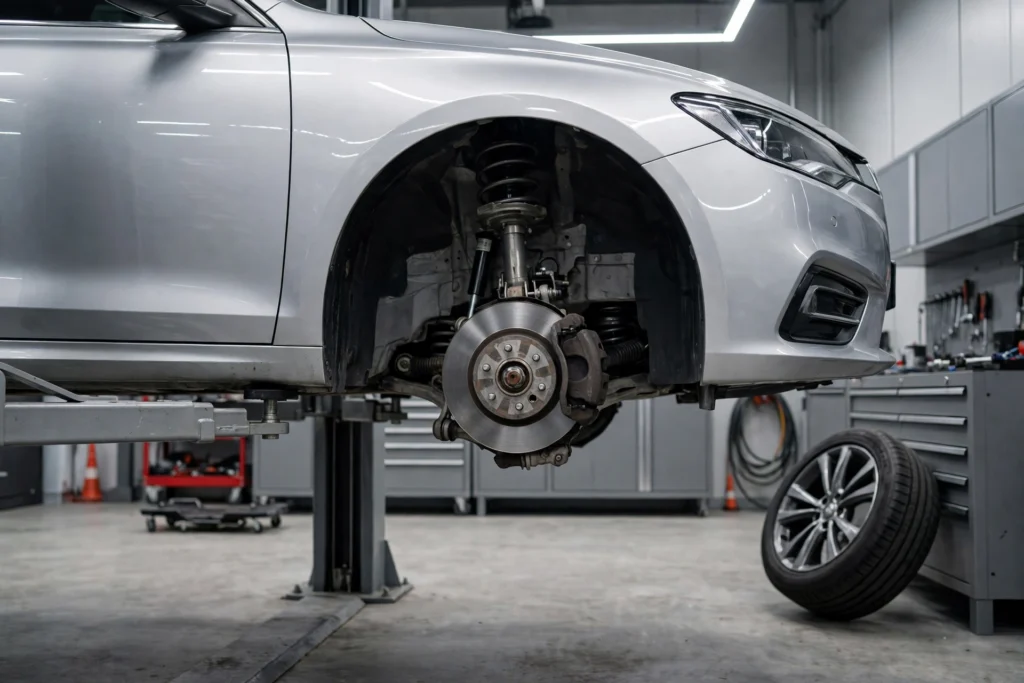
Springs
Springs carry the weight of the car. They compress when the wheel hits a bump and extend again as the wheel drops back down. They are strong, simple parts, and they usually last well, but they can weaken, sag, or crack over time, especially under heavy loads and repeated hard impacts. A weakened spring shows up as a corner sitting lower than the others, or the car bottoming out — hitting the bump stops with a thud — over humps and dips that it used to clear comfortably.
Dampers
Dampers control the springs. Without them, the car would keep bouncing after every bump, like a ball that keeps rebounding. A damper slows the spring's movement in both directions, so the car settles quickly after a bump and stays planted. When a damper wears, the bouncing returns: the car floats over dips, wallows on uneven roads, and takes longer to settle. Worn dampers also let the tyres lose contact with the road more easily over rough surfaces, which affects grip when you need it most — braking and cornering.
Bushes
Bushes are the quiet workers of the suspension. They sit at the joints where suspension parts connect, cushioning movement and absorbing vibration. They are small and inexpensive compared with other parts, but when they wear, crack or soften, the signs are noticeable: knocking over bumps, a vague or wandering feeling in the steering, and clunks when setting off or stopping. Bushes wear gradually, so the signs creep up slowly, and drivers often get used to them before realising how much the car has changed.
Arms, links and joints
Arms and links hold the wheels in position while allowing them to move up and down. Joints at their ends let them pivot smoothly as the wheel steers and the suspension moves. When a joint wears, it develops play — a small amount of unwanted movement — and that play shows up as knocking, uneven tyre wear, and steering that feels loose or imprecise. A worn joint is a safety matter, because it affects how firmly the wheel is held in position. Knocking that points to a joint should be checked promptly.
Warning Signs: What to Listen and Feel For
Suspension signs arrive through sound, through feel, and through what you can see. Most drivers notice one sign first, then start noticing others once they are paying attention. The sections below cover the common signs one by one, what each usually points to, and how urgently it should be checked.
Knocking or clunking over bumps
A knock or clunk from one corner of the car when you go over a speed hump, a pothole, or uneven ground is one of the most common suspension signs. It can be a dull thud, a sharp knock, or a rattle that appears only on rough surfaces. It usually points to wear in a bush, a link, or a joint — a part that has developed play and is now moving and knocking against its neighbour. The urgency depends on how loud and regular it is. An occasional soft knock on the roughest ground is a book-soon sign. A loud, regular knock on ordinary roads, or a knock that has clearly got worse, should be checked promptly. Note which corner the sound comes from — front left, rear right, and so on — because that detail narrows the inspection straight to the right area.
Bouncing, floating or wallowing
After a bump or a dip, the car should settle quickly — one movement, then calm. If it keeps bouncing, floats over dips, or wallows from side to side on uneven roads, the dampers are the usual suspect. The car may also feel unsettled over motorway undulations, rising and falling more than it used to. Worn dampers make the car feel less planted, and the effect grows gradually, so it is easy to adapt to it without realising. A simple comparison helps: think about how the car felt on a familiar stretch of road when it was newer to you. If that same stretch now feels bouncier and less settled, the dampers deserve a check.
Leaning, rolling or diving
If the car leans noticeably more in corners, dives forward under braking, or squats back under acceleration, the suspension is not controlling body movement as it should. Some lean and dive is normal in every car, but a clear increase — the car feeling as though it is tipping or lurching where it used to stay composed — points to worn dampers or weakened springs. This matters beyond comfort. A car that dives heavily under braking shifts weight forward suddenly, unloading the rear tyres and making the car less stable in a hard stop. A car that rolls heavily in corners feels less predictable, and predictability is what lets you steer with confidence.
Steering that feels vague, loose or wandering
Suspension wear and steering feel are closely linked. Worn bushes and joints introduce play, and play makes the steering feel vague: you turn the wheel a little and nothing much happens, then the car responds all at once. The car may wander on a straight road, needing constant small corrections, or feel unsettled when the road surface changes. Vague steering is easy to blame on alignment, and alignment can indeed be part of the story, but worn suspension parts must be ruled out first, because aligning a car with worn parts is building on a loose foundation. The inspection checks both, and the alignment guides explain the alignment side in full.
Uneven tyre wear
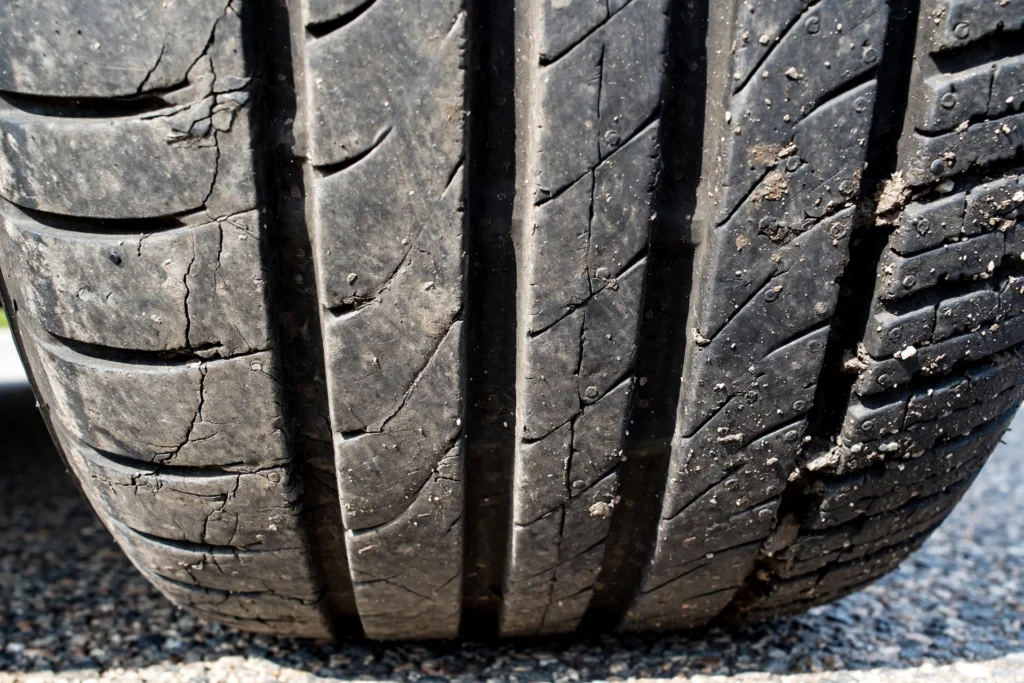
Tyres tell the story of the suspension beneath them. Wear that is heavier on one edge, patchy across the tread, or different from one wheel to another often points to suspension or alignment trouble. A tyre wearing on its inner edge, for example, suggests the wheel is not sitting squarely on the road, which can come from worn parts, sagging springs, or alignment that has drifted. Uneven wear is a book-soon sign, because it means the tyre is not working evenly, its grip is reduced, and it is wearing out faster than it should. Run your hand lightly across the tread surface — with the car parked and the tyres cool — and feel for unevenness, ridges, or smooth patches. What your hand finds, the inspection will confirm. For the tyre side of the story, the tyre repair guide covers tyre care and repair.
A corner sitting lower than the others
Stand back and look at the car from the front and from the side, on flat ground. The gaps between the tyres and the wheel arches should look roughly even across the car. A corner that sits visibly lower than the others, or a car that looks as though it is leaning when parked, points to a weakened or damaged spring on that side. It can also follow a hard impact. A sagging corner is a book-soon sign. The car may drive acceptably, but the weight distribution is uneven, the handling is affected, and the low corner is more likely to bottom out over humps and dips.
Bottoming out over humps and dips
Bottoming out is the hard thud you feel when the suspension runs out of travel and the car hits its bump stops — the cushions that prevent metal from meeting metal. Every car can bottom out on a severe dip taken too fast, but if it happens on ordinary speed humps taken at ordinary speed, or on dips the car used to clear easily, the springs or dampers are not doing their job. In Dubai, where speed humps are everywhere — in communities, around schools, in car parks — bottoming out is a sign drivers notice quickly, because humps are part of every day. If familiar humps have started to thud where they used to be smooth, book a check.
Fluid leaking near a wheel
Dampers contain fluid, and a worn damper can leak. Look for dampness or wetness on the damper body itself, visible behind the wheel, or a small oily patch under one corner. A leaking damper is a damper that is losing its ability to control the spring, and it will only get worse. A visible leak is a book-soon sign. It is not the same as water from the air conditioning, which is normal in Dubai heat and pools harmlessly under the car. Oily dampness on or near a suspension part is different, and it is worth mentioning when you call.
Why Suspension Suffers in Dubai
Dubai is demanding on suspension in ways that surprise drivers who are new to the city. The roads are generally excellent, but the combination of heat, dust, speed humps, heavy traffic patterns, and the way cars are loaded and used adds up to real wear. Understanding the causes helps you read the signs earlier and make small choices that ease the strain.
Speed humps, everywhere
Speed humps are the single most everyday suspension test in Dubai. Communities, school zones, car parks, service roads — humps are part of every short journey, and each one is a full suspension cycle: compress, extend, settle. Taken at the right speed, humps are harmless. Taken too fast, regularly, they hammer the dampers, bushes and joints. The damage is cumulative and quiet. Slowing properly for humps, approaching them straight rather than at an angle where possible, and avoiding the temptation to straddle them are small habits that genuinely extend suspension life.
Heat and dust
Dubai heat is hard on the flexible parts of suspension. Bushes and seals age faster in sustained heat, becoming harder, less flexible, and more prone to cracking. Fine dust works its way into joints and around seals, adding wear to surfaces that should move smoothly. The combination — heat ageing the materials, dust abrading the moving parts — means suspension components in Dubai often show their age earlier than drivers expect. There is no way to avoid the climate, but regular checks catch heat and dust wear before it becomes knocking and play.
Motorway driving and sudden slowdowns
Long motorway stretches with little suspension movement, followed by firm braking at exits and sudden slowdowns, ask the suspension to switch from rest to hard work in an instant. The dive under braking, the load transfer, and the recovery all depend on healthy dampers. Worn dampers show up most clearly in exactly this pattern: the car feels fine cruising, then unsettled and floaty when braking from speed. If your driving is mostly motorway, pay attention to how the car behaves at exits and in sudden queues. That is where worn suspension reveals itself.
Heavy loads and full cars
Cars in Dubai often carry full loads: families, luggage, shopping, equipment. Suspension is designed for loads, but carrying heavy loads regularly, especially over humps and uneven ground, adds to spring and damper wear. A car that sags at the rear under load, or bottoms out more easily when full, is telling you the springs are struggling. Loading heavy items low and centred, and avoiding overloading, helps. If the car regularly carries heavy loads, mention it at the check, because it shapes what the technician looks for and what is recommended.
Kerbs, potholes and the occasional hard hit
A single hard hit — a kerb struck while parking, a pothole taken at speed, a raised manhole cover — can damage a suspension part outright or start wear that shows up weeks later. If a knock, pull, or change in feel appears after a hard hit, do not wait for it to settle. Book a check and mention the impact. The inspection will look for bent, cracked or displaced parts that a visual glance from the driver's seat cannot see. Early checks after impacts catch damage while it is still one part, before it wears its neighbours.
How Diagnosis Works
Suspension diagnosis is hands-on. It starts with what you have noticed: the sounds, the feelings, when they appear, which corner they come from, and whether anything happened — a hard hit, a change in load, a gradual worsening — before they started. A good description saves time and points the inspection at the right area first. Then the car is checked properly, in a sequence that moves from the general to the specific.
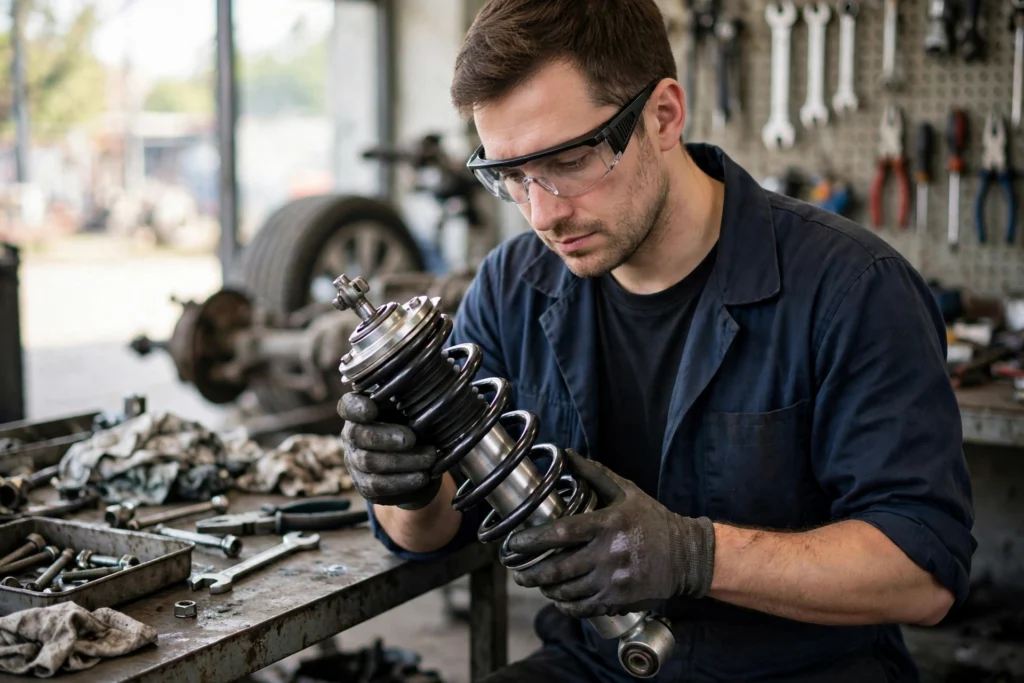
The visual check comes first: the car on flat ground, looking at ride height corner by corner, checking for leaks, damage, and uneven tyre wear. Then the hands-on check: each corner pressed and released to see how quickly it settles, wheels checked for play by rocking them, bushes and joints inspected for cracking, softness and movement. Then the under-car check, with the car raised, so arms, links, joints, springs and dampers can be seen and moved properly. A short drive, where safe, confirms how the signs behave on the road: knocking over bumps, bouncing after dips, wandering on the straight, diving under braking.
Findings are explained in plain language, and the scope and price are confirmed before any work begins. That order — listen, look, test, explain, agree — matters, because suspension problems often involve more than one worn part, and you should understand what is being recommended and why before anything is taken apart. A worn bush and a worn damper can produce similar knocking, and only a proper check separates them. Guessing, and replacing parts on a guess, wastes money and leaves the real problem in place.
What Repair Involves
Suspension repair is about restoring the system to the way it should work: springs carrying the weight properly, dampers controlling movement, bushes cushioning joints, and arms and joints holding the wheels firmly. The work depends entirely on what the diagnosis finds, and it is judged on condition, not on a calendar. A part that is worn is replaced. A part that is healthy is left alone. The sections below outline the common kinds of repair in plain language, so you know what to expect when a recommendation is made.
Damper replacement
Replacing a damper means removing the worn unit, fitting a new one suited to the car, and checking the surrounding parts — mounts, bushes and springs — while the area is open. Dampers are considered as a pair across an axle, because a new damper on one side and a worn damper on the other makes the car behave unevenly. After fitting, the car is checked for settling, noise, and ride feel. The difference after damper replacement is often immediate and obvious: the car settles after bumps, feels planted, and stops wallowing. Drivers sometimes say the car feels new again. That is what healthy dampers do.
Spring replacement
A weakened or damaged spring is replaced with one suited to the car, and the ride height and the condition of the neighbouring parts are checked at the same time. Springs are also considered as a pair across an axle, for the same reason: matched springs keep the car level and balanced. After spring work, the car should sit level on flat ground, clear familiar humps without bottoming out, and feel composed over dips. If a spring has cracked or broken, the car should not be driven until it is replaced, because a broken spring can damage neighbouring parts and affect control.
Bushes, links and joints
Bush, link and joint work means replacing the worn cushion or joint so the connection is firm and quiet again. These are often the parts behind knocking, and replacing them can transform a car that has been rattling for months. The work is fiddly rather than dramatic: the worn part is pressed or unbolted out, the new part is fitted, and the assembly is checked for play and noise. Because bushes and joints wear gradually, the improvement after replacement can feel surprisingly large. The car goes quiet over bumps, the steering tightens up, and the vague feeling disappears.
After suspension work: the alignment check
Suspension work changes the geometry of the wheels — the angles at which they sit and steer — so an alignment check after suspension repair is not an extra. It is part of finishing the job properly. The alignment check measures how the wheels sit, adjusts them to the correct position for the car, and confirms the steering wheel is centred and the car tracks straight. Without it, new suspension parts can wear tyres unevenly and the car can pull or wander. The alignment service page and articles explain the detail. The point here is simple: if suspension parts are replaced, expect an alignment check to follow, and ask about it if it is not mentioned.
Driving With a Suspension Problem: What Is Safe?
Most suspension problems give you time to book a check. The car still drives, and the signs are warnings rather than emergencies. But some situations call for more caution. A loud, regular knock that is clearly getting worse, a corner sitting visibly low, a broken spring, a joint with obvious play, or steering that feels genuinely loose are all reasons to drive gently, keep speeds moderate, avoid motorways where you can, and book the check promptly. If the car feels unsafe — steering that does not respond properly, a wheel that feels loose, or a sudden loud bang followed by a change in handling — pull over safely and call for help rather than driving on.
While waiting for a check, drive with care. Slow right down for humps, avoid rough ground where you can, leave longer gaps, and brake earlier and more gently. Do not test the suspension with fast cornering or hard braking to see how bad it is. And do not load the car heavily until the problem is checked. Gentle driving does not fix a suspension problem, but it stops a worn part from being hammered further while you arrange the repair.
Small Habits That Ease the Strain
Looking after suspension is mostly about how you drive the everyday obstacles. Slow properly for speed humps, every time, even the familiar ones. Avoid kerbs and potholes where you can, and if you hit one hard, note it and listen for new sounds afterwards. Keep loads sensible and centred. Listen for new knocks and feel for changes in the ride, and mention them early rather than waiting until they are loud. Build a suspension check into regular service visits, and ask for bushes, joints, dampers and springs to be looked at properly. Small habits and early attention keep suspension problems small, and small problems are the ones that are simplest to sort out.
How It Works: From Your Call to Suspension Sorted
Every suspension job follows the same calm sequence. First, the call: phone or WhatsApp with the location, the car details, and what you have noticed — the sounds, the feelings, which corner, and when it happens. Second, the response: help dispatched within the 15–20 minute standard, anywhere in the complete UAE. Third, diagnosis: the car looked at, tested and explained in plain language. Fourth, the quote: scope and price confirmed before work begins, with no work starting without your approval. Fifth, the work and the check: the agreed work completed, the car tested for noise, ride and handling, and the alignment checked where suspension work requires it. Prices stay very low throughout, and the service is open 24 hours.
Frequently Asked Questions
My car knocks over speed humps. Is that always suspension?
Knocking over humps most often points to suspension — a worn bush, link or joint with play in it — but other parts can knock too, and only a hands-on check separates the causes. Note which corner the knock comes from and whether it happens on every hump or only the roughest ones, and mention it when you call. A regular knock deserves a prompt check.
The car bounces after dips. What does that mean?
Bouncing that continues after a dip, or a floating feeling over uneven roads, usually points to worn dampers that are no longer controlling the springs properly. The car should settle quickly after a bump. If it keeps moving, book a check. Worn dampers affect grip as well as comfort, because the tyres lose contact with the road more easily over rough surfaces.
Do I need an alignment check after suspension repair?
Usually, yes. Suspension work changes the angles at which the wheels sit, so an alignment check after repair makes sure the wheels are positioned correctly, the car tracks straight, and the tyres wear evenly. Ask about it when suspension work is recommended. The alignment articles on this site explain the signs and the service in detail.
Is uneven tyre wear a suspension problem or an alignment problem?
It can be either, and often both are involved. Worn suspension parts throw alignment out, and poor alignment wears tyres unevenly. The inspection checks the suspension parts first, because aligning a car with worn parts does not hold. Once the suspension is sound, alignment is checked and adjusted. Describe the wear pattern when you call — which edge, which tyre — because it helps the diagnosis.
How fast can help reach me?
The response time is 15–20 minutes. Call or WhatsApp +971 54 344 3513 with a live location, car details, and what you have noticed, and help is dispatched to reach you within 20 minutes, anywhere in the complete UAE. The service is open 24 hours.
Are 95 Services prices low?
Yes — service prices are kept very low as a matter of policy. Diagnosis comes first, and the scope and price are confirmed before work begins, with no work starting without the customer's approval.
Contact 95 Services: Suspension Repair Across the UAE
If your car knocks over humps, bounces after dips, leans in corners, or just does not ride the way it used to, the next step is one call. Contact 95 Services on +971 54 344 3513 by phone or WhatsApp, or email info@95services.com, with the location, car details, and what you have noticed. Help is dispatched within the 15–20 minute response standard, prices stay very low, and the quote is confirmed before any work begins. The service is open 24 hours, across the complete UAE. The office is at Ahmed Ali Al Owais Showroom Building, Office M05, Abu Hail, Al Khabaisi, Dubai, UAE. Call before visiting so the correct service arrangement can be confirmed. Or visit the contact page to send an enquiry.
