
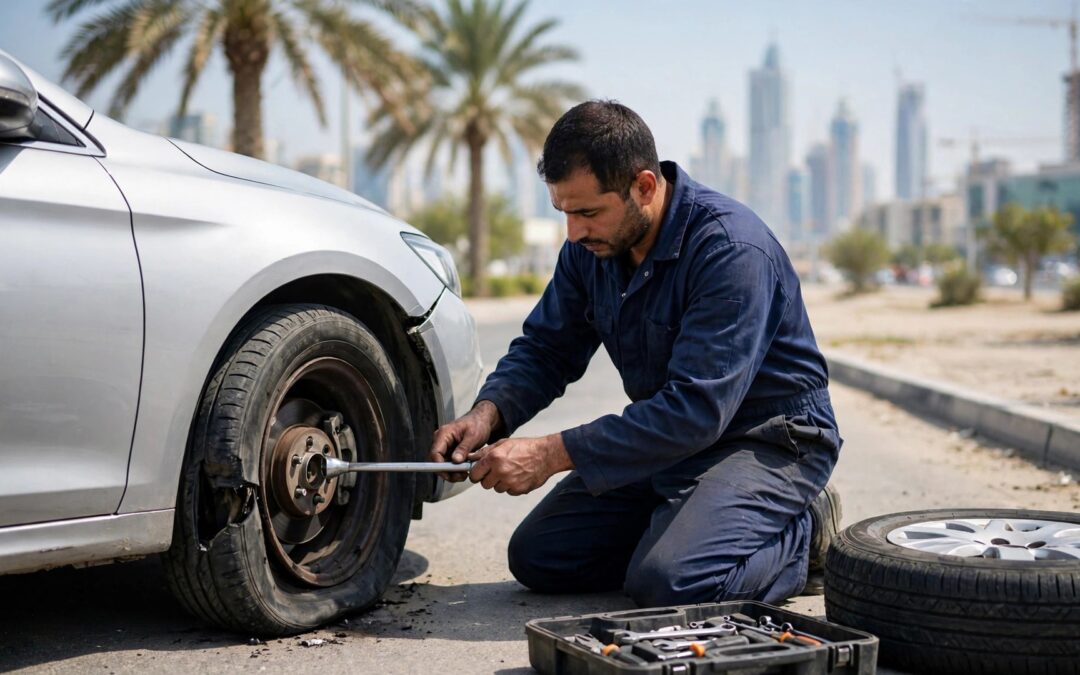
A flat tyre stops the car wherever it happens — a parking bay, a hard shoulder, a driveway at the start of the day. In Dubai’s heat, it also starts a clock: a car sitting on a flat tyre in high temperatures, and a driver waiting beside a busy road, both need the problem solved quickly and safely. Mobile tyre repair exists for exactly that moment: the service comes to the car, diagnoses the tyre, repairs or replaces it on the spot where possible, and gets the driver moving again without a tow.
This article explains what mobile tyre service covers, how puncture repair actually works, when a tyre must be replaced rather than repaired, what to do when a tyre blows out at speed, and how to keep tyres healthy in Dubai conditions — so the driver knows what should happen from the first call to the final pressure check.
When to Call, and When Not to Drive On
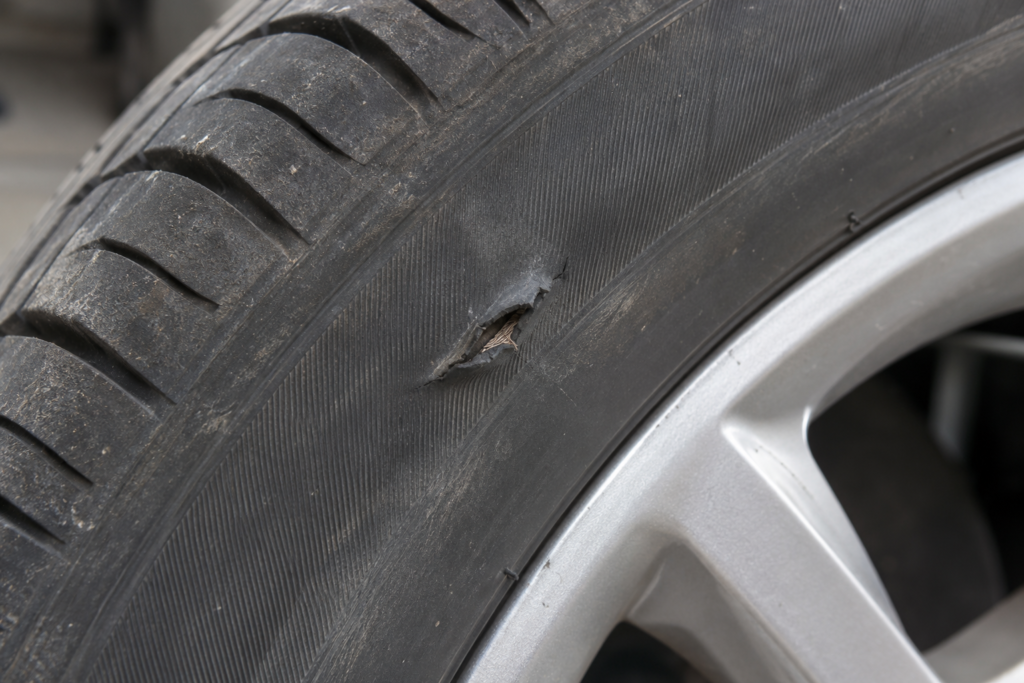
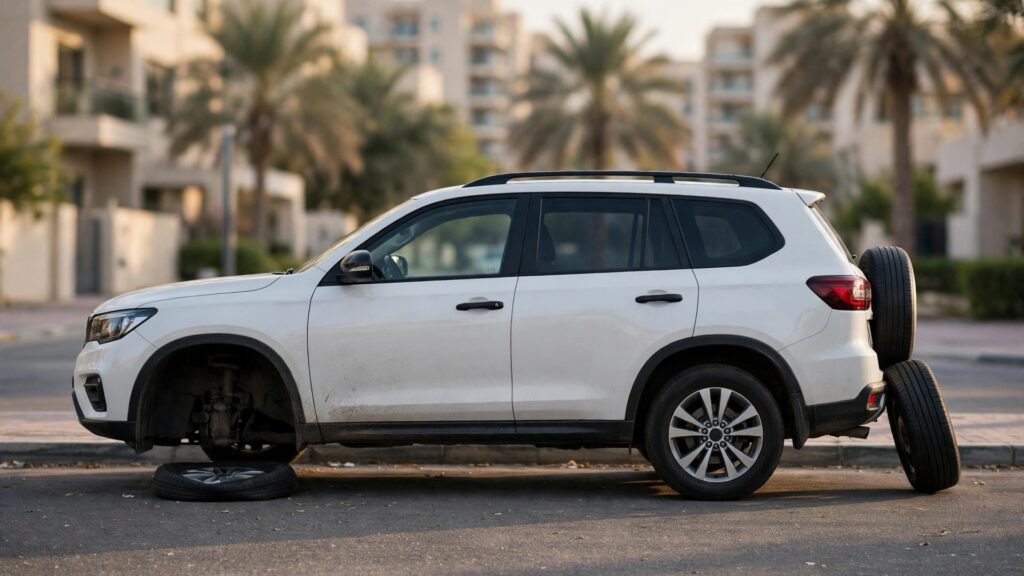
The first decision after discovering a flat is whether the car can move at all. A tyre that is visibly flat, deformed, or off the rim must not be driven on — even a short distance destroys the tyre’s sidewall, damages the wheel rim, and can damage suspension components. A tyre that is losing air slowly, with the car still sitting level, may be driven very slowly and briefly to a safe stopping place, but no further. A tyre damaged by a blowout, a large cut, or a sidewall bulge must not be driven on under any circumstances.
The safe sequence is simple: stop somewhere safe and level, away from traffic; switch on hazard lights; keep passengers away from the traffic side; and call for help with the location, vehicle details, and what happened. Do not attempt to change a wheel beside fast-moving traffic — the risk to the person is greater than the delay of waiting for help. Where the car is in a dangerous position, that is the first thing to say on the call, so the response can be prioritised.
What Mobile Tyre Service Covers
A mobile tyre visit covers more than swapping a wheel. Puncture diagnosis and repair is the core: finding the cause, assessing whether repair is safe, and repairing it properly. Tyre fitting covers mounting a replacement tyre — new or the driver’s own spare — including valve, balancing weights where the equipment allows, and correct inflation. Wheel change covers fitting the vehicle’s spare where that is the right answer. Valve and pressure work covers leaking valves, valve caps, and pressure correction. And inspection covers the remaining tyres: tread, age, cracking, and pressure, because the tyre that failed is often not the only one in poor condition.
Some work belongs in the workshop: wheel alignment after a kerb strike, rim repair, and tyre balancing that needs a full balancer. When that is the case, the honest answer is given on the spot, and car recovery is arranged where the car cannot be driven. The visit is judged by whether the car leaves safe, not by whether everything was done at the kerbside.
How Puncture Repair Works: Plugs, Patches & When Neither Is Safe
Not all punctures are repairable, and the repair method matters. A proper repair starts with removing the tyre from the wheel and inspecting it inside and out — a puncture that looks small from outside may have caused internal damage invisible without that inspection. A plug inserted from outside without removing the tyre is a temporary measure: it seals the hole but leaves the inside uninspected, and it can mask damage that later causes a blowout. A patch applied from inside, after proper preparation of the inner surface, is the durable repair for a repairable puncture — and the combination of plug and patch, where appropriate, seals both the hole and the inner liner.
Repair is only safe within limits: the puncture must be in the tread area, within size limits, and the tyre must show no sidewall damage, no shoulder damage, no internal deterioration, and no previous repair overlapping the new one. Sidewall punctures and cuts are never repairable — the sidewall flexes constantly, and no repair holds there. Shoulder damage, large cuts, and tyres driven flat are likewise replacement cases. A service that repairs a sidewall puncture is not saving the driver money; it is creating a blowout risk. For the cost side of the repair-versus-replace decision, read the guide to tyre puncture repair cost in Dubai.
Blowout Safety: What to Do When a Tyre Fails at Speed
A blowout at speed is frightening, and the instinctive reactions are the dangerous ones. Do not brake hard and do not swerve. Grip the wheel firmly, ease off the accelerator, let the car slow gradually, keep it travelling straight, and steer gently to the hard shoulder or a safe stopping place once speed has fallen. Hard braking shifts weight onto the failed tyre and can cause loss of control; a sudden swerve does the same. Hazard lights go on as soon as the car is slowing safely.
Once stopped, the car stays put — a blown tyre is not driven on. Passengers move away from the traffic side, and the call goes in with the location and the situation. The most common blowout causes are under-inflation (the tyre overheats and the structure fails), existing damage (a cut or bulge that finally lets go), and old age (rubber that has hardened and cracked). All three are preventable with the inspection habits covered below — which is why a blowout should always prompt a check of the remaining tyres, not just replacement of the failed one.
The Spare Tyre: What It Can and Cannot Do
Many cars carry a space-saver spare: narrower, lighter, and limited in speed and distance. It is a get-home measure, not a replacement tyre — it must be driven gently, at the limited speed marked on it, for the shortest distance needed to reach a repair. A full-size spare has no such limits but must still be checked: a spare that has sat unused for years may be under-inflated, aged, or damaged, and discovering that beside a flat tyre is the wrong moment. Some cars carry no spare at all, only a sealant kit — which handles small tread punctures temporarily and nothing else, and which must be followed by proper inspection promptly.
The monthly check includes the spare: pressure, condition, and the presence of the jack and tools. A spare that is flat, missing, or unusable turns a simple wheel change into a wait for help — and the driver who knows the spare’s state before a flat happens is the driver who gets moving fastest.
Tyre Inspection: Tread, Age, Cracking & Pressure
Four checks, done monthly, prevent most tyre failures. Tread depth: the legal and safety minimum matters, but in wet conditions deeper tread clears water better — worn tyres aquaplane sooner and brake longer. Tread wear patterns tell stories too: wear on both edges means under-inflation, wear in the centre means over-inflation, wear on one edge means an alignment problem. Age: tyres degrade with time regardless of tread, and a tyre over five or six years old — check the date code on the sidewall — deserves professional assessment even if it looks fine. Cracking: fine cracks in the sidewall or between tread blocks mean the rubber is ageing and the tyre’s strength is falling. Pressure: checked cold, monthly, against the manufacturer’s specification on the door jamb or fuel flap — not the maximum printed on the tyre sidewall, which is a different number.
Dubai’s heat accelerates all four. Hot roads, high ambient temperatures, and strong sunlight age rubber faster, raise pressures as tyres heat up in use, and punish under-inflation more severely. The monthly check takes five minutes and prevents the failures that strand cars.
TPMS: The Warning Light Drivers Ignore
The tyre pressure monitoring system (TPMS) warns when a tyre’s pressure falls significantly below specification — and drivers ignore it more than any other dashboard light. That is a mistake: the light means a tyre is already low enough to overheat, wear unevenly, and risk failure, and it often appears before the low tyre is visible. When the light appears, the correct response is to check all four pressures promptly, inflate to specification, and look for the cause — a slow puncture, a leaking valve, or a damaged rim seal. If the light returns after inflation, there is a leak, and it needs finding.
TPMS sensors themselves need attention too: they have batteries that eventually fail, and a sensor fault shows as a flashing light or a system warning rather than a pressure warning. A sensor replaced during tyre fitting needs programming or relearning to the vehicle, depending on the system. The warning light is an early-warning system that works — but only for drivers who act on it the day it appears, not the week after.
Choosing Replacement Tyres: Size, Rating & Matching
When a tyre must be replaced, the replacement must match: the correct size, load index, and speed rating for the vehicle, as specified by the manufacturer. Fitting a tyre with a lower load or speed rating than specified is unsafe, however cheap it is. Matching matters across the axle too: tyres on the same axle should match in type, size, and ideally tread pattern and wear, because mismatched tyres brake and handle unevenly. Replacing one tyre with a very different one from its partner creates a car that pulls, brakes unevenly, and wears the new tyre faster.
The driver should be told what is fitted and why: the size, the rating, and whether the partner tyre also needs attention. A new tyre fitted beside a worn, aged partner is a partial fix, and the driver deserves to hear that plainly. The same applies to mixing tyre types — summer, all-season, and performance tyres behave differently, and mixing them across an axle is a compromise that should be explained, not hidden.
Wheel Alignment After Tyre Work: Why It Matters
New tyres fitted onto misaligned wheels wear out fast and unevenly — which is why alignment is part of the tyre conversation, not a separate subject. A kerb strike, a pothole, or worn suspension components knock the wheels out of alignment, and the signs are uneven wear on one edge, a steering wheel that sits off-centre, or a car that pulls to one side on a straight road. Alignment is workshop work, needing a ramp and alignment equipment, but the check that reveals the need for it happens during any tyre visit: the wear pattern on the old tyres tells the story.
When alignment is recommended, it should be done promptly, before the new tyres wear into the same uneven pattern. The cost of alignment is small beside the cost of a set of tyres worn out early, and a car that tracks straight, steers true, and brakes evenly is a car that is safer in every situation. If the tyre visit finds uneven wear, the driver hears about it and the recommendation is explained — the decision is theirs, on evidence.
After the Service: Checks Before Driving Away
Before the car leaves, five checks close the job. Pressure: every tyre, including the repaired or replaced one, set to specification cold. Torque: wheel nuts tightened to the correct torque in the correct sequence — over-tightening damages studs, under-tightening risks a loose wheel. Valve: the valve checked for leaks, with a cap fitted. Inspection: the remaining tyres checked for the damage and wear covered above, with findings explained. And the spare: returned to its place properly secured, with its state noted. The driver should leave knowing what was done, what was found, and what needs attention next — including whether wheel alignment or a workshop visit is recommended.
What Mobile Tyre Service Costs — and How Quotes Work
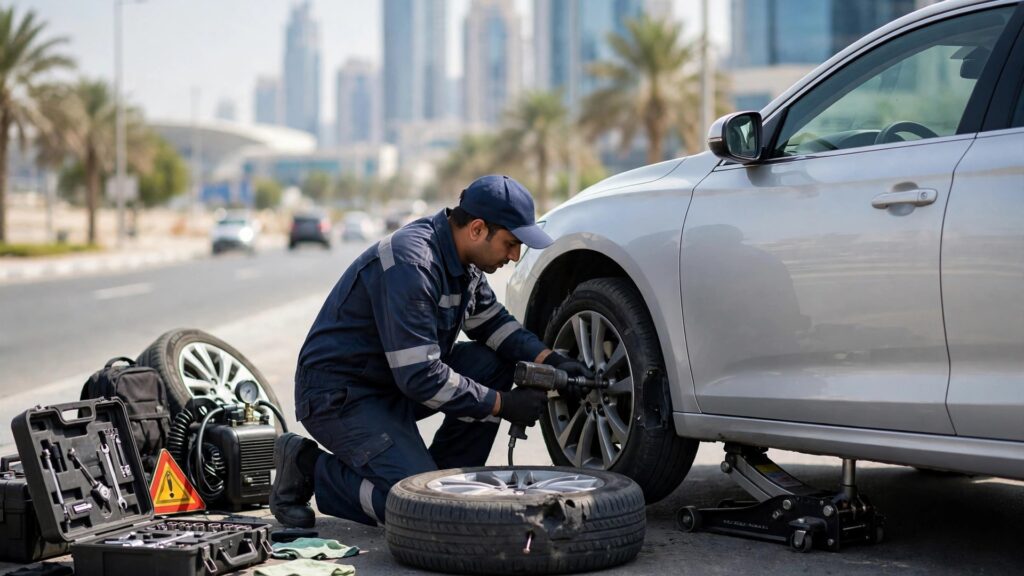
Service prices at 95 Services are kept very low as a matter of policy, and tyre work follows the same rule as every other job: inspection first, then the scope and price discussed and confirmed before work begins. No tyre is repaired or replaced on a guess, and no surprise appears on the bill afterwards. The quote reflects what inspection found — whether repair is safe, whether replacement is needed, which tyre specification the vehicle requires, and the labour involved.
What affects the cost is straightforward: repair versus replacement, the tyre size and specification, whether additional tyres need attention, and whether the car needs recovery. A safe repair costs far less than a replacement, which is exactly why inspection comes first: the driver pays for the work the tyre actually needs, not for the most expensive option. If inspection reveals more than expected, the driver hears about it first and approves the next step.
How It Works: From Your Call to Rolling Again
Every tyre job follows the same five steps. First, the call: phone or WhatsApp with the location, vehicle details, and what happened. Second, the response: help dispatched within the 15–20 minute standard, anywhere in the complete UAE. Third, inspection: the tyre and the remaining tyres checked, and the safe course decided. Fourth, the quote: scope and price confirmed before work begins. Fifth, the work and verification: repair or fitting completed, pressures and torque checked, and the findings explained. That sequence never changes, because speed without inspection is guessing, and a fitting without verification is a promise unverified.
Frequently Asked Questions
Can a punctured tyre always be repaired?
No. Punctures in the tread area within size limits, with no sidewall or shoulder damage and no internal deterioration, are repairable. Sidewall damage, shoulder damage, large cuts, and tyres driven flat require replacement.
Is it safe to drive on a space-saver spare?
For a short distance at the limited speed marked on it, driven gently — it is a get-home measure, not a replacement tyre. Reach a repair promptly, and have the remaining tyres checked at the same time.
How often should I check my tyre pressures?
Monthly, when the tyres are cold, against the manufacturer’s specification. Check the spare at the same time. Dubai heat makes regular checks more important, not less.
What causes a tyre blowout?
Most often under-inflation causing overheating, existing damage such as a cut or bulge, or old age hardening the rubber. Monthly inspection of tread, age, cracking, and pressure prevents most blowouts.
How fast can help reach me?
The response time is 15–20 minutes. Call or WhatsApp +971 54 344 3513 with a live location, vehicle details, and what happened, and help is dispatched to reach the vehicle within 20 minutes, anywhere in the UAE.
Are 95 Services prices low?
Yes — service prices are kept very low as a matter of policy. Inspection comes first, and the scope and price are confirmed before work begins, with no work starting without the customer’s approval.
Contact 95 Services: Mobile Tyre Repair Across the UAE
Whether the tyre is flat, punctured, blown, or simply due for inspection, the first step is one call. Contact 95 Services on +971 54 344 3513 by phone or WhatsApp, or email info@95services.com, with the vehicle details, the location, and what happened. Help is dispatched within the 15–20 minute response standard, prices stay very low, and the quote is confirmed before any work begins. The office is at Ahmed Ali Al Owais Showroom Building, Office M05, Abu Hail, Al Khabaisi, Dubai, UAE. Call before visiting so the correct service arrangement can be confirmed. For the dedicated service page, see tyre repair services Dubai, for step-by-step flat-tyre guidance see the flat tyre repair guide, for general repairs see car repair and maintenance, or visit the contact page to send an enquiry.
