
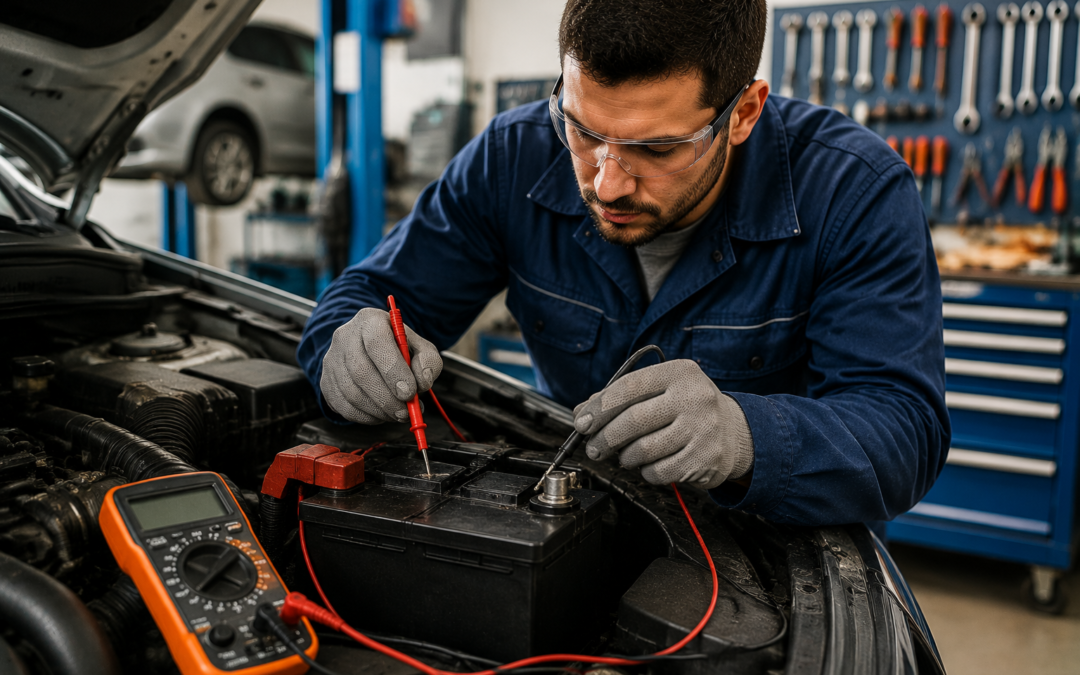
You press the button, or turn the key, and nothing happens the way it should. A slow crank. A click. Lights that fade as you try to start. Often, though, a dirty terminal or a charging fault makes a healthy battery look dead — and a new battery fitted over an unfixed charging fault will let you down again the same way. This article explains how a battery problem is diagnosed, what can be repaired, and what keeps the system healthy.
This is not a replacement guide. If the battery does need replacing, the mobile car battery replacement guide explains the fitting service, and the signs guide covers the warning signs. What follows is the repair side: testing, terminals, charging faults, drain, the repair-or-replace call, and maintenance habits.
What "Battery Repair" Actually Means
A battery is a sealed unit. Nobody opens one up and rebuilds the plates inside it at the roadside, and anyone who tells you otherwise is selling a story. When a technician talks about battery repair, they mean repairing everything around the battery: cleaning and refitting terminals, fixing corroded connections, sorting cables and clamps, finding the charging fault that left the battery flat, and putting right the small drain that emptied it. The battery may survive all that and go back to doing its job. Or the tests may show it cannot hold a charge, and then the honest answer is replacement — but that answer comes after testing, not before.
That distinction decides what you pay for. A new battery on dirty terminals does not fix dirty terminals. A new battery on a car that is not charging does not fix the charging. Repair-first thinking looks at the whole system as one thing — battery, terminals, cables, alternator, belt, connections — and fixes the fault that is actually there, instead of swapping the obvious part and hoping.
Battery Testing: What the Tests Actually Show
The technician wants three answers: can this battery hold a charge, can it deliver a strong crank, and is the car recharging it while driving? No single glance answers all three.
The Visual Check Comes First
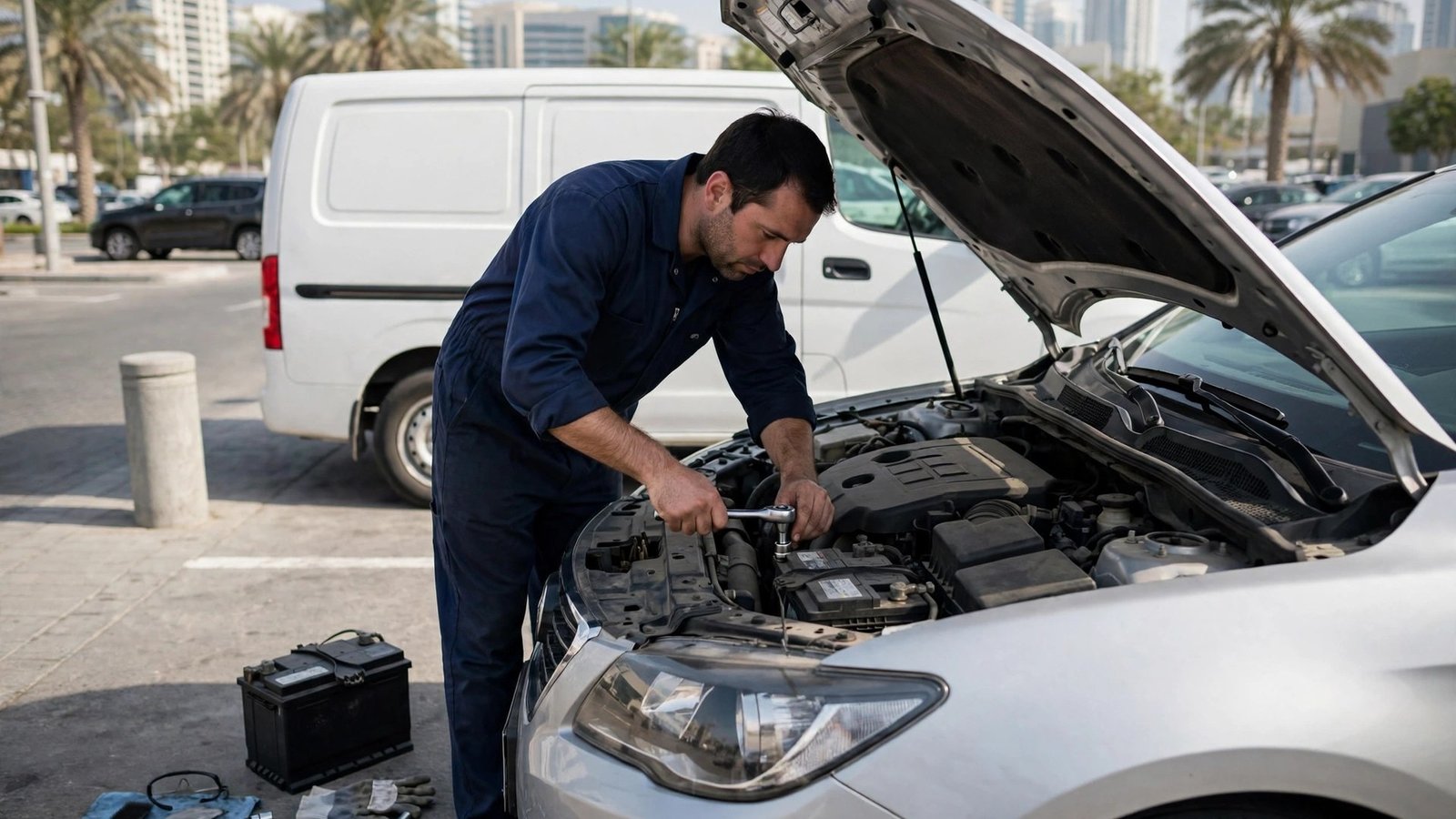
Before any meter comes out, a good technician looks. Is the case swollen, cracked, or leaking? Are the terminals caked in corrosion or loose enough to wiggle? Are cables frayed or green near the clamp? Is the battery held down firmly, or rocking in its tray? A cracked case is a replacement, full stop. Corrosion on a terminal is often the whole problem, and it is visible before any test is run.
The Cranking Check
This answers the question you care about: when you ask for a start, does the battery deliver? The technician checks the battery at rest, then watches what happens while the engine cranks. A healthy battery dips under the heavy demand and recovers. A weak one collapses — slow, laboured crank, lights dimming hard, engine barely turning. A battery can look fine doing nothing and fall apart the moment it is asked to work, which is why a resting reading alone proves little.
The Charging-System Check
With the engine running, the technician checks whether the charging system is putting charge back into the battery, and whether that stays steady when loads switch on — lights, air conditioning, and the rest. A system that copes at idle but fades under load, or one that overcharges, points to faults no battery swap will fix. This is the check that catches alternator, belt, and connection faults. Skip it, and you are guessing.
What a Test Cannot Tell You
A test shows the battery as it is right now, in its current state of charge. It cannot see inside the sealed case. A battery that fails while deeply discharged may deserve a proper recharge and a retest before it is condemned — testing a flat battery and calling it dead on the spot is a shortcut, not a diagnosis. Charge, rest, retest, then decide.
Terminals and Corrosion: The Small Fault That Strands Cars
The two posts on top of the battery and the clamps gripping them carry every bit of current the car needs to start, and the connection depends on clean metal touching clean metal. Corrosion breaks that contact. It builds slowly, looks harmless — a bit of white or greenish crust — and then one morning the car will not start, though the battery itself is fine.
What Corrosion Looks Like
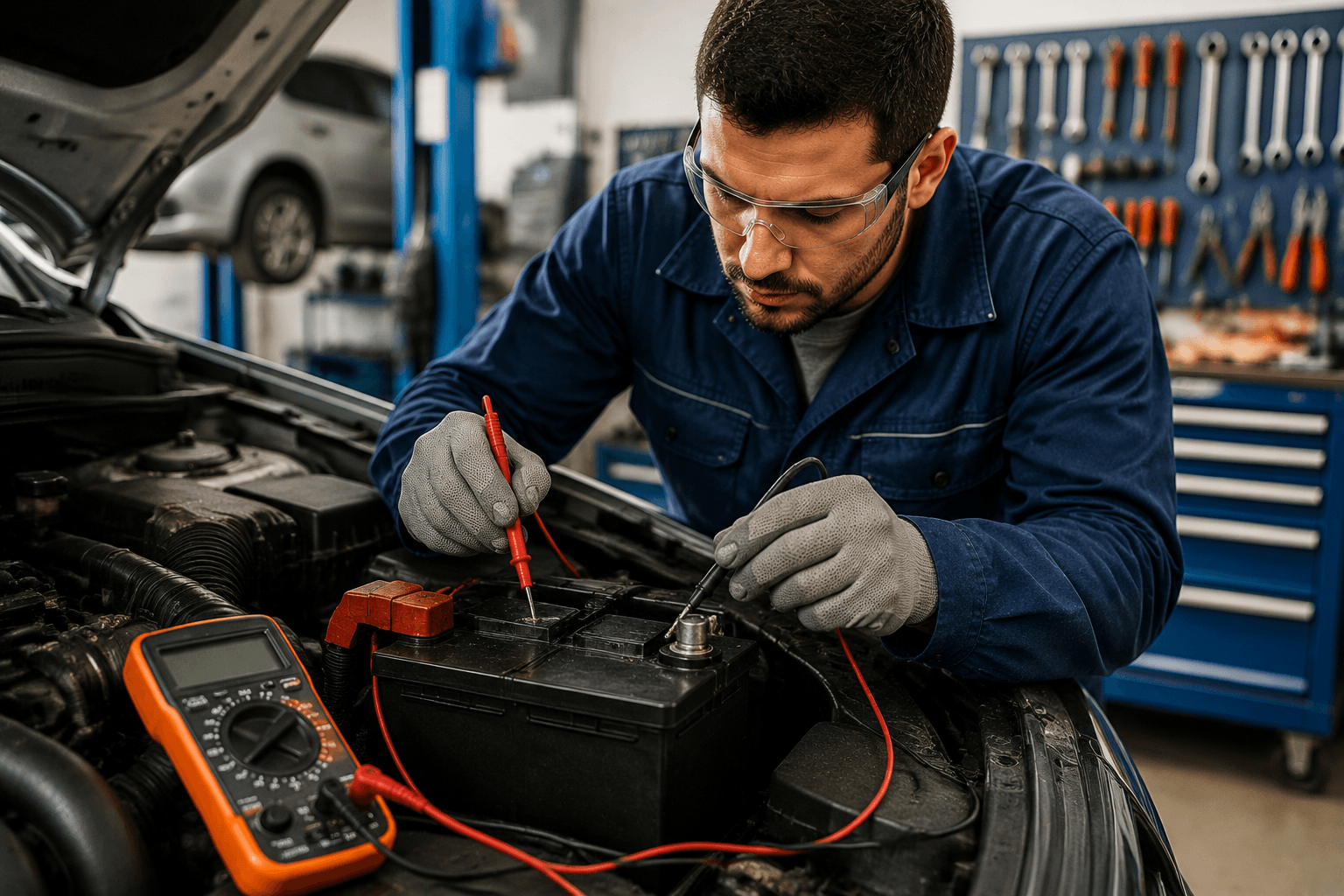
Corrosion shows as a crusty build-up around one or both terminals, often white, pale blue, or greenish, sometimes creeping down the cable. It forms where battery acid vapour meets metal, helped along by loose clamps and vibration. It works its way between clamp and post, adding resistance exactly where the car needs a clean path. Corrosion under the clamp is the sneaky version — the top looks acceptable, the contact underneath is poor. A proper check means removing the clamps and looking at the contact surfaces.
How Terminal Cleaning Is Done Properly
Cleaning is a short job done in the right order. The technician disconnects the terminals — earth side first, refitted last — so there is no risk of a short. Posts and clamp interiors are cleaned back to bright metal, and corrosion is cleared from the post bases and cable ends. Clamps go back snugly — tight enough that they cannot be twisted by hand, not so tight the post is damaged — and contact faces are protected so corrosion is slower to return. Then the car is started and the charging check runs again. Many no-starts leave under their own power with the same battery they arrived with.
After Cleaning: What to Watch For
The crank should sound strong and even, and the car should start the same way cold as warm. If the slow crank returns quickly, or corrosion comes back fast and thick, something else is going on — a leaking post seal or an overcharging problem — and it deserves a second look, not just another clean. Glance at the terminals whenever the bonnet is open.
Charging-System Faults That Look Exactly Like Battery Faults
A charging fault and a battery fault feel identical from the driver's seat. Flat in the morning. Slow crank. Warning light on. Jump start works, then the car dies again. The battery gets blamed, replaced, and the same thing happens — because the battery was never the fault. The charging system refills the battery while you drive, and when it stops doing that properly, even a new battery runs down.
The Alternator: The Charger Under the Bonnet
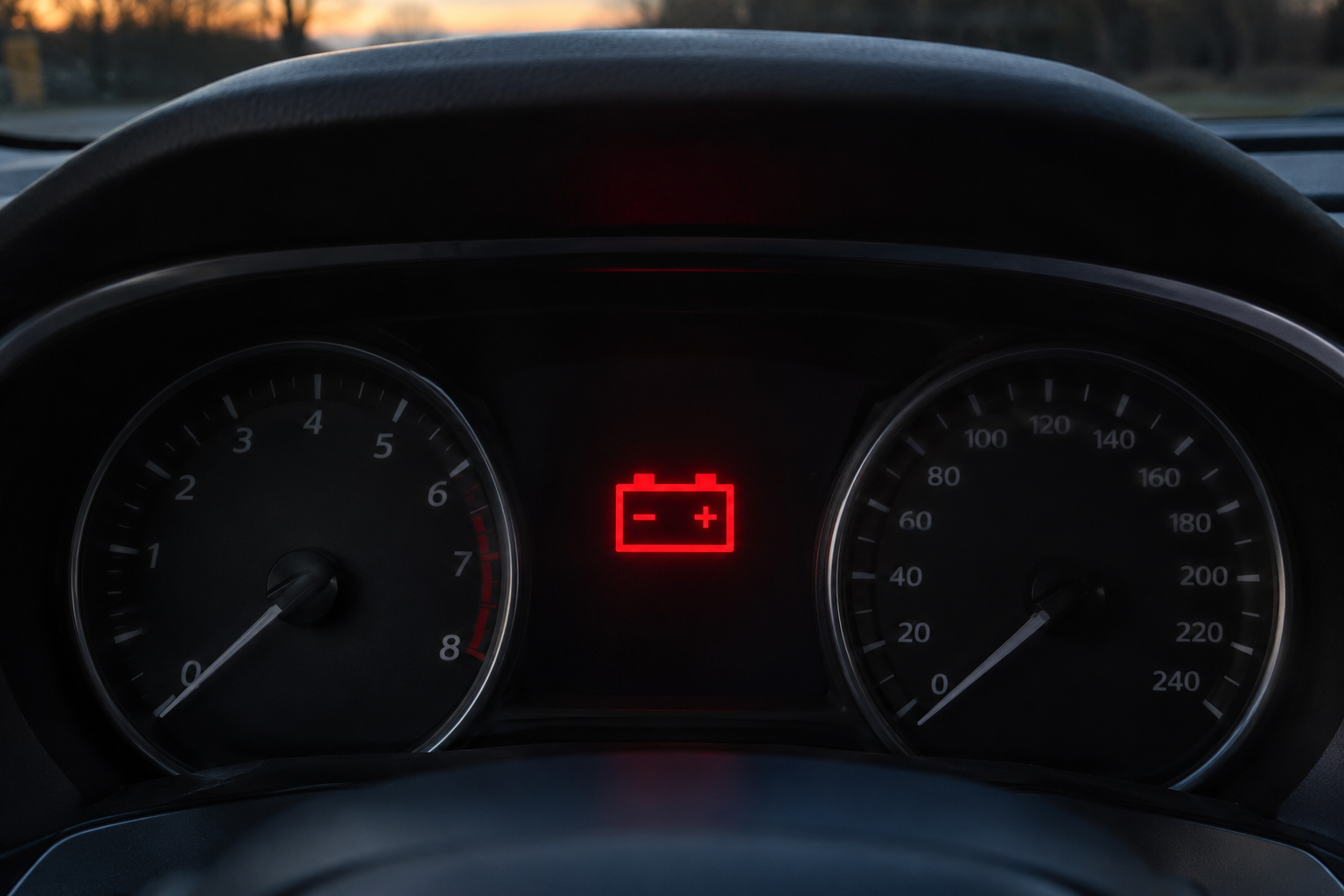
The alternator generates power while the engine runs and sends charge back to the battery. When it weakens, the car runs on battery power alone — lights dim, the warning light comes on, electrics misbehave, and eventually the engine stops. The warning light is the clue most drivers misread: the battery-shaped light usually means a charging fault, not a dead battery. It means the system is not charging, and driving on will empty the battery completely. The charging check catches it, and the fix is alternator repair or replacement, with the battery recharged and retested after.
The Drive Belt: Simple and Easy to Miss
The alternator is driven by a belt, and if that belt slips, stretches, cracks, or snaps, the alternator cannot do its job however healthy it is. A slipping belt often squeals on a cold start, and charging turns patchy. A snapped belt is more dramatic: warning light on, and the car needs to stop, because driving on overheats the engine as well as draining the battery. Cracks, fraying, glazing, or slack all point to a belt not driving the alternator properly. Belt work is straightforward, and it is the kind of fault that makes a driver blame the battery when the culprit is a strip of rubber.
Connections and Earth Straps
Cables and earth straps carry heavy current between the alternator, the battery, and the body of the car. When a connection loosens or corrodes, resistance builds and charging suffers — the alternator works, the battery is willing, and the charge never quite arrives. Earth straps are the classic hidden fault: fine from above, corroded underneath, causing dim lights, slow cranking, and erratic electrics. The fix is repair, not replacement: clean, tighten, or replace the cable or strap, and the whole system comes back to life.
How the Technician Tells Them Apart
The separation is methodical. Battery tested at rest and under cranking load. Charging checked running, at idle and with loads on. Belt, connections, and earth straps inspected. The driver's story matters too: fading while driving, flat after sitting, a squeal, a warning light. If you need a jump start first, the jump start process explains how it is done safely — but a jump start is a rescue, not a diagnosis, and the charging check still needs to happen after.
Parasitic Drain: A Short Pointer, Not a Detour
Sometimes battery and charging system are both fine, and the car still goes flat because something keeps drawing power after switch-off — a light staying on, a module not sleeping, an accessory wired the wrong way. That is parasitic drain, and finding it means measuring the draw with everything off, then isolating circuits one by one. It deserves its own article, and it has one: if your car goes flat overnight or after sitting, read the overnight-drain article for the full diagnosis. If a new battery goes flat the same way, the drain is still there. Mention the pattern when you call — flat after sitting, fine when used daily — because it points straight at the right test.
When Repair Is the Right Call, and When Replacement Is
Repair is right when tests show the battery can still hold charge and crank strongly once the real fault is fixed — terminals cleaned, a connection tightened, a belt replaced, a charging fault repaired, a drain stopped. In those cases the battery was the victim, not the culprit. The car is fixed, the battery stays, and the bill reflects the repair actually needed.
Replacement is right when the battery itself fails after a proper recharge and retest — it cannot hold charge, it collapses under cranking load, the case is damaged or leaking, or it keeps failing while charging and connections test well. The decision should always be explained with the test results behind it, in plain words, before anything is fitted. If replacement is needed, the car battery replacement service page explains the service. Either way, the quote is confirmed before work begins.
Maintenance Habits That Keep a Battery Healthy
Most battery trouble is slow neglect — terminals left dirty, short trips never quite recharging, small signs ignored until the no-start morning. The habits below need no tools, just doing them regularly.
Drive It Enough to Recharge
Starting is the heaviest single demand on the battery, and the charging system needs driving time to put that charge back. A car used only for very short hops, with lights and air conditioning on from the off, can slowly run down — each start takes more out than each short trip puts back. Give the car a proper drive regularly. If it is used daily but still struggles, say so when you call: that pattern points away from usage and towards a fault.
Keep the Terminals Clean and the Battery Secure
Open the bonnet from time to time and look. Terminals clean? Clamps tight? Battery sitting firmly in its tray, not rocking? Top clean and dry? A minute's look catches corrosion starting, a clamp working loose, or a hold-down missing after earlier work. Get corrosion cleaned while it is small. Never force a clamp with a metal tool while both terminals are connected, and if anything looks damaged, swollen, or leaking, leave it alone and call for help.
Switch Off Before You Switch Off
Small electrical habits add up. Lights left on, interior lights left on, accessories left plugged in — each draws on the battery with nothing putting charge back. Switch electrical items off before switching the engine off, and check nothing is left running when you leave the car. A door not quite shut, leaving the interior light on, is a classic overnight flat. If something was fitted afterwards and the battery started struggling after that, mention it when you call.
How It Works: From Your Call to the Car Starting Properly
First, the call: phone or WhatsApp with the location, car details, and what happened. Second, the response: help dispatched within the 15–20 minute standard, anywhere in the complete UAE, arriving within 20 minutes. Third, diagnosis: visual, cranking, and charging checks, belt and connections inspected, findings explained plainly. Fourth, the quote: scope and price confirmed before work begins. Fifth, the fix and recheck: agreed work done, car started and rechecked, charging confirmed.
Frequently Asked Questions
Can a car battery be repaired, or does it always need replacing?
The battery itself is sealed and not rebuilt. What can be repaired is everything around it: terminals, connections, cables, the charging system, and drains. If the battery tests well once those are fixed, it stays. If it fails after a recharge and retest, replacement is the honest answer.
My car starts after a jump start but goes flat again. Is the battery dead?
Not necessarily. That pattern often points to a charging fault or a drain. The charging check, and the drain check if the car goes flat after sitting, separate a battery fault from the faults that mimic it.
How do I know if the problem is the battery or the alternator?
The tests separate them. A battery fault shows in the cranking check; a charging fault shows with the engine running, often with the warning light on and the car fading while driving. One visit with the right sequence of tests usually gives a clear answer.
Is terminal corrosion serious?
Yes, and very fixable. Corrosion between clamp and post adds resistance where the car needs a clean connection, causing slow cranking and no-starts even with a healthy battery. Cleaning back to bright metal, clamps refitted snugly, often fixes the car completely.
What should I tell the technician when I call?
Location, car details, and the pattern: slow crank or click, warning light on or off, flat after sitting or died while driving, whether a jump start held, and anything unusual like a squeal.
How fast can help reach me, and are prices low?
The response time is 15–20 minutes, and help arrives within 20 minutes, anywhere in the complete UAE. We are open 24 hours. Call or WhatsApp +971 54 344 3513 with a live location and the symptoms. Prices are kept very low, and the scope and price are confirmed before work begins.
Contact 95 Services: Car Battery Repair Across the UAE
One call, and a proper diagnosis instead of a guess. Contact 95 Services by phone on +971 54 344 3513, by WhatsApp at https://wa.me/971543443513, or by email at info@95services.com, with the location, car details, and what happened. Help is dispatched within the 15–20 minute standard, arrives within 20 minutes anywhere in the complete UAE, we are open 24 hours, prices stay very low, and the quote is confirmed before work begins. The office is at Ahmed Ali Al Owais Showroom Building, Office M05, Abu Hail, Al Khabaisi, Dubai, UAE. Call before visiting so the correct arrangement can be confirmed. See the contact page to send an enquiry.
