
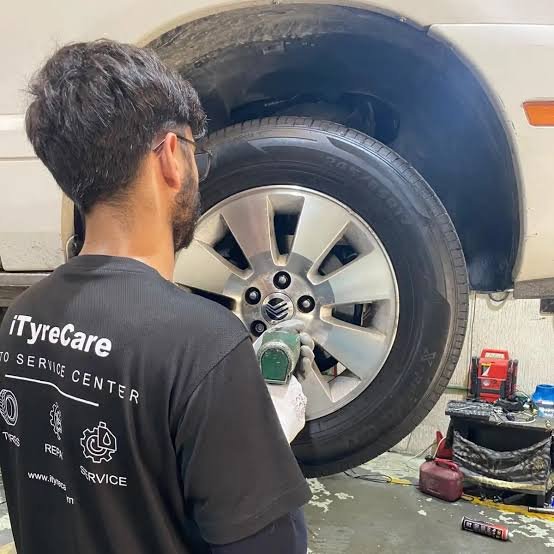
A breakdown does not wait for a convenient moment or a convenient place. It happens in traffic, in a parking bay, on the way to work, or outside the house at the start of the day — and the driver’s problem is always the same: the car cannot move, and the garage is somewhere else. On-site vehicle assistance reverses that logic. Instead of the car going to the workshop, the workshop comes to the car — with the diagnostics, tools, and parts to fix most faults where the car stands, and the honest judgement to say when a fault needs workshop facilities.
This article explains how on-site assistance works from the first call to the final test, what the mobile unit carries, what can be fixed on-site and what cannot, how to stay safe while waiting, and what to expect at every step — so a breakdown becomes an inconvenience with a clear ending, not a day lost to uncertainty.
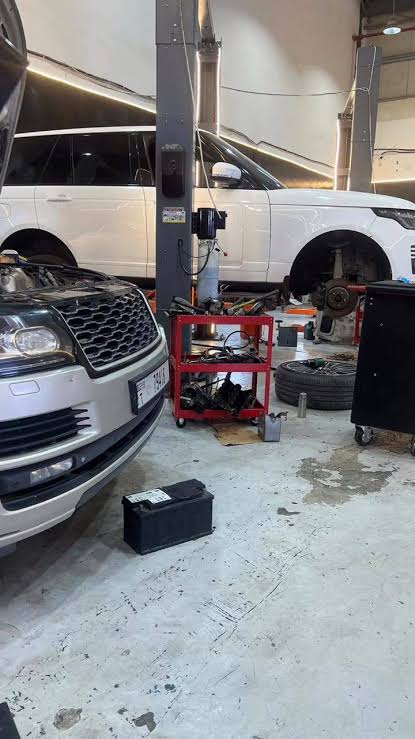
What On-Site Assistance Means — and What It Does Not
On-site assistance means diagnosis and repair at the vehicle’s location: home, office, roadside, or parking area. The technician arrives with diagnostic equipment, hand and power tools, a battery tester and jump pack, tyre equipment, common consumables and fluids, and the parts most commonly needed for the faults that strand cars. Most breakdown causes — dead batteries, flat tyres, minor electrical faults, fluid top-ups, belt and hose failures, AC diagnosis, and many sensor and fuse faults — are fixed on the spot.
What it does not mean is that every repair happens at the kerbside. Gearbox removal, major engine work, wheel alignment, bodywork, and any job needing a ramp, a clean bench, or extended access belongs in the workshop — and pretending otherwise would be dishonest and unsafe. The difference between a good mobile service and a bad one is not whether everything is done on-site; it is whether the technician knows which faults belong where, says so plainly, and arranges the workshop step without leaving the driver stranded. Where the car cannot be driven, car recovery brings it to the workshop. For the full picture of the company behind the service, read why choose 95 Services.
The Call: What to Say So Help Arrives Ready
The call is the first diagnostic step, and the information given in it decides what the technician brings. Four things matter most: the location — a live location pin is worth more than any description, especially on a highway or in an unfamiliar area; the vehicle — make, model, year, and fuel type, so the right parts and specifications are ready; the symptoms — what happened, what the car does now, and what lights or noises appeared; and the situation — whether the car is in a safe place or in traffic, whether passengers need attention, and whether the car can be moved.
A driver who says “the car won’t start, dashboard flickers, in the mall parking, level B2” gets a technician arriving with a battery tester and jump pack. A driver who says “the car overheated, steam from the bonnet, on the hard shoulder” gets a technician arriving with coolant, hoses, and a very different plan. The more precisely the problem is described, the faster the fix — and the questions asked on the call are not bureaucracy, they are preparation.
What the Mobile Unit Carries
A mobile service vehicle is a workshop on wheels, and its equipment decides what can be fixed on-site. Diagnostic equipment: a fault-code scanner that reads engine, transmission, ABS, and body-system codes, plus a multimeter and battery tester. Power equipment: a jump pack with reverse-polarity protection, a battery charger, and the tools to test charging systems. Tyre equipment: jack, stands, wheel tools, a compressor, puncture repair equipment, and a pressure gauge. Mechanical tools: a full hand-tool set, torque wrench, and the consumables — fuses, relays, belts, hoses, clamps, fluids — that cover the common failures. And safety equipment: warning triangles, high-visibility gear, a fire extinguisher, and spill containment.
What the unit does not carry is equally honest: no ramp, no alignment rig, no engine crane, no paint booth. Those belong to the workshop, and the technician who knows the boundary is the technician who can be trusted with the judgement calls. The equipment list is what makes the promise real — a van with a spanner set is not a mobile workshop, whatever it claims.
The Diagnostic Scan: What Fault Codes Can and Cannot Tell You
The fault-code scanner is the mobile technician’s most powerful tool — and the most misunderstood. It reads the codes the car’s computers have stored: which system reported a fault, what parameter went out of range, and when. That narrows the search enormously. What it does not do is name the failed part. A code pointing at an oxygen sensor may mean a failed sensor, a wiring fault, an exhaust leak, or a fueling problem upstream — the code is a clue, not a verdict. A code cleared without repair returns, and a part replaced on a code alone is a guess with expensive odds.
Proper use of the scanner combines codes with live data — sensor readings in real time, while the engine runs — and with physical inspection. The code says where to look; the live data and the inspection say what is actually wrong. Drivers should be wary of any diagnosis that consists of a code read and an immediate parts quote, with no inspection and no live data. The scan is the start of the diagnosis, not the end of it, and the technician who explains what the codes mean — in plain language, with the reasoning — is the technician doing the job properly.
What Gets Fixed On-Site — and What Goes to the Workshop
On-site work covers the faults that strand cars most often. Batteries: testing, jump starting, and replacement. Tyres: puncture repair assessment, wheel changes, pressure and valve work. Electrical: fuse and relay replacement, terminal cleaning, sensor and wiring diagnosis. Fluids: coolant, oil, brake fluid, and power steering top-ups with leak checks. Belts and hoses: replacement of accessible belts and hoses. AC: pressure testing, leak detection, and gas service. Brakes: inspection, pad assessment, and fluid checks. And diagnosis of everything else: fault codes, warning lights, and no-start causes, so the driver knows what the fault is even when the repair needs the workshop.
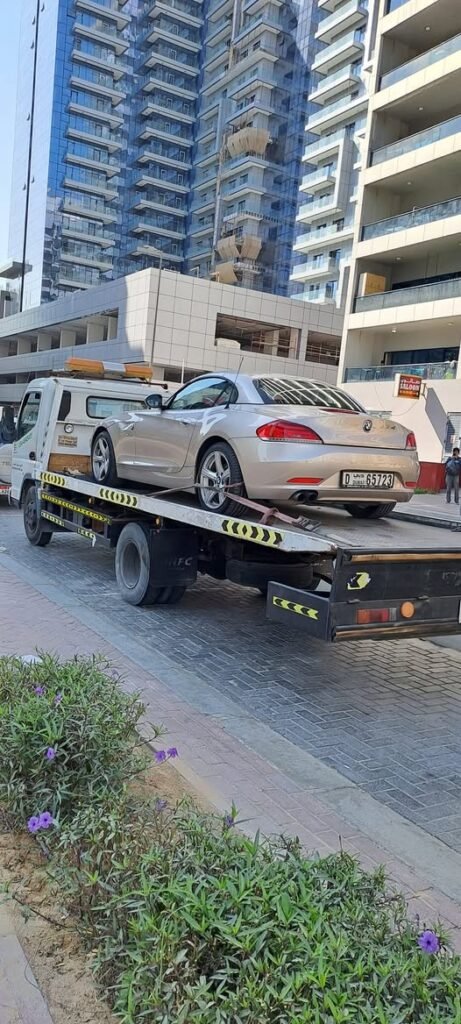
Workshop work covers the rest: gearbox and clutch jobs, major engine repairs, suspension and steering overhauls, wheel alignment, bodywork and paint, airbag and advanced safety-system work, and any repair needing extended access underneath the car. The decision is made after diagnosis, explained to the driver, and the workshop step is arranged — including recovery where the car cannot be driven. The driver is never left to arrange the next step alone.
Breakdown Scenarios: What Happens in Each
A car that will not start gets battery and starter diagnosis first: voltage, cranking behaviour, connections, and fault codes — then a jump start, a battery replacement, or a starter repair decision, on evidence. The guide to battery jump start service covers the procedure, and mobile car battery replacement covers testing and fitting. A flat tyre gets inspection first: repairable or replacement, decided on the tyre’s condition, not on assumption — the mobile tyre repair guide covers the detail. An overheating car gets the engine switched off and left to cool before anything is opened — a hot cooling system under pressure is dangerous — then coolant, hose, fan, and thermostat checks. A warning light gets a fault-code scan and an assessment of whether the car is safe to drive or must be recovered. A car that has been in a collision gets a safety assessment first: structural damage, fluid leaks, and whether the car is safe to move at all.
Each scenario follows the same pattern: make safe, diagnose, explain, quote, repair or recover. The pattern never changes, because it is what turns a frightening moment into a managed one.
Staying Safe While You Wait
Safety while waiting matters more than the repair. Move the car off the road if it can be moved safely; if it cannot, hazard lights go on immediately. Passengers leave the vehicle on the side away from traffic and wait behind a barrier or well away from the road — never in the car beside fast-moving traffic. Warning triangles go out where it is safe to place them. Do not open a hot bonnet fully, do not touch a hot engine or cooling system, and do not attempt repairs beside traffic. At night, keep lights on and stay visible. And stay in contact: if the situation changes — the car is in danger, someone is unwell, the location changes — say so on the call immediately. The technician’s arrival is the end of the wait; staying safe until then is the driver’s most important job.
Night, Highway & Remote Breakdowns: Extra Care
Breakdowns at night, on highways, or in remote areas carry extra risk, and the response adapts to it. At night, visibility is everything: hazard lights, interior light, and a phone torch make the car and the people visible, and reflective gear matters. On a highway, the hard shoulder is not a safe workplace — passengers move behind the barrier, well away from the car, and nobody works on the traffic side. The technician positions the service vehicle as a shield where possible, with warning lights and triangles. In remote areas, the live location pin is essential, and the driver should stay with the vehicle rather than walking for help — the vehicle is shelter, visibility, and the location the technician is navigating to.
Heat adds its own danger in the UAE: a car without air conditioning in direct sun heats fast, and passengers — especially children and older people — need shade and water while waiting. If the car is safe to sit in with the engine off and windows open, shade is the priority; if the location has any shelter nearby, use it. The call should mention passengers who need extra care, so the response can be planned around them as well as the car.
Coverage: The Complete UAE
Assistance covers the complete UAE — anyone, anywhere in the UAE, can call, and the response time is 15–20 minutes. That coverage matters because breakdowns do not respect city boundaries: a car can fail on a highway between emirates, at a desert-edge destination, or in an industrial area far from any garage. The live location pin makes that coverage practical: the technician navigates to the pin, not to a description, and the driver does not need to know the area’s name or the nearest landmark. Coverage without a fast response is a slogan; coverage with a 15–20 minute standard is a service. The response standard is the same wherever the call comes from, because a breakdown on a quiet road is no less urgent than one in the city centre.
What On-Site Assistance Costs — and How Quotes Work
Service prices at 95 Services are kept very low as a matter of policy, and on-site work follows the same rule as every other job: diagnosis first, then the scope and price discussed and confirmed before repair work begins. No work starts on a guess, and no surprise appears on the bill afterwards. The quote reflects what diagnosis found — the fault, the parts needed, and the labour — confirmed before the technician starts. If the visit reveals that the fault needs workshop facilities, the driver hears that first, with the recovery and workshop steps explained, and approves the next step. A call-out is never used as a reason to sell work that testing does not support.
After the Repair: What Good Follow-Up Looks Like
A repair is not finished when the car starts — it is finished when the driver knows what was done, what was found, and what comes next. The technician should explain the fault in plain language, what was repaired or replaced, what was tested to verify it, and what to watch for. If other issues were found during the visit — a worn belt, a tyre near its limit, a fluid that needs attention — the driver hears about them with an honest assessment of urgency: what needs doing now, what can wait until the next service, and what is simply worth knowing.
The driver should also leave with a record: what work was done, what parts were fitted, and when the next check or service is due. That record protects the driver, supports any future warranty or resale discussion, and lets the next technician see exactly what the car has had. A service that drives away without explanation has done half the job. A service that explains, verifies, and records has done the whole job — and the driver knows the difference immediately, because the worry is gone with the fault.
How It Works: From Your Call to Rolling Again
Every on-site visit follows the same five steps. First, the call: phone or WhatsApp with the location, vehicle details, and symptoms. Second, the response: help dispatched within the 15–20 minute standard, anywhere in the complete UAE. Third, diagnosis: inspection, fault codes, and testing to find the real cause. Fourth, the quote: scope, parts, and price confirmed before any repair work begins. Fifth, repair and verification: the agreed work completed and tested — a road test, a pressure check, a charging test, whatever the fault requires — to confirm the car is genuinely fixed, not just started. That sequence never changes, because speed without diagnosis is guessing, and a start without verification is a promise unverified.

Frequently Asked Questions
What should I do first when my car breaks down?
Get safe: move off the road if possible, hazard lights on, passengers away from the traffic side. Then call with a live location, vehicle details, and symptoms. Do not attempt repairs beside traffic.
Can most breakdowns be fixed where the car is?
Most common causes — batteries, tyres, fuses, fluids, belts, hoses, AC faults — are fixed on-site. Gearbox, major engine, alignment, and bodywork need the workshop, and the technician says so honestly after diagnosis.
How do I describe the problem if I know nothing about cars?
Describe what happened and what the car does now: noises, lights, smells, and when it started. That is enough — diagnosis does the rest. A photo or short video of the dashboard lights helps too.
What if my car is in a dangerous position?
Say so first on the call. The response is prioritised, and you will be told exactly what to do while help is on the way. Your safety comes before the car, always.
How fast can help reach me?
The response time is 15–20 minutes. Call or WhatsApp +971 54 344 3513 with a live location and vehicle details, and help is dispatched to reach the vehicle within 20 minutes, anywhere in the UAE.
Are 95 Services prices low?
Yes — service prices are kept very low as a matter of policy. Diagnosis comes first, and the scope and price are confirmed before work begins, with no work starting without the customer’s approval.
Contact 95 Services: On-Site Assistance Across the UAE
Whether the car will not start, has a flat tyre, is overheating, or has a warning light that will not go away, the first step is one call. Contact 95 Services on +971 54 344 3513 by phone or WhatsApp, or email info@95services.com, with the vehicle details, the location, and the symptoms. Help is dispatched within the 15–20 minute response standard, prices stay very low, and the quote is confirmed before any work begins. The office is at Ahmed Ali Al Owais Showroom Building, Office M05, Abu Hail, Al Khabaisi, Dubai, UAE. Call before visiting so the correct service arrangement can be confirmed. For general repairs, see car repair and maintenance, or visit the contact page to send an enquiry.
