

The fuel pump is one of those parts drivers never think about until it fails — and when it fails, the car simply stops. No drama, no gradual decline that is easy to read, just an engine that sputters, stalls, or refuses to start at all. Because the symptoms overlap with battery, ignition, and sensor faults, fuel pump problems are also among the most misdiagnosed: parts get replaced on guesses while the real fault sits untouched in the fuel tank.
This article explains what the fuel pump does, the symptoms of a failing pump, how proper diagnosis separates a pump fault from look-alike problems, what repair and replacement involve, and how mobile service handles fuel system work across Dubai and the UAE.
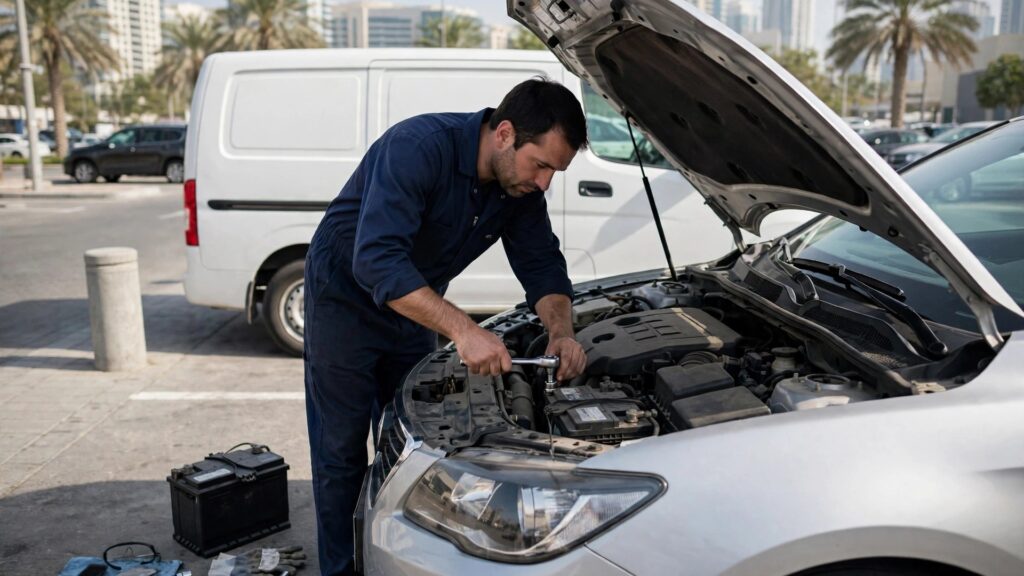
What the Fuel Pump Does — and Why It Fails
The fuel pump delivers petrol or diesel from the tank to the engine at the correct pressure and flow, continuously, from the moment the ignition is switched on. Modern cars use an electric pump mounted inside the fuel tank, where the surrounding fuel cools and lubricates it. The engine control unit meters fuel based on that steady supply: too little pressure and the engine starves, too much and it runs rich. Either way, performance, starting, and reliability suffer.
Pumps fail for a handful of reasons, and Dubai conditions accelerate most of them. Heat is the first: fuel systems run hotter here, and a pump working in hot fuel ages faster. Running the tank low habitually is the second: with little fuel around it, the pump loses its cooling and lubrication, and it also picks up more sediment from the bottom of the tank. Contaminated or poor-quality fuel is the third: debris clogs the pump's inlet strainer and wears its internals. Electrical faults are the fourth: a failing relay, corroded connector, or damaged wiring starves the pump of power and mimics a dead pump exactly. And plain age is the fifth: brushes wear, bearings loosen, and output falls until the engine notices. Understanding which cause applies matters, because a pump replaced without fixing its cause — a clogged filter, a bad relay, contaminated fuel — fails again.
The Warning Signs of a Failing Fuel Pump
Fuel pump failure usually announces itself before it strands the car, but the signs are easy to misread. Sputtering at high speed or under load is the classic one: the engine hesitates or jerks when demand is highest, because the pump cannot keep up. Loss of power under stress — climbing, overtaking, accelerating hard — points the same way. Surging, where the car unexpectedly gains speed at steady throttle, happens when the pump delivers fuel in uneven bursts.
Hard starting, extended cranking, or needing several attempts before the engine catches can be a pump losing pressure overnight — the system has to re-pressurise before the engine will fire. Stalling under load or at idle, especially when the engine is hot, is another marker. A whining or humming noise from the rear of the car, louder than the usual faint pump prime on ignition, often means the pump is straining. And the most obvious sign of all: an engine that cranks strongly but never starts, with fuel in the tank, no spark fault, and no warning light explaining it. Any one of these deserves diagnosis; two or more together make the fuel system the prime suspect. For the broader set of symptoms that should never be ignored, read the guide to engine warning signs.
Diagnosis First: Separating Pump Faults From Look-Alikes
A no-start or a stalling engine can be a battery, a starter, an ignition fault, a sensor failure, or a fuel problem — and guessing between them is how drivers pay for parts they did not need. Proper fuel system diagnosis follows evidence, not hunches.
It starts with the basics: listening for the pump's prime when the ignition is switched on, checking fuses and the fuel pump relay, and scanning for fault codes that point to fuel delivery, pressure, or related sensors. Then comes the decisive test: fuel pressure measurement. A gauge on the fuel rail shows whether the pump delivers the manufacturer's specified pressure at idle and under load, and whether pressure holds after switch-off or bleeds away — a bleed-down points to a leaking injector, a faulty regulator, or a failing pump check valve. Electrical checks follow: voltage and current at the pump connector under load, which separates a genuinely weak pump from a wiring or relay fault starving a healthy one. A volume test — how much fuel the pump delivers in a set time — confirms whether flow, not just pressure, meets specification.
Only with those results does the conversation turn to repair or replacement. That discipline is what makes the difference between a fixed car and a car with a new pump and the same fault: the cause is found first, the scope and price are confirmed, and the work starts only after the driver approves it.
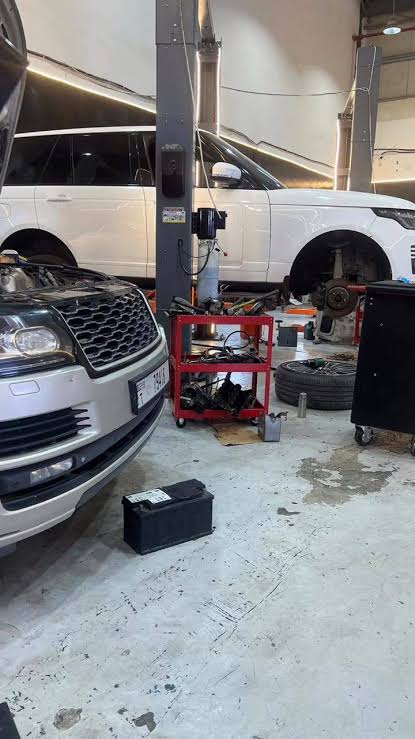
Repair or Replace? What the Evidence Decides
Whether a fuel pump is repaired or replaced depends on what failed — and honesty here saves money in both directions. Some fuel system faults are repaired without touching the pump at all: a clogged fuel filter, a faulty relay, a corroded connector, a leaking line, or a failed pressure regulator are all fixes that leave the pump itself in place. Where the pump is the fault, replacement is usually the right answer: electric in-tank pumps are sealed units, and rebuilding one rarely delivers the reliability of a correct replacement. What can be repaired around it — the strainer, seals, wiring, and filter — is repaired; the pump itself, when it has failed testing, is replaced.
The replacement must match the vehicle: correct pressure and flow specification, correct physical fit for the tank module, and correct electrical connector. A pump that fits but under-delivers causes the same symptoms as the old one, and a pump that over-delivers can strain the regulator and return system. The specification is checked against the vehicle before fitting, not assumed from what looks similar. After fitting, pressure and volume are re-tested, the system is checked for leaks, and the car is run under load to confirm the symptoms are gone — not just at idle, where a weak pump can hide.

What Replacement Involves — and Why Safety Matters
Fuel pump replacement is not a casual roadside job, and any service that treats it as one should worry the driver. The pump sits inside the fuel tank, accessed either through a panel under the rear seat or by lowering the tank, depending on the vehicle. The work involves fuel vapour, electrical connections, and sealed fittings — a combination that demands proper procedure: depressurising the system before opening it, disconnecting the battery, working away from ignition sources, and replacing seals and lock rings rather than reusing tired ones.
That is why the first conversation after diagnosis covers where the work happens. Inspection, testing, pressure checks, and electrical diagnosis are realistic mobile jobs, done where the car stands. Tank-drop replacements, and any job needing a ramp, clean conditions, and extended access, belong in the workshop — and where the car cannot be driven, car recovery brings it there. The choice is made honestly, case by case, after the diagnosis — not assumed in advance, and not driven by what is convenient for the garage.
Fuel Pump Problems vs Battery and Ignition Faults
Because the symptoms overlap, it helps to know the rough dividing lines — while remembering that only testing confirms the fault. A battery fault usually shows slow cranking, dim lights, or a dead dashboard; a fuel fault usually cranks strongly but does not fire, or fires and dies. An ignition fault often shows misfires, rough running, and fault codes pointing at coils or plugs. A sensor fault — crank or cam position, airflow — usually brings a warning light and specific codes.
The practical point is that these are starting points for diagnosis, not conclusions. A car that cranks strongly, has fuel, and will not start needs fuel pressure and spark tested before either system is blamed. A car that stalls hot and restarts cold could be a pump, a sensor, or an ignition module — and the test results, not the pattern alone, decide. The guide to a car battery dying overnight explains the electrical side of repeated no-starts, and mobile car battery replacement covers testing and fitting where the battery is the fault.
Preventing Fuel Pump Failure: Habits That Add Years
Most fuel pump failures are wear, but habits decide how fast wear accumulates. The single most effective habit is keeping the tank above a quarter full: the fuel around the pump cools and lubricates it, and running low habitually is the fastest way to shorten its life. The second is fuel quality: filling at reputable stations and avoiding fuel from questionable sources reduces contamination that clogs strainers and wears internals. The third is filter discipline: replacing the fuel filter on schedule protects the pump from the debris it would otherwise have to fight through.
The fourth is attention to early signs. A new whine from the rear, a first sputter under load, a longer crank on hot starts — each is cheap to investigate and expensive to ignore. A pressure test at the first symptom is a planned repair; the same pump ignored becomes a stall in traffic. And the fifth is electrical care: relays, fuses, and connectors age too, and a pump that intermittently loses power will be blamed for what is actually a wiring fault. Regular inspection catches all of these while they are still small.
The Parts Around the Pump: Filter, Regulator, Relay & Lines
A fuel system is a chain, and the pump is only one link. The fuel filter protects the pump and injectors from debris; when it clogs, it starves the engine exactly as a weak pump would, and it makes the pump work harder to push fuel through — which shortens the pump's life. The inlet strainer inside the tank does the first stage of that filtering, and a blocked strainer mimics pump failure so closely that only a pressure test after the filter tells them apart. The pressure regulator holds rail pressure steady; when it fails, pressure runs high or low and the engine runs rich or starves, with fault codes that can point at the pump instead. The relay and wiring deliver the pump's power; a relay that drops out when hot causes the classic stall-and-restart-after-cooling pattern that gets blamed on the pump itself. And the lines and seals carry fuel under pressure — a weeping connection is both a performance fault and a safety hazard that needs immediate attention. This is why diagnosis inspects the whole chain rather than condemning the pump on symptoms alone: fixing the failed link, whichever it is, costs less and lasts longer than replacing the most expensive part on a guess.
What Fuel Pump Work Costs — and How Quotes Work
Service prices at 95 Services are kept very low as a matter of policy, and fuel system work follows the same rule as every other job: diagnosis first, then the scope and price discussed and confirmed before repair work begins. No pump is replaced on a guess, and no surprise appears on the bill afterwards. The quote reflects what testing found — whether the fault is the pump itself, the filter, the relay, the wiring, or a combination — plus the correct part specification for the vehicle and the labour the access method requires.
What affects the cost is straightforward: the part the vehicle needs, whether access is through a panel or requires lowering the tank, whether related items such as the filter, seals, or strainer are replaced at the same time, and whether the car needs recovery to the workshop. A relay or filter fix costs far less than a pump replacement, which is exactly why diagnosis comes first: the driver pays for the fault found, not for the most expensive guess. If inspection reveals more than expected, the driver hears about it first and approves the next step.
How It Works: From Your Call to a Car That Runs Right
Every fuel system job follows the same five steps. First, the call: phone or WhatsApp with the location, vehicle details, and symptoms. Second, the response: help dispatched within the 15–20 minute standard, anywhere in the complete UAE. Third, diagnosis: fault codes, pressure and volume tests, and electrical checks to find the real cause. Fourth, the quote: scope, parts, and price confirmed before any repair work begins. Fifth, repair and verification: the agreed work completed, pressure re-tested, leaks checked, and the car run under load to confirm the symptoms are gone. That sequence never changes, because speed without diagnosis is guessing, and a repair without testing is a promise unverified.
Frequently Asked Questions
What are the signs of a failing fuel pump?
Sputtering at speed, loss of power under load, surging, hard starting, stalling, a loud whine from the rear, and an engine that cranks but will not start. Two or more together make the fuel system the prime suspect — but only pressure and electrical testing confirms it.
Can a fuel pump be repaired, or must it be replaced?
Faults around the pump — filter, relay, connector, regulator, lines — are often repaired without replacing the pump. A pump that has failed pressure and volume testing is normally replaced, as sealed electric pumps rarely rebuild reliably.
Is it safe to drive with a suspected fuel pump fault?
Short, careful driving to inspection is sometimes possible, but a pump that stalls the engine can strand the car in traffic. If the car stalls repeatedly, loses power under load, or will not restart reliably, pull over safely and call for help rather than driving on.
Does running the tank low damage the fuel pump?
Yes. Fuel around the in-tank pump cools and lubricates it, and habitually running low shortens its life and increases sediment intake. Keeping the tank above a quarter full is the simplest preventive habit.
How fast can help reach me?
The response time is 15–20 minutes. Call or WhatsApp +971 54 344 3513 with a live location, vehicle details, and symptoms, and help is dispatched to reach the vehicle within 20 minutes, anywhere in the UAE.
Are 95 Services prices low?
Yes — service prices are kept very low as a matter of policy. Diagnosis comes first, and the scope and price are confirmed before repair work begins, with no work starting without the customer's approval.
Contact 95 Services: Fuel System Diagnosis & Repair Across the UAE
Whether the car sputters, stalls, cranks without starting, or has a new whine from the rear, the first step is one call. Contact 95 Services on +971 54 344 3513 by phone or WhatsApp, or email info@95services.com, with the vehicle details, the location, and the symptoms. Help is dispatched within the 15–20 minute response standard, prices stay very low, and the quote is confirmed before any work begins. The office is at Ahmed Ali Al Owais Showroom Building, Office M05, Abu Hail, Al Khabaisi, Dubai, UAE. Call before visiting so the correct service arrangement can be confirmed. For general repairs, see car repair and maintenance, or visit the contact page to send an enquiry.
