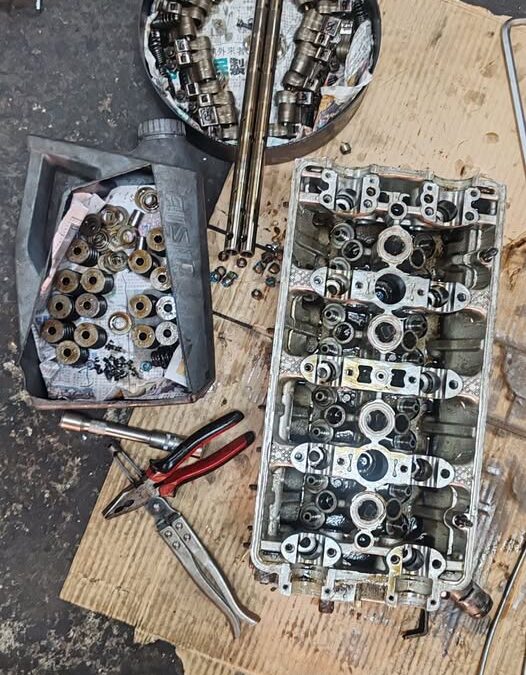
The cylinder head sits at the top of the engine, sealing the combustion chambers, housing the valves, and carrying the camshafts — and it works in the harshest conditions in the car: combustion temperatures, high pressures, and constant thermal cycling. When it fails, the symptoms are serious: overheating, white smoke, coolant loss, misfires, and oil contamination. And the repair is one of the most skilled jobs in engine work — diagnosis must be exact, machining must be precise, and reassembly must be perfect, because the head seals the pressures that make the engine run. This article explains what the cylinder head does, how it fails, how faults are diagnosed, what repair and rebuilding involve step by step, when repair is right and when replacement is, and how to prevent head failure — so the driver knows what should happen at every stage, and can judge the quality of the work.
For the wider engine picture, see the engine warning signs guide and the car repair guide. This article goes deep on one component: the cylinder head.
What the Cylinder Head Does — and Why It Matters So Much
The cylinder head closes the top of each cylinder, forming the combustion chamber together with the piston and the cylinder walls. It houses the intake and exhaust valves, the valve guides and seats, the spark plugs or injectors, and — in most modern engines — the camshafts and their drive. Coolant passages run through it to carry heat away; oil passages feed the valvetrain. The head gasket seals the head to the engine block, keeping combustion pressure, coolant, and oil in their separate channels. Every one of those functions depends on precision: the head must be flat, the gasket must seal, the valves must seat, and the passages must stay separate. A failure in any of them affects the others, which is why head problems often show several symptoms at once — and why diagnosis must identify the root cause, not just the loudest symptom.
Failure Signs: Overheating, White Smoke, Milky Oil & Misfires
Head problems announce themselves, and the signs deserve immediate attention. Overheating: the temperature gauge climbing, especially under load, can mean combustion gas entering the cooling system through a failed gasket, or coolant loss from a head or gasket leak. White smoke from the exhaust: coolant burning in the combustion chamber — sweet-smelling, persistent white vapour, distinct from normal condensation. Milky oil: coolant mixing with oil produces a milky, mayonnaise-like substance on the dipstick or oil cap — oil contaminated with coolant loses its lubricating ability and damages bearings quickly. Coolant loss with no visible leak: coolant disappearing into the combustion chamber or the oil, rather than onto the ground. Misfires and rough running: loss of compression in one cylinder from a gasket, valve, or head fault. Bubbles in the coolant reservoir: combustion gas pressurising the cooling system. Loss of power: compression loss across one or more cylinders. Any combination of these signs means the car should be assessed promptly — driving on with a head fault turns a repairable head into a damaged engine.
Causes: Overheating, Detonation, Age & Maintenance Gaps
Head failure usually has a cause, and finding it prevents the repair failing the same way. Overheating is the leading cause: sustained high temperatures warp the head, weaken the gasket, and crack the casting — and the overheating itself often has a cause (a failed thermostat, water pump, radiator, or fan) that must be fixed as part of the repair. Detonation and pre-ignition: abnormal combustion hammering the head and gasket, caused by wrong fuel, carbon buildup, or ignition faults. Age and thermal cycling: thousands of heat cycles fatigue the gasket and the casting over years. Incorrect assembly: a previous repair with wrong torque, wrong sequence, or a reused gasket that should have been replaced. Coolant neglect: old or incorrect coolant corrodes passages and weakens the gasket's sealing surfaces. The repair must address the cause as well as the damage — a new gasket on a head whose overheating cause was never fixed will fail again, and the driver will pay twice for one fault.
Diagnosis: Compression, Leak-Down, Pressure Tests & Inspection
Head diagnosis combines tests, each answering a different question. Compression test: measures each cylinder's compression; a low cylinder points to a sealing fault — gasket, valve, or head. Leak-down test: pressurises each cylinder and shows where air escapes — into the cooling system (gasket or head), into the intake or exhaust (valves), or into the crankcase (rings). Cooling system pressure test: pressurises the cooling system and reveals leaks, including internal ones. Chemical test: detects combustion gas in the coolant, confirming a gasket or head breach into the cooling system. Visual inspection: the head, once removed, is checked for cracks (including crack testing where needed), warping (measured with a straightedge and feeler gauge against specification), valve and seat condition, and guide wear. The findings are explained before work begins: what failed, what caused it, what the repair involves, and what else must be fixed. A head removed without diagnosis risks repairing the symptom while the cause stays in the engine.
Head Gasket Failure: The Most Common Head Problem
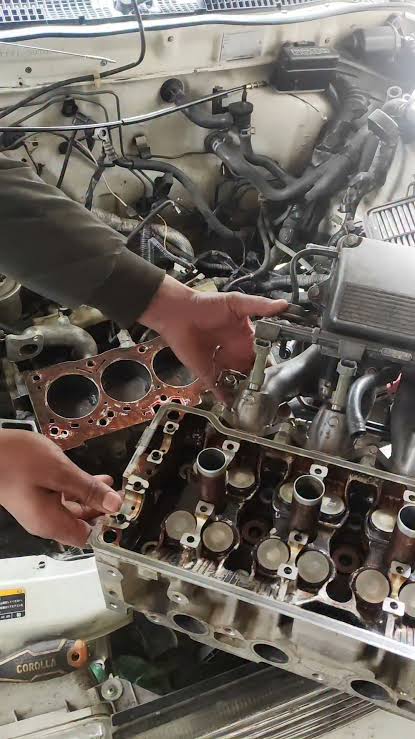
The head gasket is the most common head-related failure, and understanding it explains most head symptoms. The gasket seals three things at once: combustion pressure, coolant, and oil — and its failure lets them mix. Combustion gas into coolant causes overheating and bubbles. Coolant into the combustion chamber causes white smoke and coolant loss. Coolant into oil causes milky oil and bearing damage. Oil into coolant contaminates the cooling system. Compression loss between cylinders causes misfires. Gasket replacement is not just a gasket swap: the head must be checked for flatness and cracks, the block surface cleaned and inspected, the cause of failure addressed, and the new gasket fitted with the correct torque and sequence — a gasket fitted to a warped head, or torqued incorrectly, will fail again. The gasket is replaced, never reused, and the head bolts are replaced where the manufacturer specifies stretch bolts. The job's quality is in the preparation and the procedure, not just the new gasket.
Warping & Skimming: Restoring a Flat Sealing Surface
Overheating warps the head — the sealing surface distorts, and no gasket can seal a distorted surface. Warping is measured precisely: the head is checked with a straightedge and feeler gauge, and the distortion is compared with the manufacturer's limit. Within limits, the head is skimmed (machined) to restore a flat surface — a small amount of material removed to true the face. Skimming has limits: too much material removed raises compression, affects valve timing and clearance, and weakens the casting — the manufacturer's minimum thickness must be respected. A head warped beyond the skimming limit is not repaired by skimming; it is replaced. The measurement, the limit, and the decision are explained to the driver before machining begins, because skimming is irreversible and the driver is entitled to know what is being removed and why.
Cracks: When a Head Can Be Saved and When It Cannot
Cracks in a cylinder head range from repairable to terminal, and the distinction requires inspection and crack testing. Small cracks in non-critical areas can sometimes be repaired by specialist welding or pinning, depending on the casting material, the crack's location, and the manufacturer's guidance. Cracks between valve seats, across combustion chambers, or into coolant or oil passages are usually terminal — the head cannot reliably seal combustion pressure, and a repair there risks failure under load. Aluminium heads, the most common today, are more crack-sensitive and harder to repair than older cast-iron heads. The honest assessment states whether the crack is repairable, what the repair involves, and what the risk is — and where the head cannot be reliably repaired, replacement is recommended plainly, with the reasoning explained. A cracked head repaired against judgement is a breakdown waiting for the worst moment.
Valves, Guides & Seats: The Valvetrain Inside the Head
The head houses the valvetrain, and head work often includes valve work. Valves seal the combustion chamber on each cycle; worn valves, guides, or seats leak compression, burn oil, and cause misfires. Valve guides wear over time, letting valves wobble and seals leak. Valve seats — the surfaces valves close against — wear, pit, and recess, losing their seal. A head rebuild includes assessing all of these: valves inspected for wear, burning, and bending; guides measured for clearance; seats checked and re-cut or replaced where needed; valve stem seals replaced; and valve clearances set to specification. The camshafts, followers, and timing components are inspected too, since the head's removal exposes them. Valve work is precision work — clearances measured in hundredths of a millimetre — and it is what separates a head that runs properly from one that ticks, misfires, or burns oil after reassembly.
The Repair Process, Step by Step
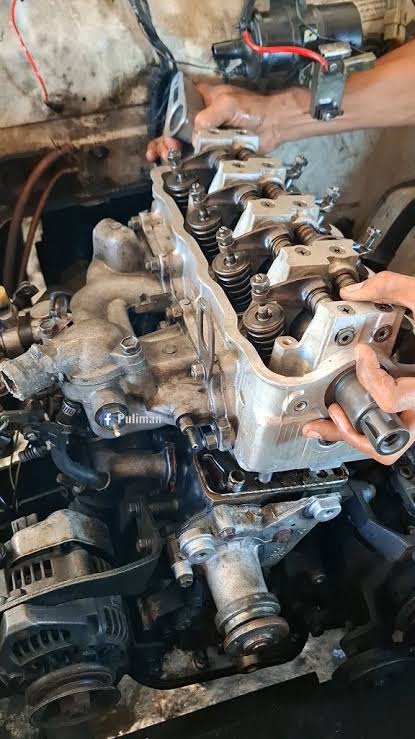
Cylinder head repair follows a fixed sequence. First, diagnosis and cause-finding, as described above, with the scope agreed before disassembly. Second, removal: coolant and oil drained, components disconnected and labelled, timing set and locked, and the head removed carefully without disturbing the block surface. Third, strip-down and inspection: the head is disassembled, cleaned, crack-tested, measured for flatness, and every component assessed — valves, guides, seats, camshafts, and passages. Fourth, machining and repair: skimming where needed and within limits, crack repair where appropriate, valve and seat work, and guide replacement. Fifth, reassembly of the head: new valve stem seals, valves lapped or replaced, clearances set, and camshafts refitted to specification. Sixth, refitting: new gasket, new bolts where specified, correct torque and sequence, timing restored and verified, and all components reconnected. Seventh, testing: coolant filled and bled, oil filled, the engine run and checked for leaks, overheating, misfires, and correct operation, including a road test. Each step is documented, and the driver is told what was found, what was done, and what to watch for.
Repair or Replace? The Decision, Honestly Made
Not every head should be repaired. Repair is right when the casting is sound — flat within skimming limits, crack-free or with repairable cracks, and with serviceable valvetrain components. Replacement is right when the head is cracked beyond repair, warped beyond the skimming limit, or when the cost of rebuilding approaches the cost of a replacement head. A replacement head — new or quality used — must match the engine exactly: casting number, valve sizes, camshaft specification, and passages. The honest assessment states which case applies and why, with the options and their costs laid out before the decision. The engine's overall condition feeds into the call too: a head repair on an engine with worn rings or bearings may not be the best investment, and that is said plainly rather than discovered afterwards.
Prevention: Cooling, Oil & Habits That Protect the Head
Head failure is largely preventable. Keep the cooling system healthy: coolant changed on schedule with the correct specification, thermostat, water pump, radiator, and fans working, and leaks fixed promptly — overheating is the head's greatest enemy. Keep the oil healthy: oil and filter changed on schedule, because oil cools and lubricates the valvetrain as well as the bottom end — the engine oil change guide covers intervals and oil choice. Never ignore the temperature gauge: pull over and cool down at the first sign of overheating, rather than driving on and warping the head. Fix small problems early: a weeping water pump, a sticking thermostat, or a slow coolant leak are cheap fixes that prevent head failure. And maintain on schedule: the car maintenance tips guide covers the full schedule for Dubai conditions. A head that never overheats, never runs dry, and never suffers detonation will usually outlast the car around it.
Mobile Assessment or Workshop Repair?
Head diagnosis can begin at the vehicle's location: symptoms assessed, tests run where the setup allows, and the findings explained. The repair itself is workshop work — head removal, machining, and reassembly need controlled conditions, specialist tools, and precise measurement that cannot be done properly at the roadside. The honest answer is given after assessment, and the car is recovered to the workshop where it cannot be driven safely. Either way, the response time, the low prices, and the confirmed quote stay the same, and the driver is told the plan, the timeframe, and what happens at each stage. Head work is not rushed: the machining, the measurements, and the reassembly each take the time they take, and a timeframe that respects that is more honest than a fast promise that cannot be kept.
What Cylinder Head Repair Costs — and How Quotes Work
Service prices at 95 Services are kept very low as a matter of policy, and head repair follows the same rule as every other job: assessment first, then the scope and price discussed and confirmed before work begins. No work starts on a guess, and no surprise appears on the bill afterwards. The quote reflects what assessment found — diagnosis, machining, parts, gaskets, and labour — itemised so the driver can see exactly what is included.
What affects the cost is straightforward: the extent of the damage, whether the head needs skimming or valve work, whether the head is repairable or must be replaced, and what caused the failure (a cooling system fault fixed as part of the job adds parts but prevents repeat failure). Hidden damage found during strip-down is explained and approved before the repair proceeds beyond the agreed scope. If assessment shows the engine's overall condition makes repair unwise, that is said plainly, with the options laid out.
How It Works: From Your Call to Your Engine Running Right
Every head repair follows the same five steps. First, the call: phone or WhatsApp with the location, vehicle details, and the symptoms. Second, the response: help dispatched within the 15–20 minute standard, anywhere in the complete UAE. Third, diagnosis: tests run, findings explained, and the cause identified. Fourth, the quote: itemised scope and price confirmed before work begins. Fifth, repair and verification: the agreed work completed, the engine tested — including a road test — and the driver told what was done and what to watch for. That sequence never changes, because speed without diagnosis is guessing, and a handover without testing is a promise unverified.
Frequently Asked Questions
What are the signs of a blown head gasket?
Overheating, white smoke from the exhaust, milky oil, coolant loss with no visible leak, misfires, and bubbles in the coolant reservoir. Any combination deserves prompt assessment — driving on damages the engine further.
Can a warped cylinder head be repaired?
If the warping is within the manufacturer's limit, the head can be skimmed to restore a flat surface. Beyond the limit, skimming is unsafe and the head must be replaced. Measurement decides, and the limit is explained before machining.
Can a cracked cylinder head be repaired?
Some small cracks in non-critical areas can be repaired by specialist methods. Cracks between valve seats, across combustion chambers, or into passages are usually terminal. Crack testing and inspection decide, and the honest answer is given before work begins.
How long does cylinder head repair take?
It depends on the damage, the machining needed, and parts availability. The timeframe is given after assessment and kept updated if strip-down reveals more — head work is not rushed, because precision takes time.
How fast can help reach me?
The response time is 15–20 minutes. Call or WhatsApp +971 54 344 3513 with a live location, vehicle details, and the symptoms, and help is dispatched to reach the vehicle within 20 minutes, anywhere in the UAE.
Are 95 Services prices low?
Yes — service prices are kept very low as a matter of policy. Assessment comes first, and the scope and price are confirmed before work begins, with no work starting without the customer's approval.
Contact 95 Services: Engine Cylinder Head Repair Across the UAE
Whether the engine is overheating, smoking, losing coolant, or misfiring, the first step is one call. Contact 95 Services on +971 54 344 3513 by phone or WhatsApp, or email info@95services.com, with the vehicle details, the location, and the symptoms. Help is dispatched within the 15–20 minute response standard, prices stay very low, and the quote is confirmed before any work begins. The office is at Ahmed Ali Al Owais Showroom Building, Office M05, Abu Hail, Al Khabaisi, Dubai, UAE. Call before visiting so the correct service arrangement can be confirmed. For general repairs, see car repair and maintenance, or visit the contact page to send an enquiry.
